Giuseppe Vasi
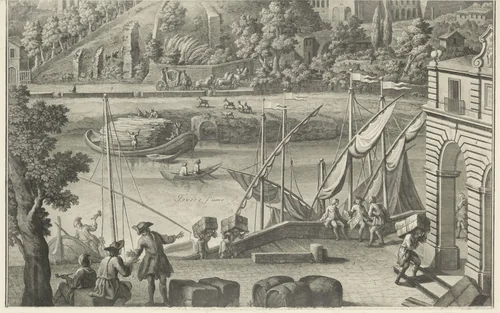
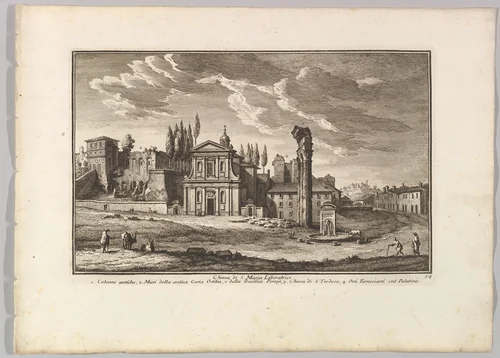
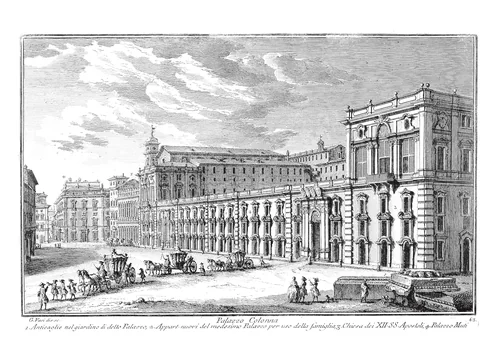
Giuseppe Vasi, active between 1746 and 1759, remains the indispensable visual historian of mid-eighteenth century Rome. An Italian engraver and architect, Vasi specialized in the grand topographic view, or veduta, establishing the visual baseline against which the celebrated drama of his student, Giovanni Battista Piranesi, would later be measured. While his contemporary focused on the melancholic power of ancient ruins, Vasi dedicated his efforts to documenting the full, functioning expanse of the Baroque capital, prioritizing architectural accuracy and systematic documentation over mere picturesque effect.
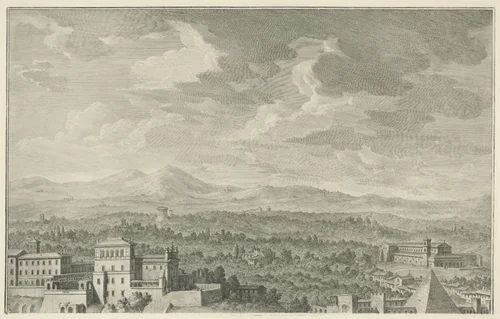
Vasi’s enduring contribution is his immense three-volume survey, Delle Magnificenze di Roma Antica e Moderna. This monumental undertaking, executed over more than a decade, provided a comprehensive architectural inventory of the city, detailing both the ancient and modern fabric of Rome. This encyclopedic approach meant his collection offered unprecedented scope, capturing everything from well-known landmarks to surrounding papal estates, exemplified by the detailed View of the Palazzo di Caprarola. The project did not function merely as a travelogue; rather, it was a precise mapping of civic, religious, and residential architecture, capturing the city’s state during a crucial period of neoclassical transition.
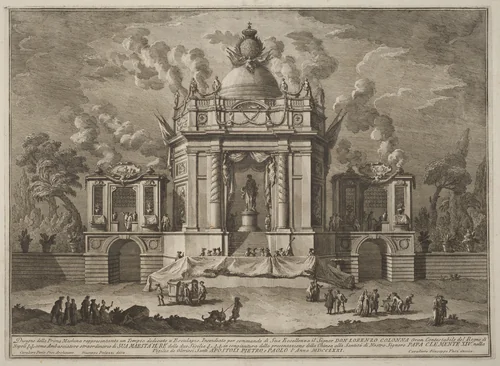
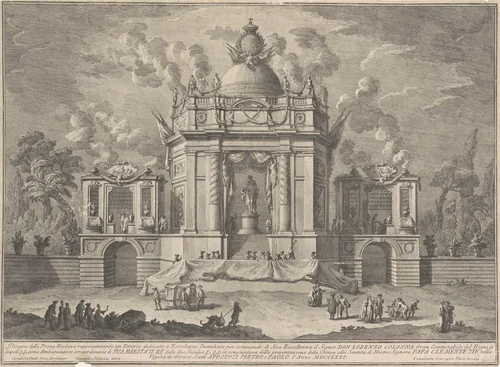
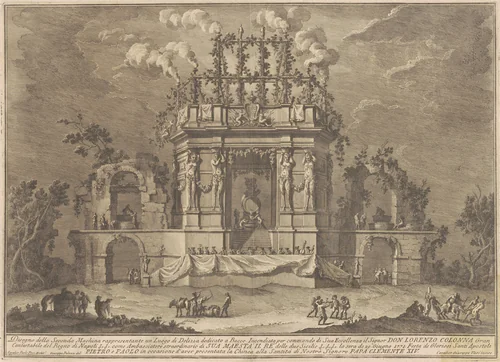
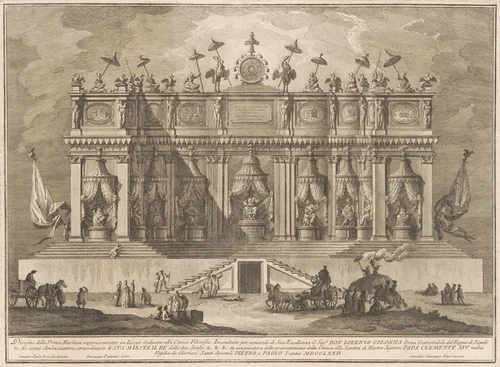
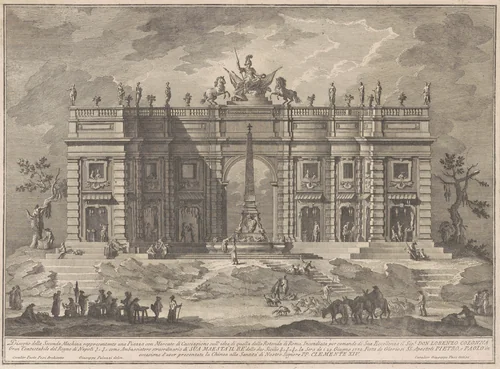
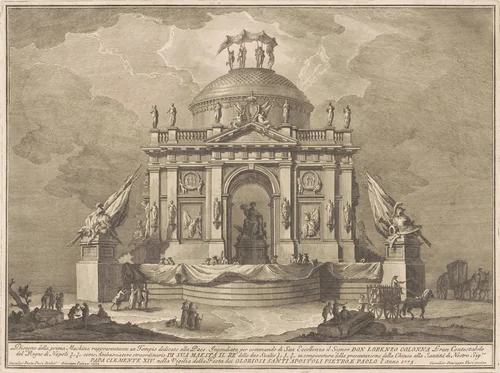
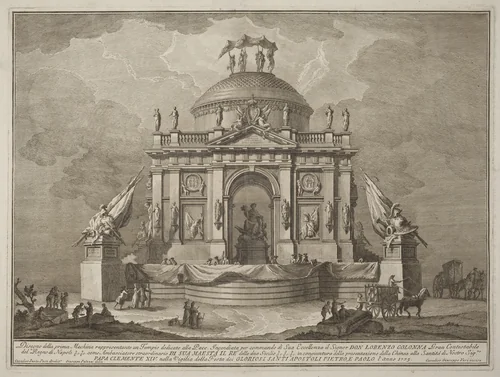
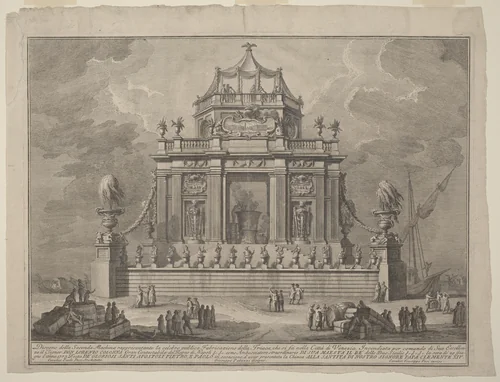
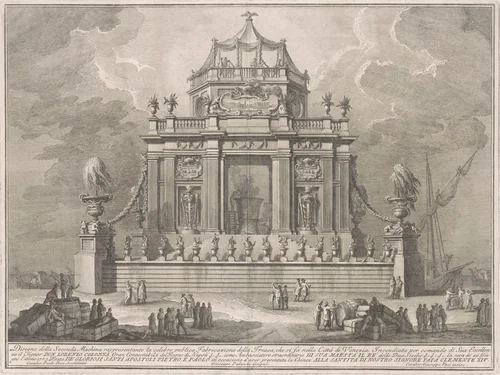
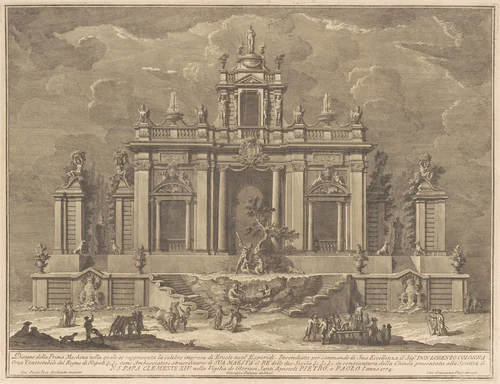
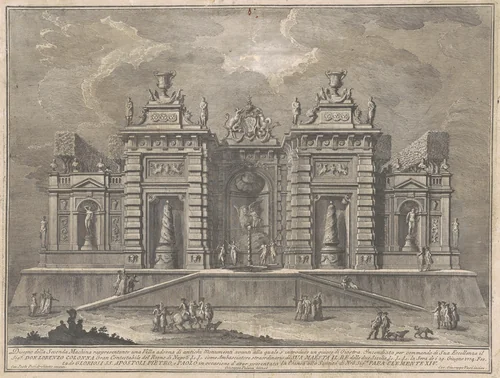
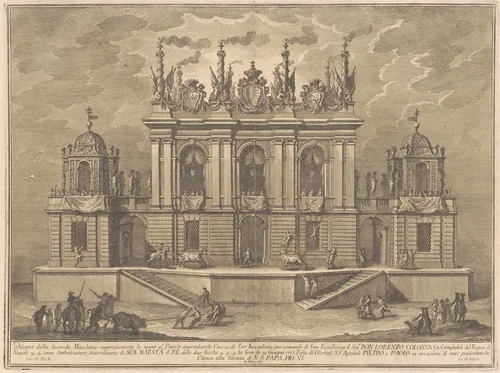
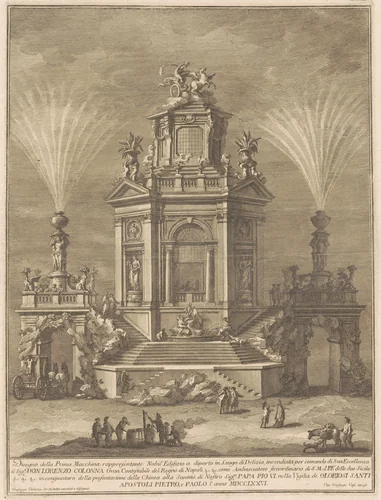
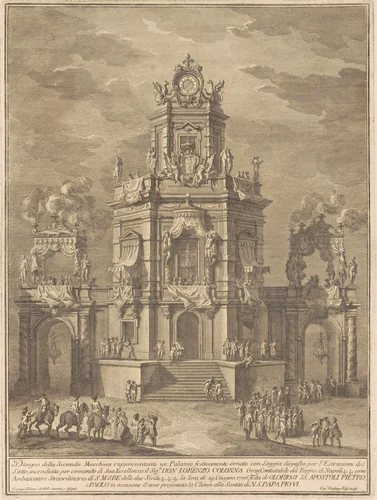
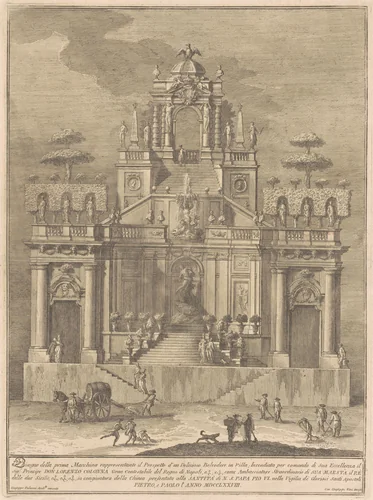
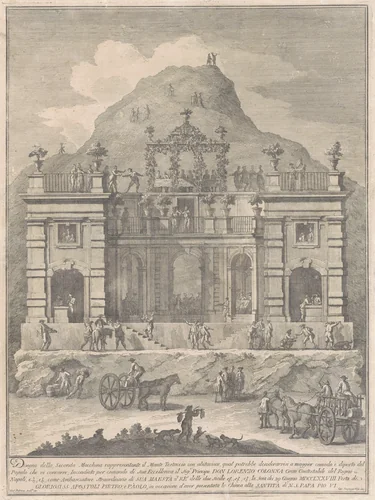
Perhaps the most fascinating aspect of Vasi’s output is his devotion to structures intended for immediate disassembly. He was meticulous in documenting spectacular, ephemeral creations, such as the grand temporary triumphal arches and scenic machines erected for annual festivals. His representation of The Prima Macchina for the Chinea of 1751: Triumphal Arch for Roger I of Sicily captures the technical complexity and fleeting glory of these grand public works, which often existed for less than a week. This attention to temporary grandeur showcases an unusually comprehensive mindset, treating all architectural expression as worthy of permanent record.
The wealth of topographical detail contained in these copperplate engravings ensures their ongoing relevance for historians and researchers. Today, numerous Giuseppe Vasi prints constitute essential components of major institutional collections, including the National Gallery of Art and the Metropolitan Museum of Art. Their quality and historical significance ensures that many high-quality prints remain available, functioning as crucial primary source material detailing the appearance of 18th-century Rome.
Source: Wikipedia · CC BY-SA 4.0