Giuseppe Valeriani
Giuseppe Valeriani, active primarily between 1695 and 1740, holds a distinct place among the Italian masters specializing in large-scale architectural illusionism during the transition from the late Baroque to the Rococo period. As an artist whose primary professional focus lay in painting murals and, critically, designing elaborate stage scenery, Valeriani mastered the demanding discipline of quadratura and perspective drafting. His skill set bridged the world of pure pictorial art and the high-stakes engineering required for theatrical productions.
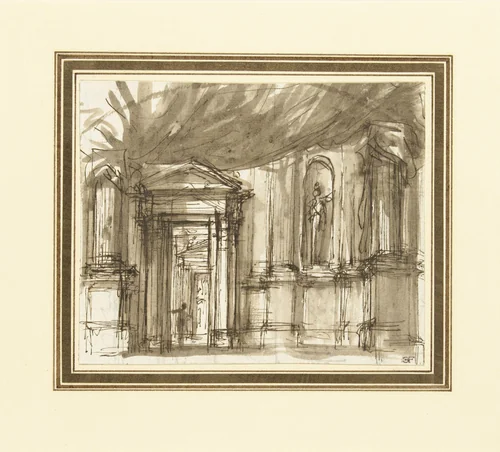
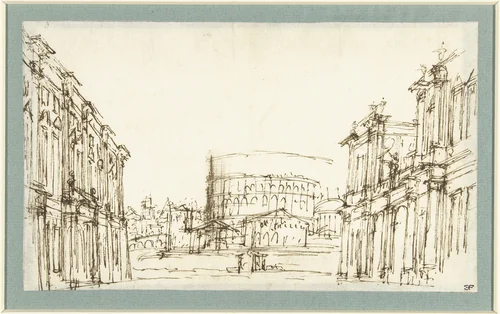
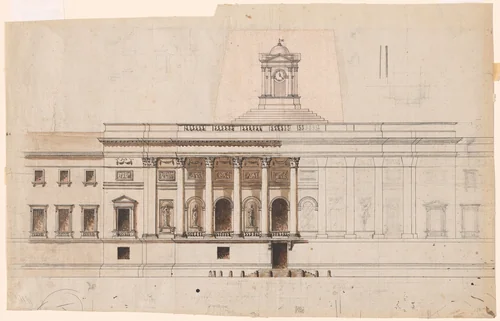
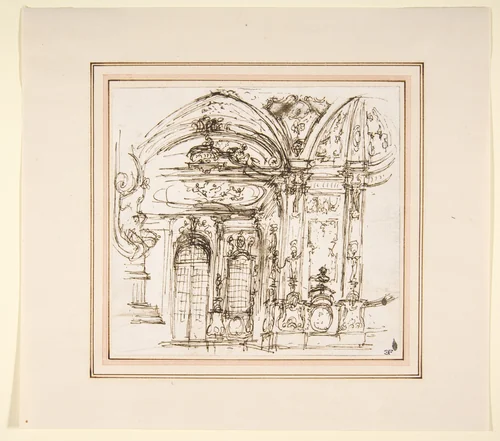
Valeriani’s surviving corpus, notably his detailed preparatory drawings and etchings, illuminates the technical precision required to conceptualize monumental but temporary visual environments. Works like the grand Architecturaal ontwerp voor een zaal of hal and the dramatic Fantasiearchitectuur met doorkijk op het Colosseum showcase his aptitude for the veduta di fantasia, or capriccio, where real ruins are seamlessly integrated with soaring, imaginary contemporary structures. He manipulated scale and light with confidence, creating spaces that were meant to convince the eye of profound depth and solidity, often in contradiction to the shallow stage or flat wall they adorned.
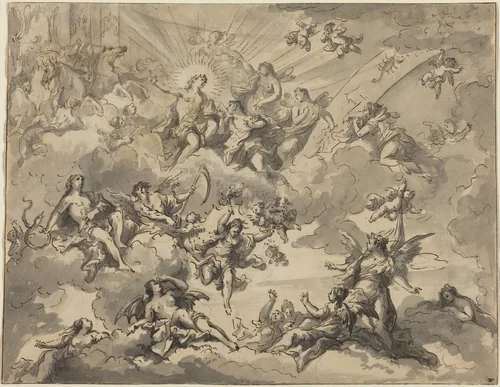
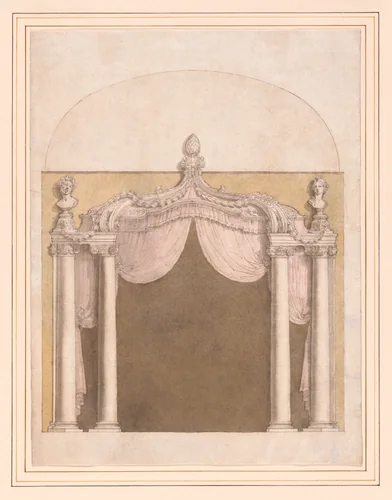
It is a curious paradox of his career that the vast, ephemeral stage sets and decorative schemes Valeriani executed for noble houses and opera stages have vanished, yet the meticulous preparatory sketches remain. The enduring artistic permanence resides in the exacting line work of these studies. His draftsmanship, as seen in the classical groupings of Apollo and the Muses or the practical application demonstrated in Design for an Alcove, ensured his sustained relevance across Europe.
Today, Valeriani’s works are conserved in major international collections, including the Metropolitan Museum of Art, the National Gallery of Art, and the Rijksmuseum. The presence of these objects confirms his influence on 18th-century scenography and design, ensuring that even today, high-quality prints derived from his portfolio, sometimes available as downloadable artwork, continue to inform studies of this period. Giuseppe Valeriani prints demonstrate the demanding rigour required of artists whose primary function was to conjure visual grandeur for momentary spectacle.