Giuseppe Salviati
Giuseppe Porta (c. 1520-1575), known professionally as Giuseppe Salviati, was a pivotal Italian painter and draftsman who operated during the height of the Late Renaissance period. Having adopted the surname of his early master and patron, Francesco Salviati, he bridged the sophisticated, linear traditions of Florentine Mannerism with the rich coloristic concerns that defined the Venetian art center, where he spent the majority of his prolific career.
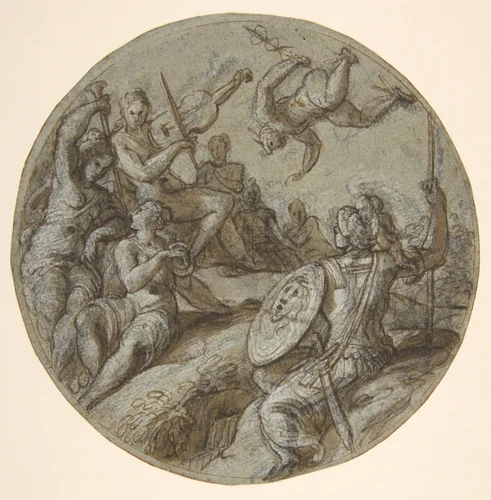
Salviati’s artistic output reveals an impressive versatility, moving seamlessly between large-scale public commissions in fresco and oil, and detailed graphic work designed for dissemination. Trained initially in Rome and Florence, he absorbed the intricate compositional styles of Central Italy before relocating north, where he quickly became instrumental in translating grand narratives into Venetian visual language. His proficiency as a draftsman is evidenced by surviving works such as the highly decorative Design for a Pilaster with Two Candelabra Grotesques and Three Masks, a work that showcases his command of ornamental precision crucial for the period’s architectural and interior designs.
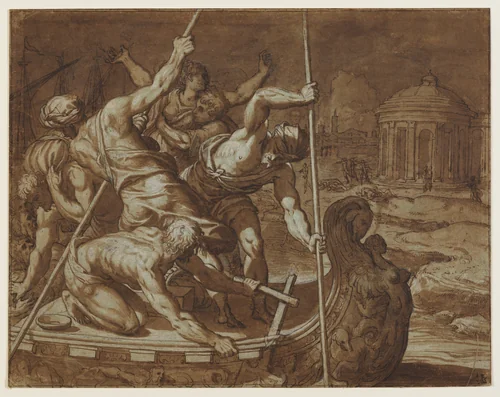
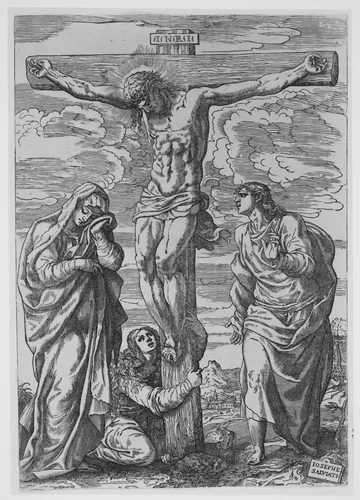
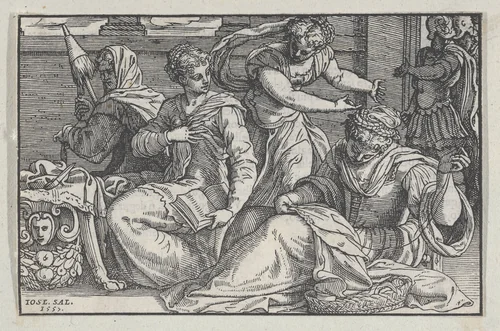
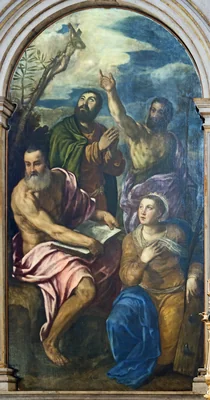
Beyond painting grand religious and mythological scenes, such as the dramatic The Crucifixion and the dynamic narrative The Abduction of Helen, Salviati was a dedicated contributor to the burgeoning print culture of the sixteenth century. By designing detailed frontispieces, including the intricate Frontispiece to ‘Le sorti di Francesco Marcolini da Forli intitolato Giardino di Pensieri’, he ensured that the complex visual discourse of Mannerism was widely circulated. It is perhaps telling that an artist capable of handling monumental public commissions in the most competitive artistic environment was equally adept at illustrating esoteric textual works; this demonstrates a thoroughly professional adaptability rarely matched by his peers.
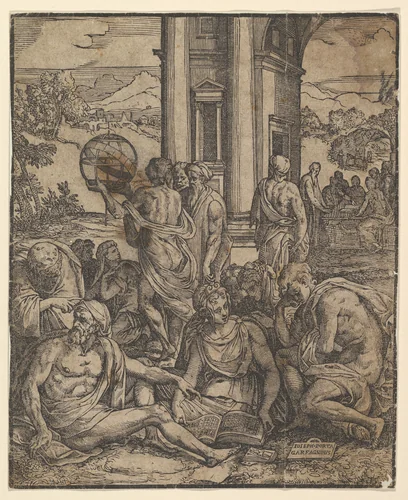
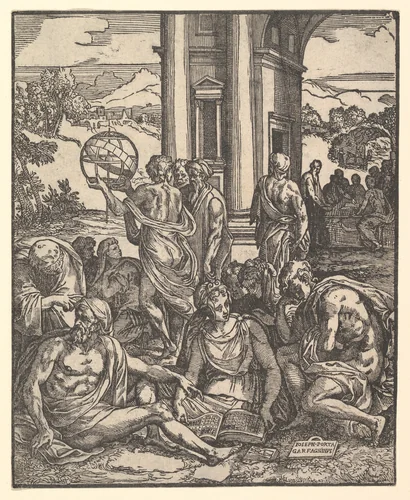
Today, Giuseppe Salviati prints and drawings provide invaluable insight into the intersection of High Renaissance influence and Venetian innovation. Institutions such as the Metropolitan Museum of Art hold significant examples of his work. While often overshadowed by his more famous Venetian contemporaries, Salviati’s enduring impact is reflected in the continuing study of his compositions. Many of his museum-quality graphic works are now preserved in the public domain and available as downloadable artwork, ensuring that the elegant complexity of his drawing style remains readily accessible for contemporary study.
Source: Wikipedia · CC BY-SA 4.0