Giuseppe Pozzi
Giuseppe Pozzi was an artist documented as active between 1757 and 1758. His known body of work consists exclusively of Giuseppe Pozzi prints documenting the grand ephemeral architecture erected for the Roman festival of the Chinea. This specialization in detailed architectural documentation confirms his position as a recorder of 18th-century spectacle and temporary design.
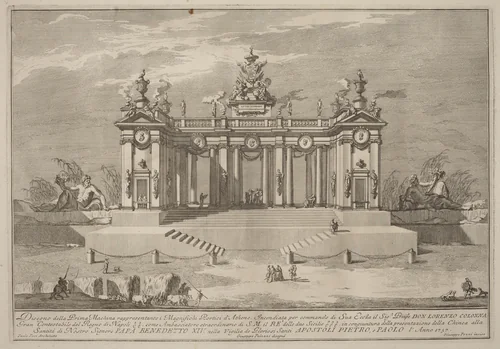
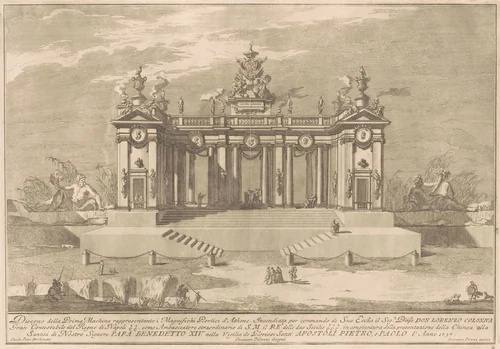
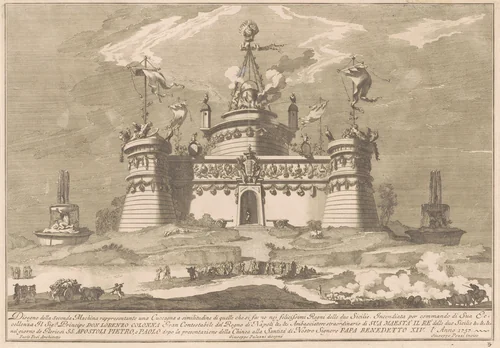
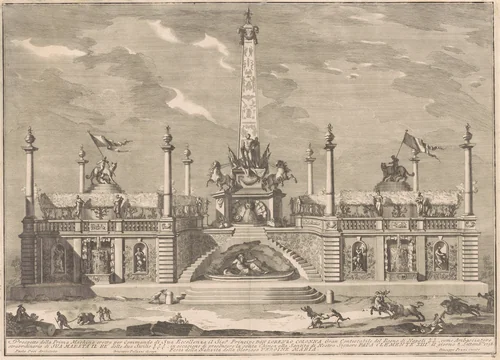
Five of his high-quality prints are represented in major museum collections, including the holdings of the National Gallery of Art. These works meticulously capture the elaborate structures, or Macchine, which were characteristic of late-Baroque festival design, blending elements of classical revival and exotic fantasy.
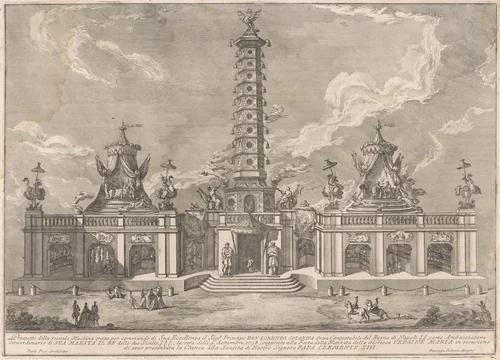
Pozzi’s work details two successive years of the festival. The 1757 designs include two versions of The Prima Macchina for the Chinea of 1757: The Colonnade of the Athenian Lyceum and The Seconda Macchina for the Chinea of 1757: The Fortress of Cockaigne. The 1758 prints document The Prima Macchina for the Chinea of 1758: A "Deliziosa" with Hanging Gardens and The Seconda Macchina for the Chinea of 1758: The Porcelain Tower of Nanjing. Today, these historically and culturally significant images often fall into the public domain, making them accessible for scholarly study and general interest.