Giuseppe Canale
Giuseppe Canale (1725-1802) was a pivotal Italian designer and engraver whose career bridged the Roman academic tradition with the demanding requirements of institutional court patronage. Born in Rome, the son of Antonio Canale, his early development was shaped by a strategic dual instruction: the precise technical mastery of reproductive engraving under Jacob Frey, complemented by the refined artistic sensibilities absorbed while frequenting the drawing school of the esteemed Cavalière Marco Benefial.
Canale’s technical proficiency quickly garnered international notice. In 1751, he accepted an invitation to the Saxon capital of Dresden, then a vibrant center for the arts, to assist in the ambitious project of translating the Dresden Gallery’s renowned masterpieces onto copper plates. His success there led to his official appointment as engraver to the Court. This tenure cemented his legacy as a foremost reproductive printmaker of the mid-eighteenth century, focusing less on original work and more on facilitating the wider distribution of celebrated European painting.
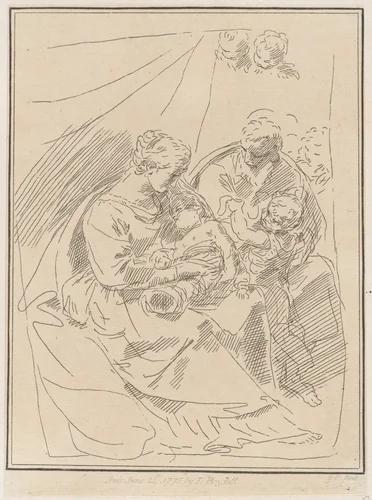
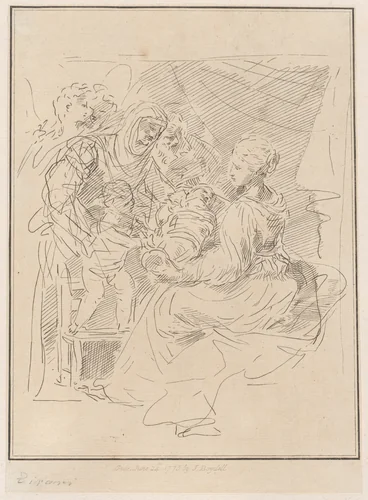
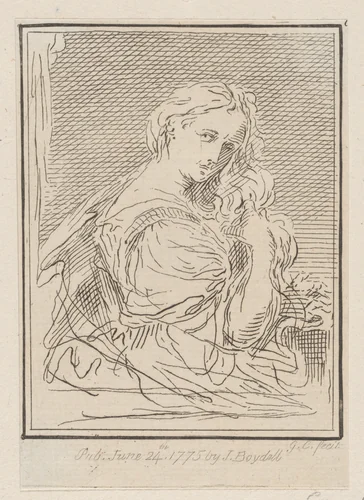
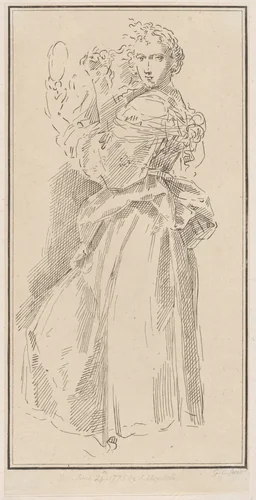
His specialized work ensured that masterpieces, such as the compelling interpretation of the Philosopher after Jusepe Ribera or the dramatic Adam and Eve driven from Paradise after Francesco Albani, reached collectors far beyond Saxony. Such historical subjects and high-quality prints remain highly sought after in museum-quality collections today, and many are now accessible as public domain downloadable artwork through institutional archives.
Canale excelled in executing both detailed portraiture and grand allegorical subjects. His skill successfully captured the necessary gravitas of religious subjects, visible in his interpretation of The Glory after Domenichino, as well as the delicate observation required for courtly likenesses, including his portrait of Maria Antonia, Electress Dowager of Saxony. Intriguingly, his commissioned versatility encompassed the ephemeral as well; alongside the celebrated portraits of royalty and clergy, he devoted equal meticulousness to documenting the Sepulchral Monument of Cardinal Spinola. This professional breadth allowed him to move seamlessly between recording historical sacred scenes and chronicling contemporary political figures like Prince Xavier of Saxony, establishing him as a crucial intermediary between original creation and mass dissemination throughout Europe.
Source: Wikipedia · CC BY-SA 4.0