Giuseppe Caletti
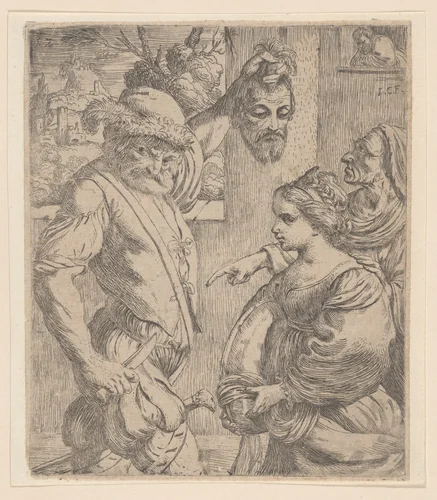
Giuseppe Caletti, often known as Calletti, stands as a notable, if frequently understated, figure within the efflorescence of 17th-century Italian Baroque art. Active circa 1620, the artist divided his career between the significant artistic centers of Ferrara and Cremona, contributing works equally distinguished across painting and the graphic arts. His foundational significance is underscored by the presence of his compositions, particularly his detailed prints, in major institutional holdings, including the Metropolitan Museum of Art and the National Gallery of Art.
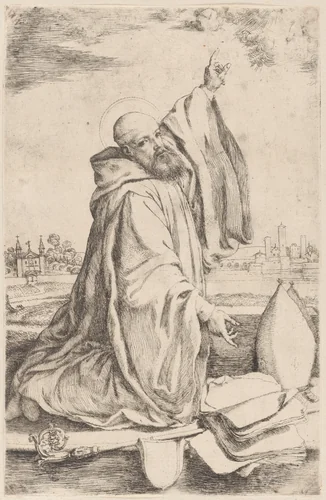
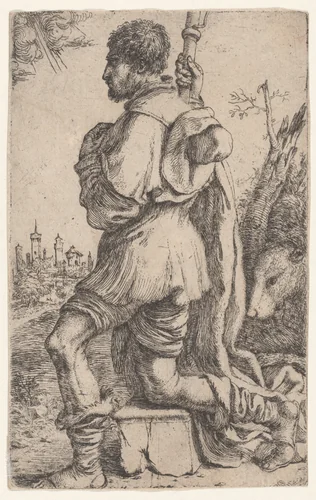
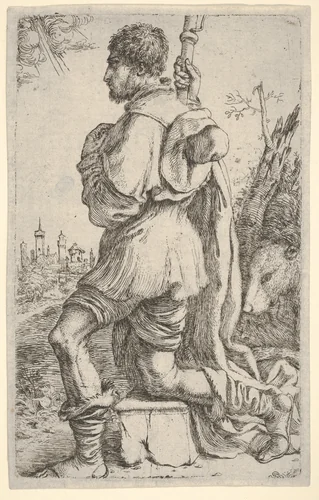
Caletti’s core innovation lay in his distinctive approach to established religious iconography. While firmly committed to spiritual themes, his subjects often appear clad in contemporary, genre-like dress and inhabit familiar, less formalized surroundings. This humanizing tendency effectively closed the distance between the sacred and the everyday observer, lending a vital immediacy to works such as A sainted bishop of the Benedictine order kneeling towards the right and pointing at the heavens. Beyond his devotional output, Caletti exhibited strong stylistic ambitions toward the Venetian masters. He engaged with the mythological, particularly embracing the Titianesque tradition of the Bacchanalia, lending a robust, sensual vigor to his secular compositions.
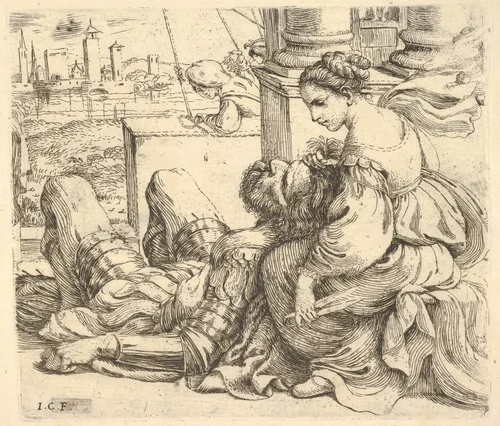
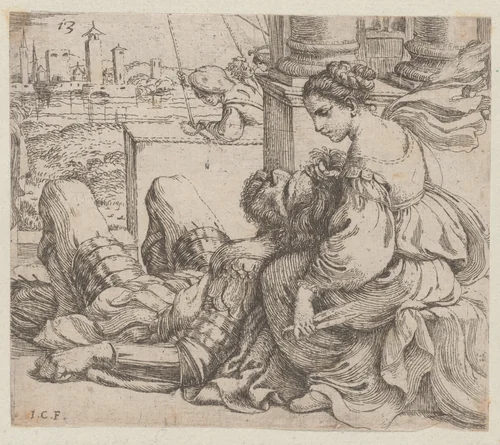
The extant body of Caletti’s graphic work is notably focused on powerful, isolated narratives, emphasizing psychological tension and the burdens of consequence. His repeated studies of complex figures in conflict, such as the compelling print of Delilah holding Samson's hair and a pair of scissors, highlight this intense focus. It is characteristic of Giuseppe Caletti prints that they often capture the moment after the critical action has passed, focusing instead on the weight of decision and the contemplation of fate, a hallmark of sophisticated High Baroque storytelling.
Owing to the clear definition and enduring nature of these copperplate compositions, high-quality prints of Caletti’s work circulated widely, sustaining his influence beyond his primary period of activity. Today, the detail and expressive power of his compositions ensure they remain essential pieces for the study of 17th-century Italian engraving, frequently available as royalty-free downloadable artwork for scholars and enthusiasts globally.
Source: Wikipedia · CC BY-SA 4.0