Giuseppe Antonio Landi
Giuseppe Antonio Landi (active circa 1719) was a defining figure in early 18th-century Italian classicism, recognized both as a neoclassical architect and as a master painter of quadratura. Operating during a period of intense scholarly and artistic fascination with antiquity and the mechanics of theatrical space, Landi synthesized these preoccupations, achieving his most enduring legacy not through built works, but through the printed medium.
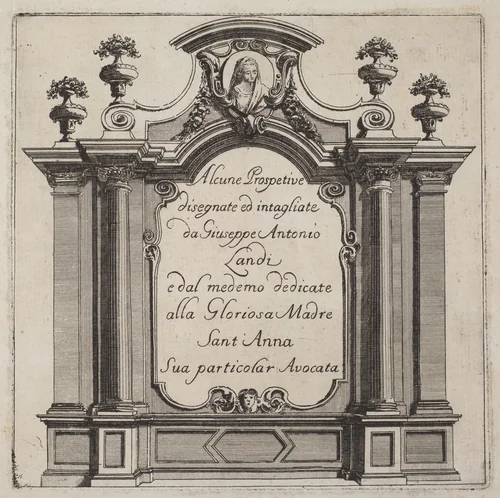
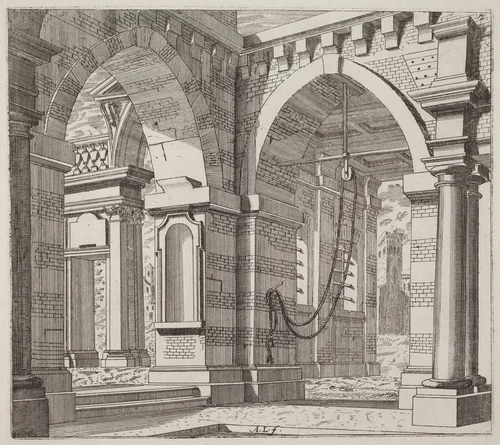
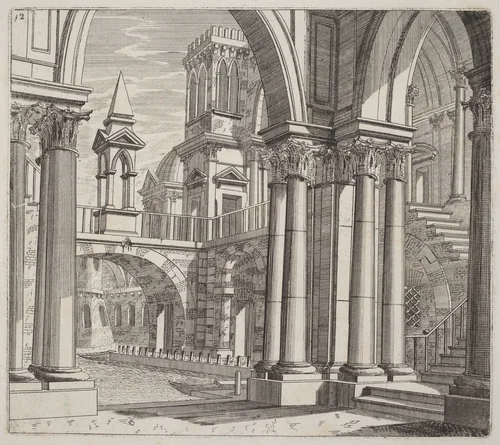
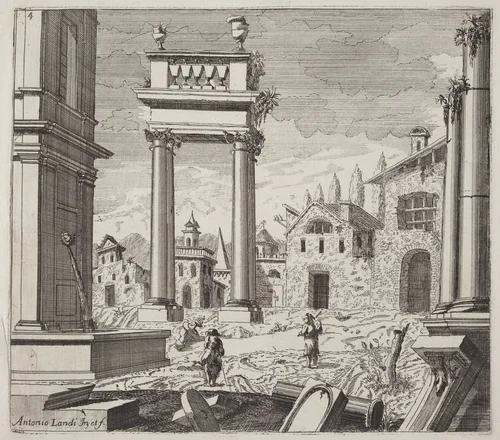
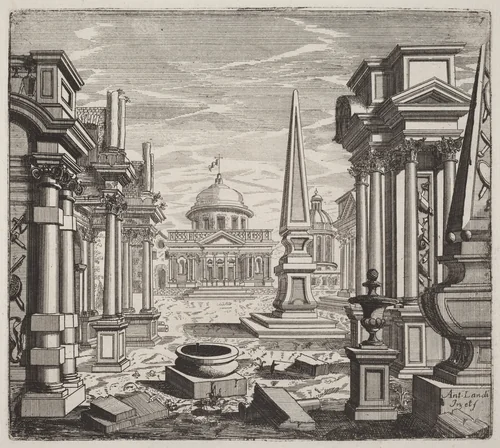
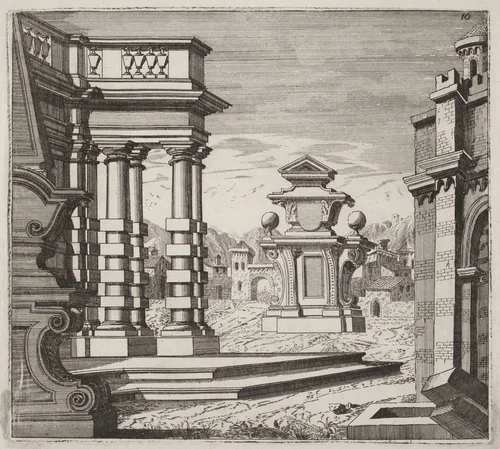
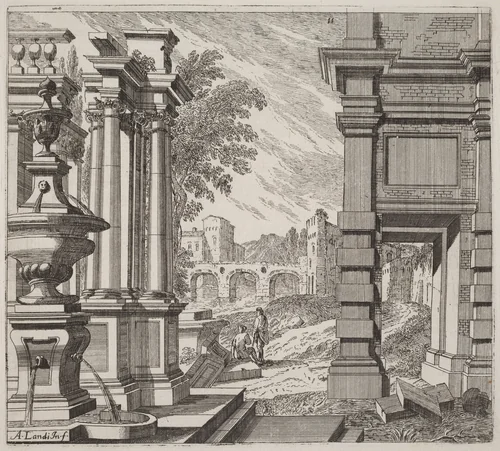
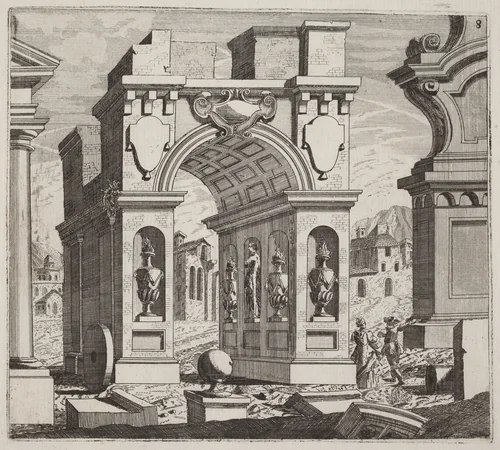
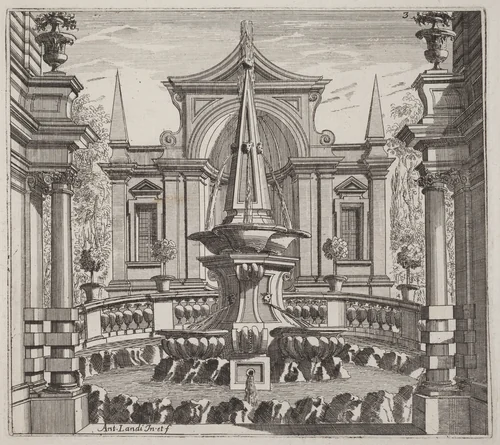
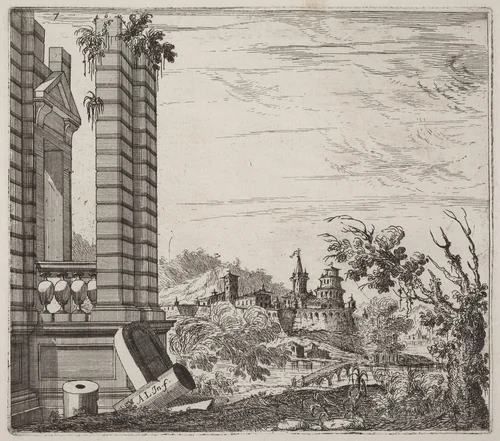
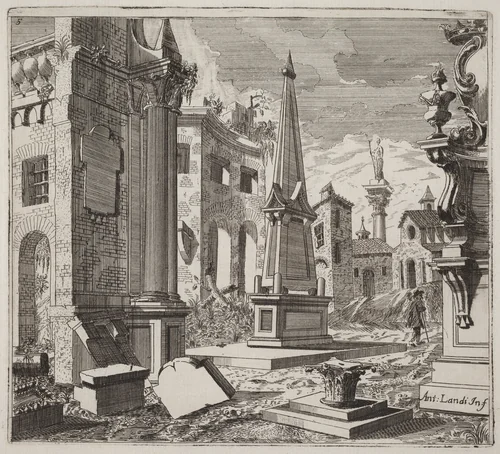
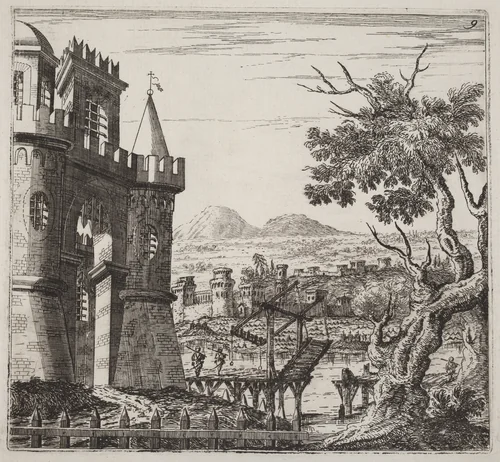
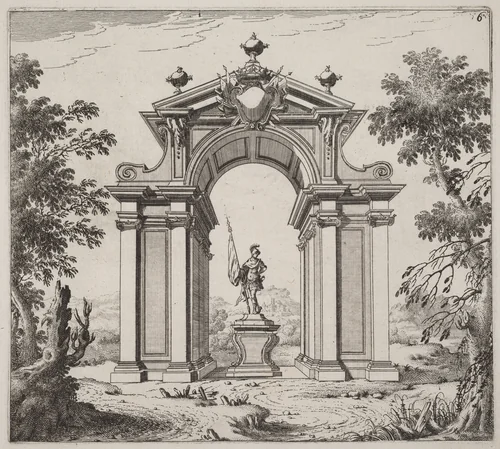
His reputation today rests on a small but highly influential corpus of architectural etchings, most notably the thirteen plates comprising the series Alcune Prospettive (A Few Perspectives). These works transcend simple architectural documentation; they are complex capricci that engage the viewer in spatially inventive, hypothetical settings. Titles such as Architectural Fantasy with Buildings, Stairways, and Portals beside a Canal demonstrate Landi's unique skill in merging the pristine clarity of the Neoclassical ideal with the dynamic visual interest of the ruin.
Landi’s compositions often play clever visual tricks, utilizing elaborate, overlapping stairways, deep vanishing points, and conflicting scales to establish a sophisticated dialogue between the monumental perfection of imagined classical forums and the intimate clutter of vernacular buildings. His precision in rendering these structures suggests a profound understanding of perspective and illusion, skills essential for a specialist in quadratura, the ceiling painting designed to simulate three-dimensional architecture.
It is this output of free art prints, circulating as influential manuals for spatial invention, that cemented Landi’s historical significance, carrying ideas about scenographic architecture across Europe. The prints served as vital conceptual tools for subsequent generations of designers and artists. Unlike many of his contemporaries whose reputations hinge on large-scale commissions, Landi’s enduring authority rests on the accessibility and detail of his graphic work. This meticulous design work, held in major institutions like the National Gallery of Art, is preserved today, often available as downloadable artwork or museum-quality high-quality prints within the public domain.
Source: Wikipedia · CC BY-SA 4.0