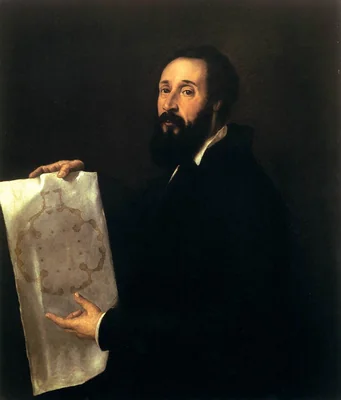
Giulio Romano
Giulio Pippi (c. 1499-1546), internationally recognized by the moniker Giulio Romano, was a foundational figure in sixteenth-century Italian art and architecture. Trained directly in the Roman studio of Raphael, Romano initially mastered the tenets of High Renaissance classicism before transitioning dramatically toward the expressive elongation and psychological complexity that would define Mannerism. His stylistic deviations from his master’s measured idealization proved instrumental in shaping this critical aesthetic shift, securing his place as one of the period’s most significant innovators.
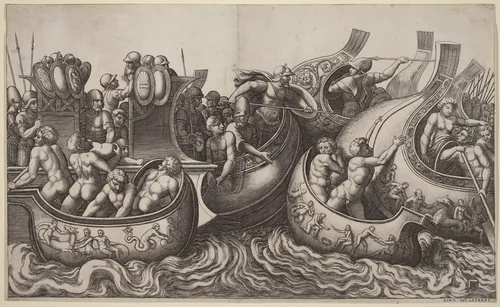
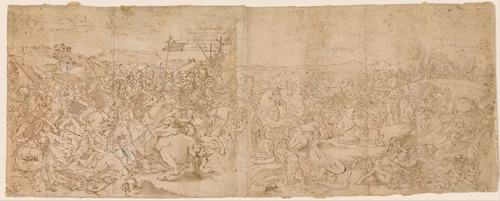
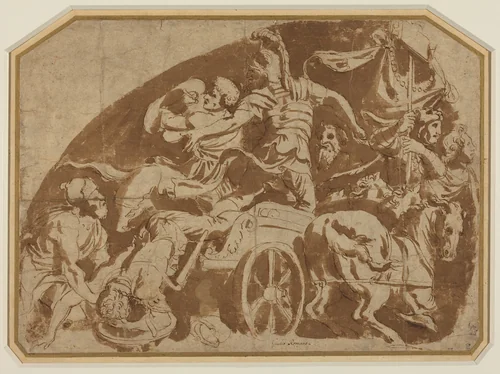
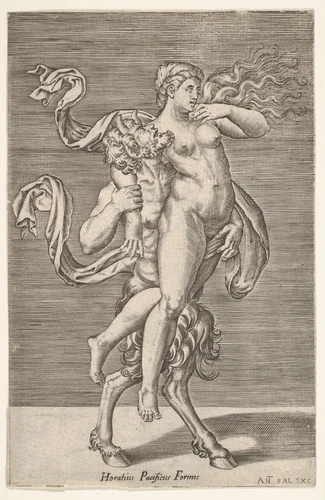
Romano’s impact extended far beyond Rome and Mantua, where he spent his most productive years. His prolific graphic designs were immediately valued by contemporary printmakers, serving as the essential visual currency of the early sixteenth century. The engravings of his compositions, particularly those executed by Marcantonio Raimondi, were instrumental in spreading the nascent Italian style across continental Europe. These high-quality prints ensured the widespread dissemination of Giulio Romano’s visual vocabulary and cemented his reputation as a master designer whose innovative compositions, such as the dynamic sketch Naval Battle, were keenly sought after.
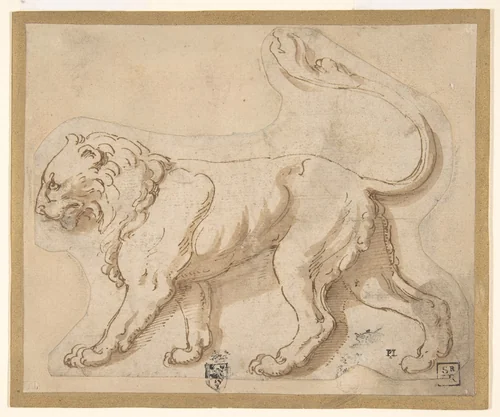
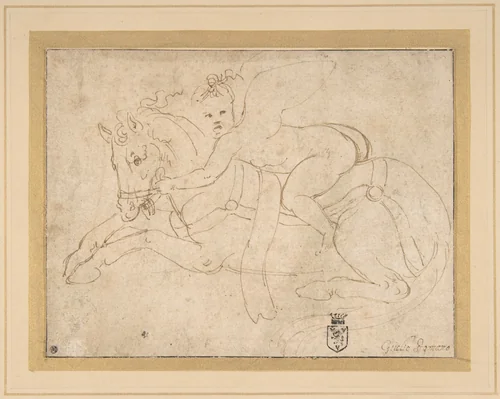
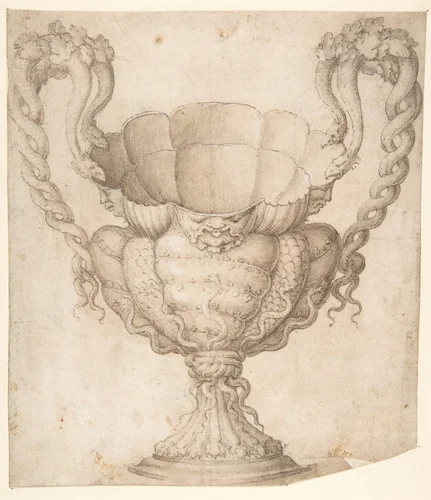
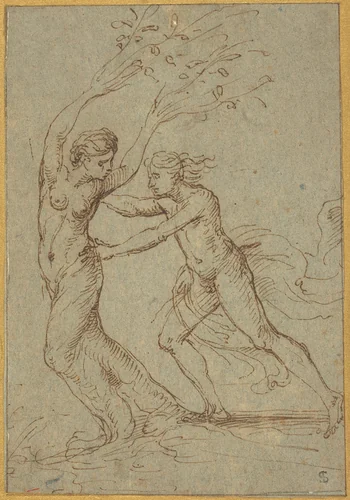
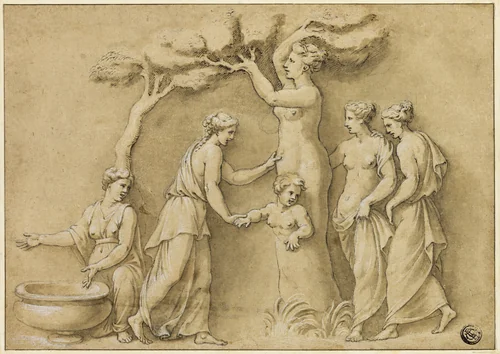
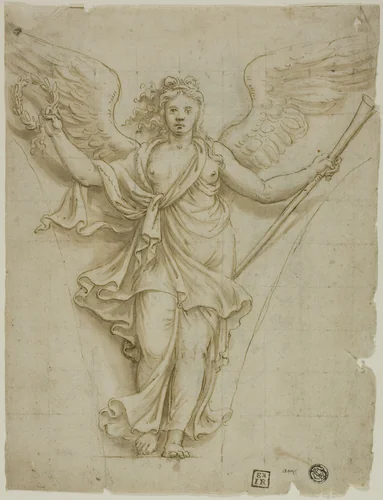
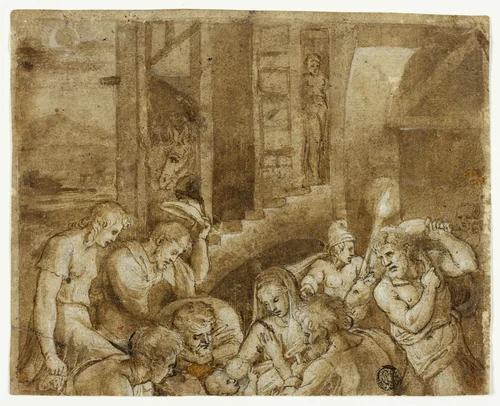
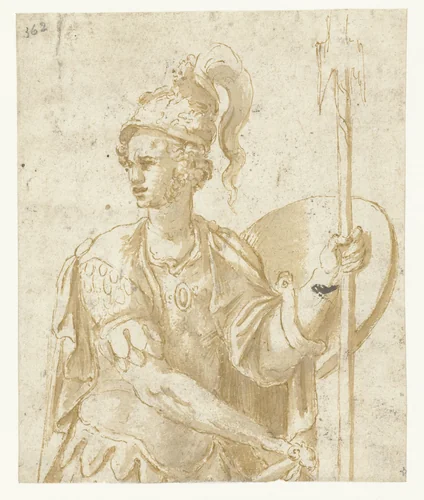
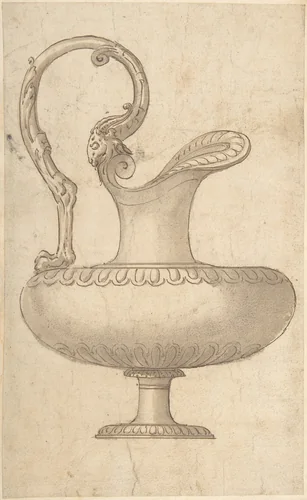
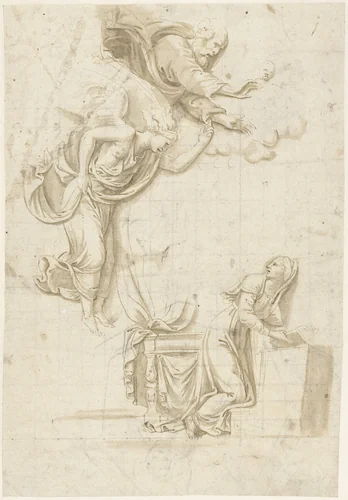
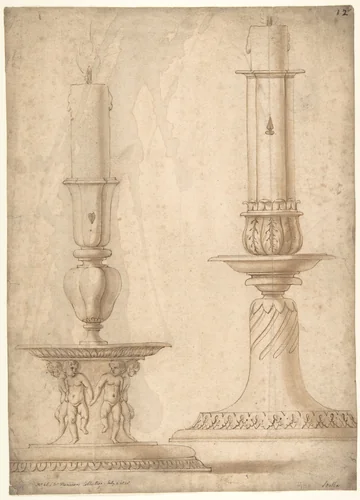
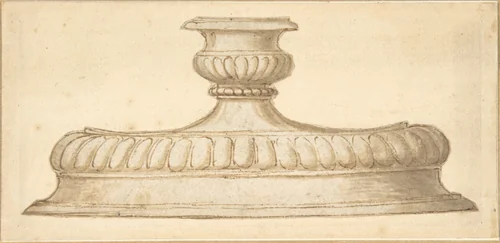
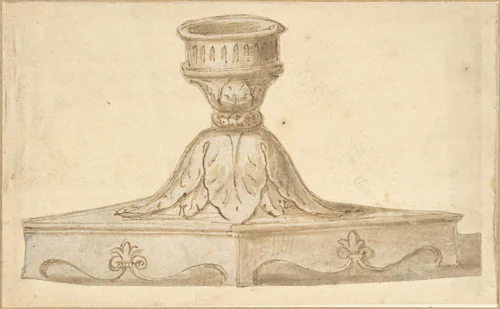
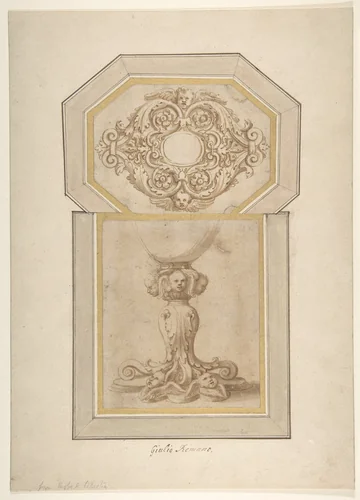
His mastery of draftsmanship remains perhaps the most accessible component of his varied oeuvre. Collectors have long prized his preparatory studies, which demonstrate his facility across genres, from mythological narratives like Apollo and Daphne to detailed animal studies, including the powerful, heraldic A Lion in Profile Facing to the Left ("Leo"). This breadth of imagination extended into his architectural designs, positioning him as an artist who fluently navigated the demands of painting, decorative scheme, and structural theory. It is worth noting that while he is known primarily as a painter and architect, his surviving graphic output often reveals a designer whose visual ambition frequently exceeded his ability to execute every concept in pigment or stone, a subtle hallmark of the ambitious Mannerist period itself.
Today, institutions such as the Art Institute of Chicago, the Rijksmuseum, and the Metropolitan Museum of Art safeguard significant portions of his drawings and design work. Much of this historical material is now available in the public domain, providing scholars and enthusiasts alike access to museum-quality images for study and appreciation.
Source: Wikipedia · CC BY-SA 4.0