Giulio Campi
Giulio Campi (c. 1502–1550) was the foundational figure and initial catalyst of the formidable Campi artistic dynasty, an influential family of painters and architects who dominated the Cremonese artistic scene in the mid-16th century. Active professionally as both a painter and an architect, Campi navigated the transition from High Renaissance ideals toward the more personalized, expressive language of Mannerism. His work skillfully integrated the sophisticated, detailed draftsmanship rooted in Lombard tradition with the emerging structural and figurative dynamism emanating from Rome and Florence.
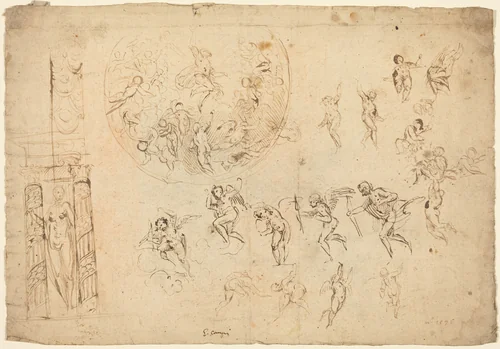
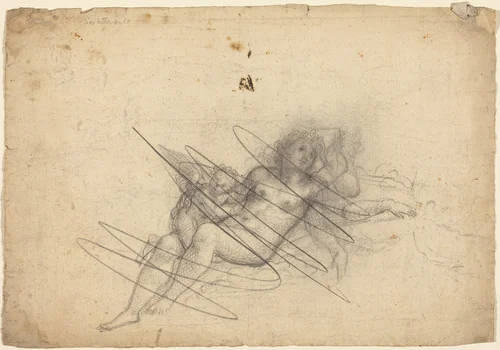
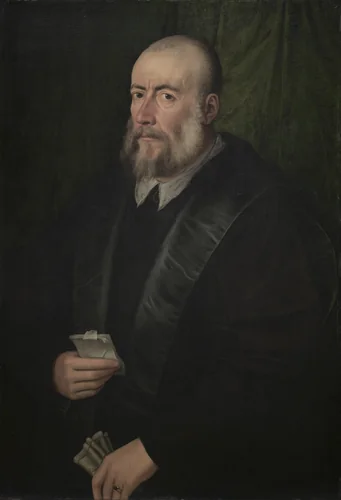
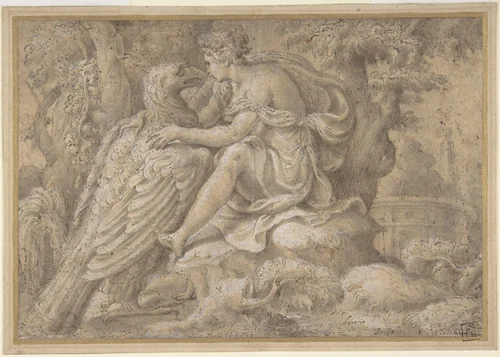
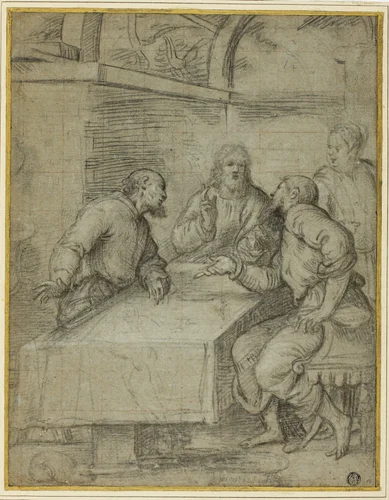
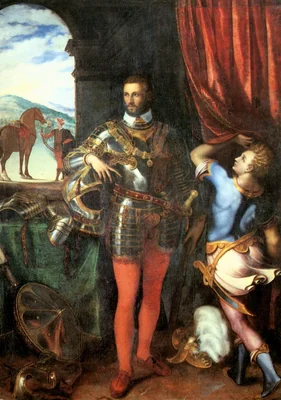
His versatility is particularly evident in the surviving body of work, which ranges from large-scale religious commissions, such as the drawing An Ascension and Other Studies, to intimate portraiture and mythological scenes. While records of Giulio Campi paintings are comparatively scarce, the substantial number of known preparatory studies confirms his rigorous technical approach. Drawings like Venus and Cupid and the psychologically astute Portrait of an Old Man showcase a breadth of subject matter, demonstrating his equal facility with idealized forms and penetrating naturalistic likenesses.
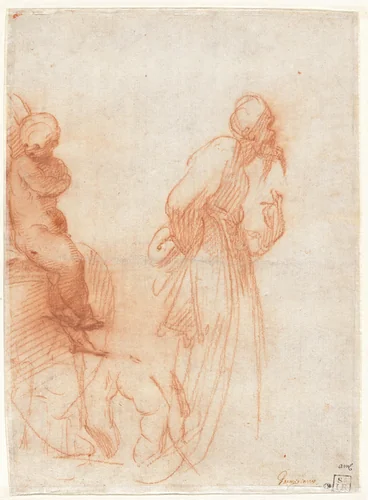
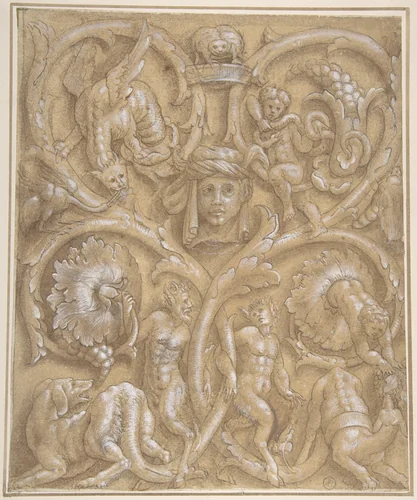
Campi’s expertise in design and architectural embellishment is highlighted by his elaborate studies for ornamental schemes. His drawing practice went beyond simple figure studies, embracing the intricate fusion of architecture and decoration. Designs such as Design for an Ornamental Panel with Rinceaux, Satyrs, Putti, Monsters and a Human Head reveal a restless imagination focused on complex surface articulation, seamlessly integrating mythological creatures, human heads, and decorative foliage, suggestive of large-scale decorative frescoes or architectural friezes. Furthermore, rapid figure notations, seen in pieces like a) Studies of Figures and a Hand (recto); b) Studies of a Bull (verso), underscore his commitment to continuous observation.
Campi's most profound historical impact lies not only in his individual output but in establishing the studio environment that nurtured his younger brothers, Antonio and Vincenzo Campi, both of whom would become renowned masters in their own right. It is intriguing to note the almost industrial consistency with which the Campi family produced high-caliber artists across several decades. Today, these seminal works are held in major institutions, including the Metropolitan Museum of Art and the National Gallery of Art, offering scholars essential insight into 16th-century Lombard art. Through collections made available to the public domain, high-quality prints of his foundational drawings allow new audiences to study the origins of this powerful artistic lineage.
Source: Wikipedia · CC BY-SA 4.0