Giulio Campagnola
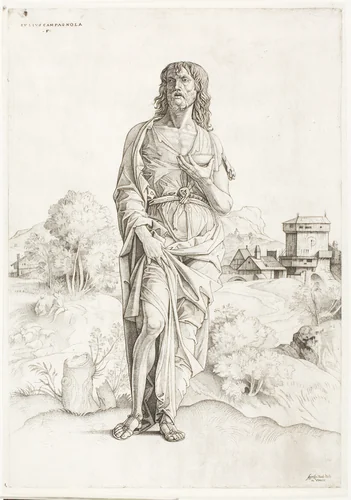
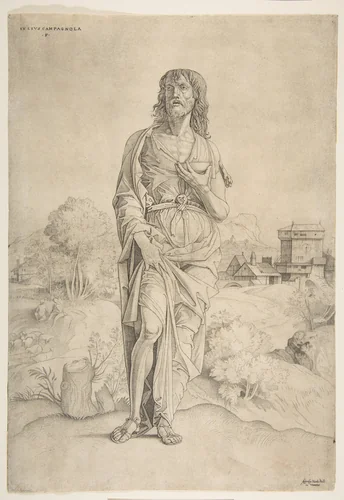
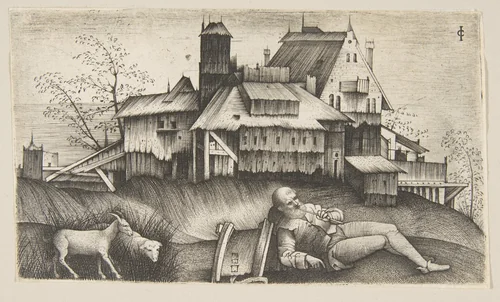
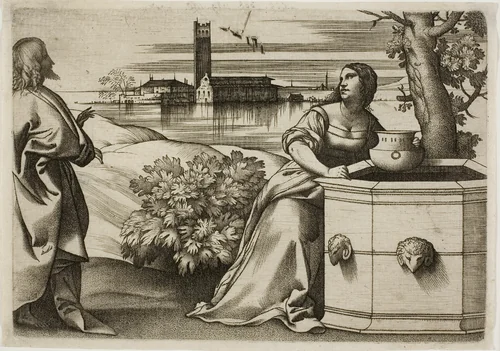
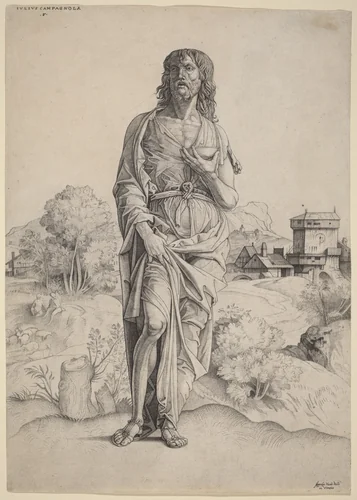
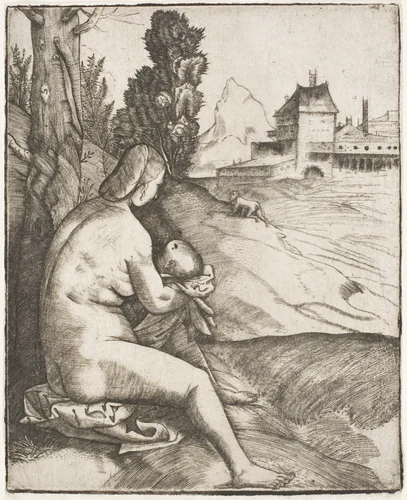
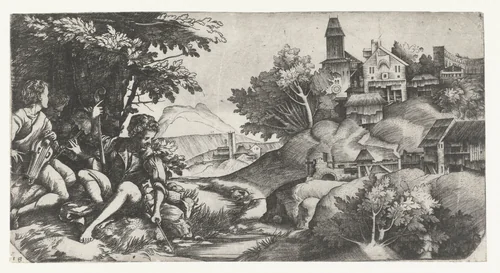
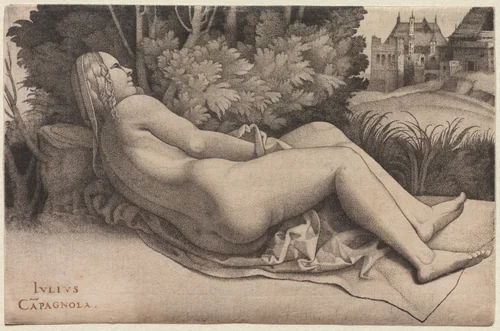
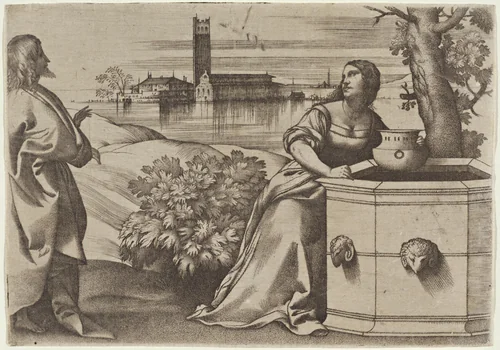
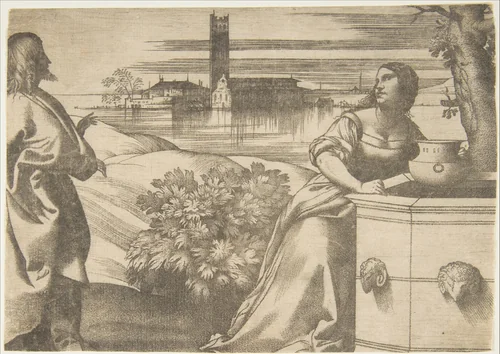
Giulio Campagnola (c. 1482-1507) was one of the most intellectually ambitious printmakers of the early Venetian Renaissance. While his known output comprises fewer than fifteen surviving prints, these rare, museum-quality works established a pivotal link between the emerging stylistic richness of contemporary oil painting and the inherently rigid linearity of engraving. Active for a brief, intense period spanning two decades, Campagnola successfully translated the atmospheric colorito and nascent luminosity pioneered by Giorgione and the young Titian into the reproducible medium, ensuring these groundbreaking artistic sensibilities circulated throughout Europe.
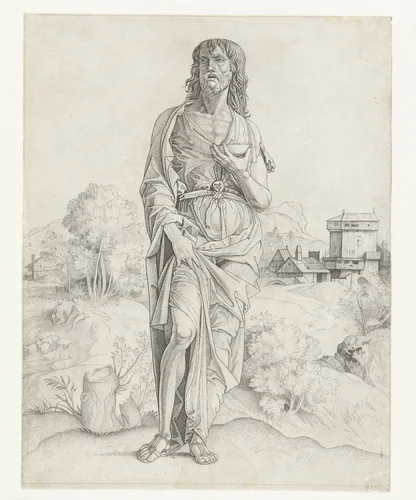
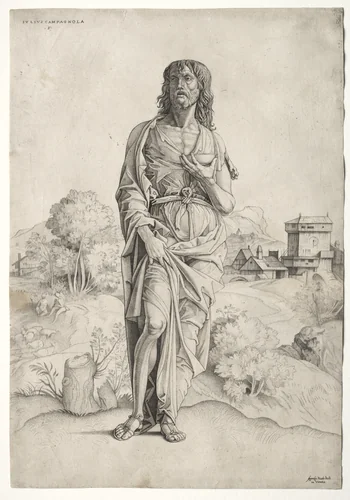
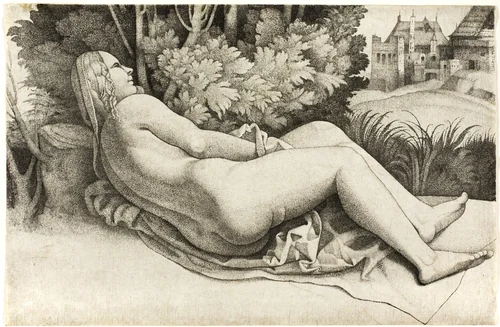
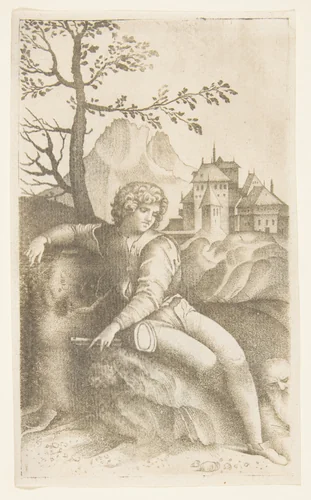
Campagnola’s most profound and lasting contribution was a crucial technical innovation: the invention of the stipple technique. Traditional engraving relied heavily on etched or cut lines for definition and shading. To achieve the smooth, subtle gradations of tone necessary to emulate the seamless transitions found in Venetian painting, Campagnola abandoned continuous crosshatching in favor of meticulously placed multitudes of tiny dots or dashes. This method allowed for an unprecedented sense of sfumato and shadow transition across the copper plate.
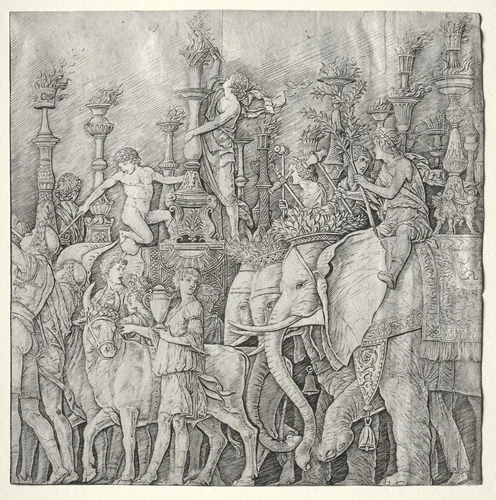
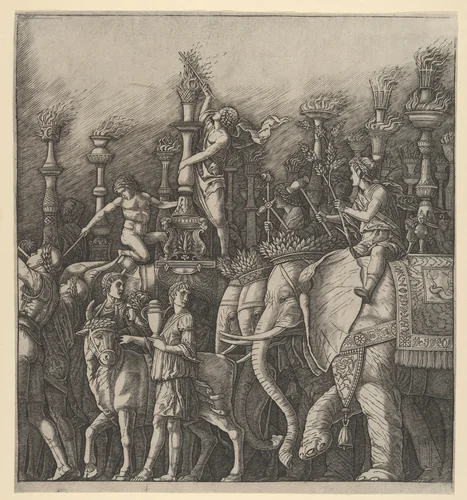
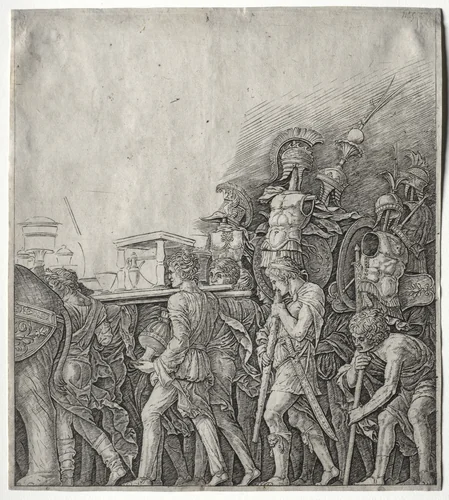
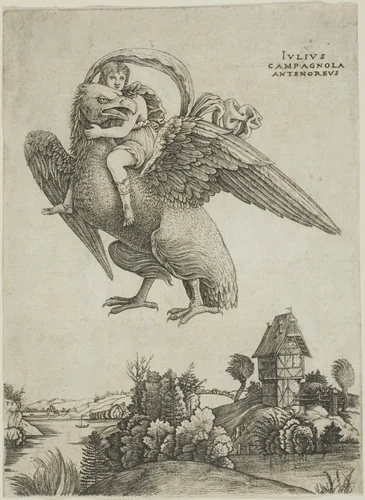
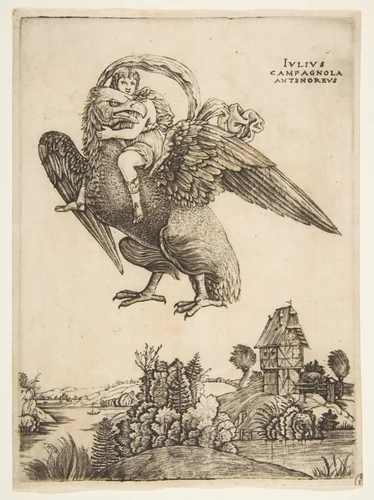
Examining early works such as Ganymede reveals the painstaking discipline involved in building form solely through this intricate punctuation. It is worth noting the sheer physical commitment required; the creation of a single large-scale print, such as a segment of the multi-plate series The Triumphs of Caesar, demanded countless hours of point work, transforming the engraving process into something akin to painting with light. This discovery was far more than an aesthetic flourish; variations on Campagnola’s stipple method became foundational for future printmaking techniques, profoundly influencing the graphic arts well into the 18th century.
Although few Giulio Campagnola paintings are definitively attributed today, his limited graphic output remains highly valued, residing in major institutions, including the National Gallery of Art, the Art Institute of Chicago, and the Cleveland Museum of Art. His direct influence extended through his adopted son, Domenico Campagnola, a prolific artist who carried on his formal techniques. Today, the scarcity of originals is mitigated by the availability of high-quality prints derived from these collections, often accessible as royalty-free downloadable artwork, ensuring that the inventive approach of this crucial figure remains visible and studied within the public domain.
Source: Wikipedia · CC BY-SA 4.0