Giulio Bonasone
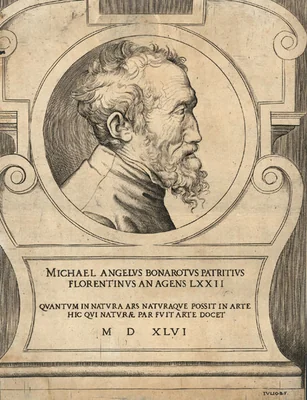
Giulio Bonasone (Bologna, active mid-16th century) holds an important, if secondary, position in the history of Italian Renaissance art. While records indicate he received training in painting, perhaps under Lorenzo Sabbatini, and executed a known canvas, Purgatory, for the church of San Stefano, all his painted works have since been lost to time. Consequently, Bonasone’s substantial reputation rests almost entirely on his prolific output as a printmaker, an arena in which he displayed sophisticated technical command of both etching and engraving.
His training is generally assumed to have taken place within the orbit of Marcantonio Raimondi, the seminal figure in Renaissance engraving whose technical innovations heavily influenced Bonasone’s early career. Bonasone established himself by successfully working across the major artistic hubs of the era, notably Mantua, Rome, and Venice. This geographical mobility allowed him to translate compositions by master painters into widely distributed prints, skillfully meeting the burgeoning market demand for museum-quality visual reproductions.
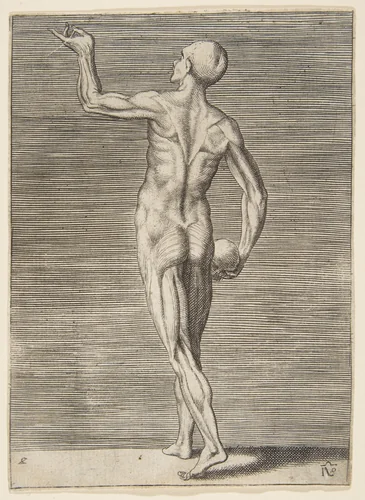
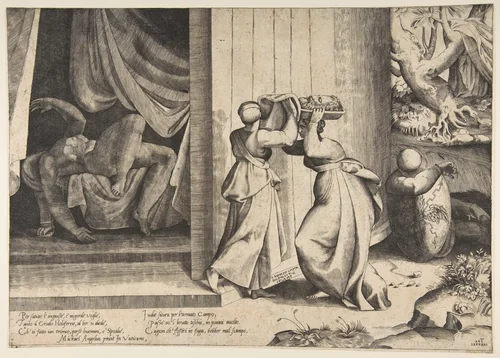
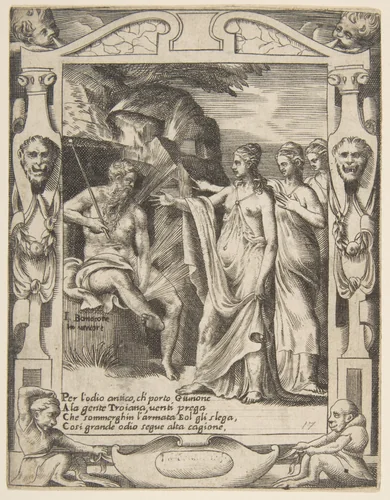
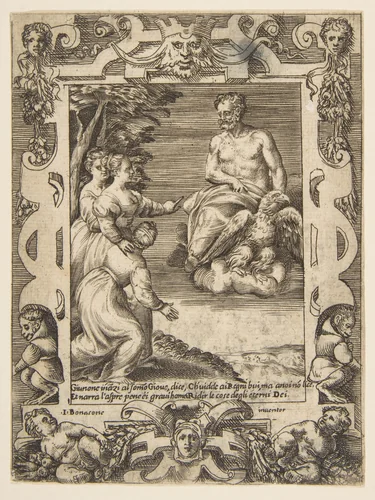
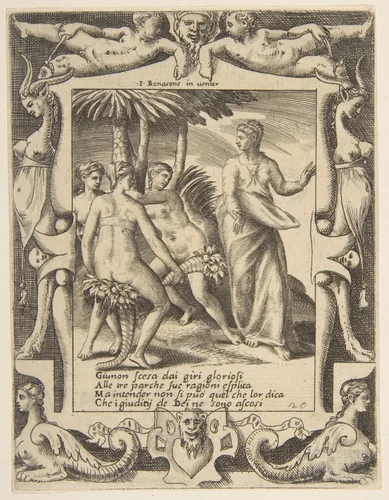
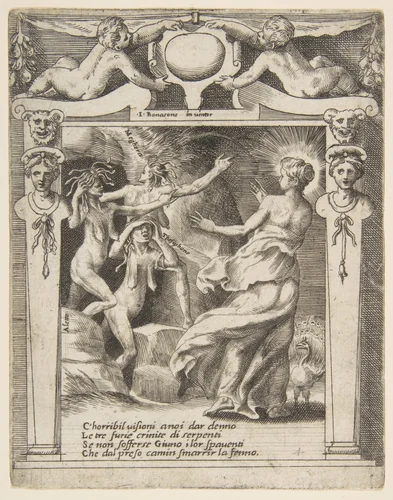
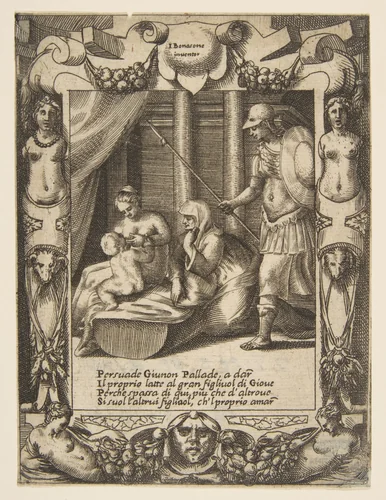
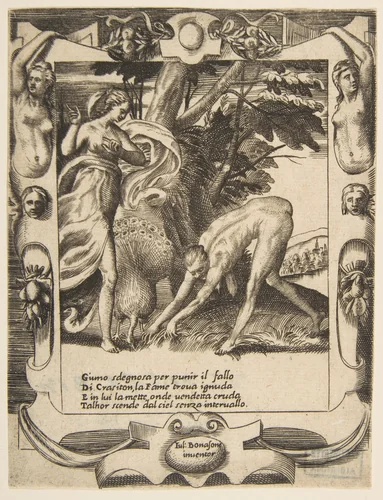
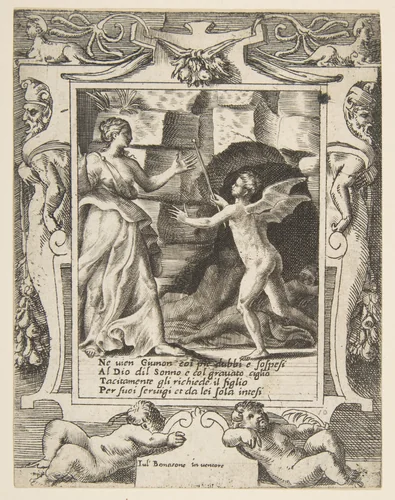
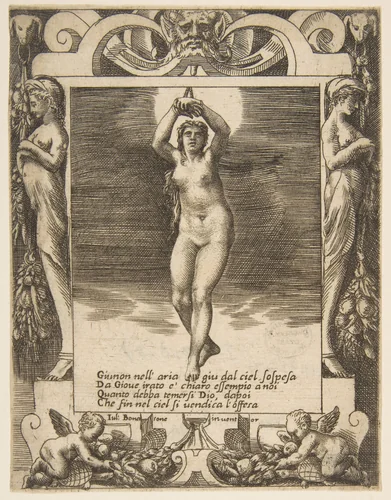
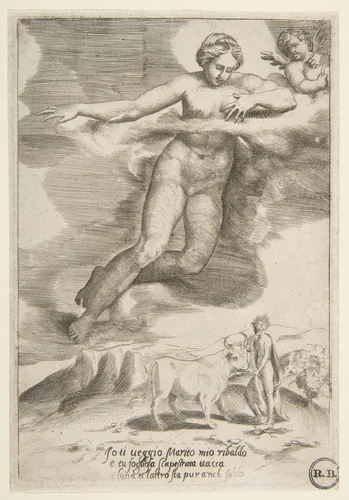
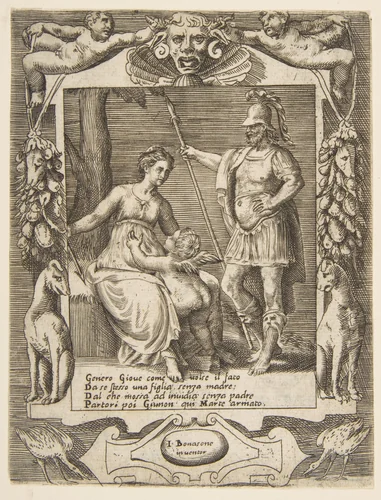
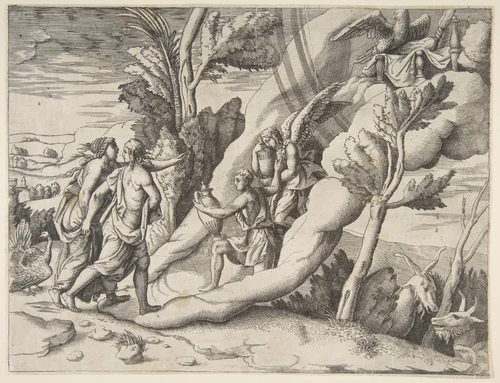
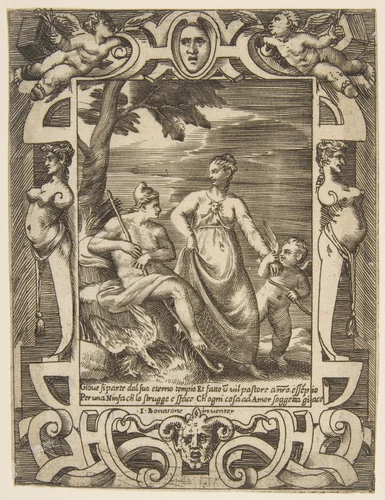
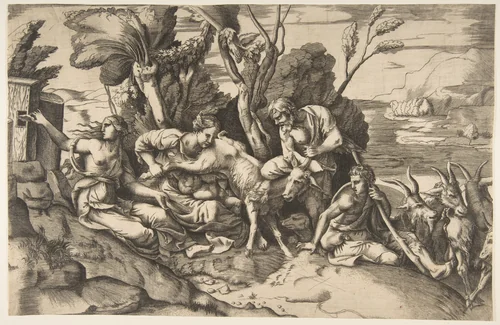
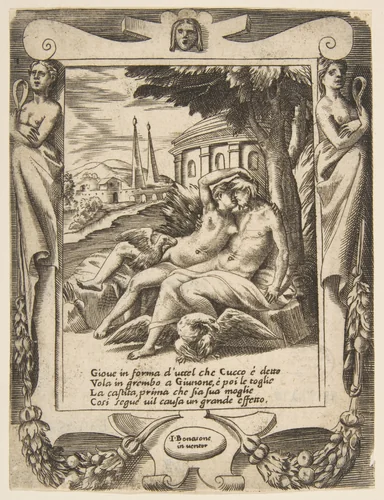
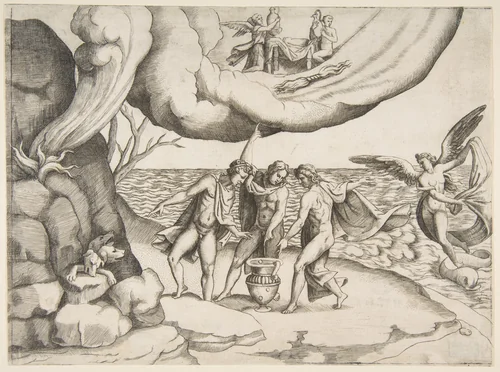
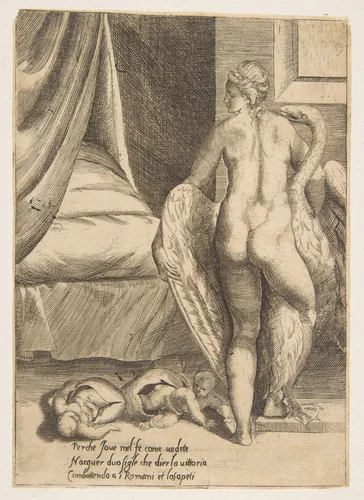
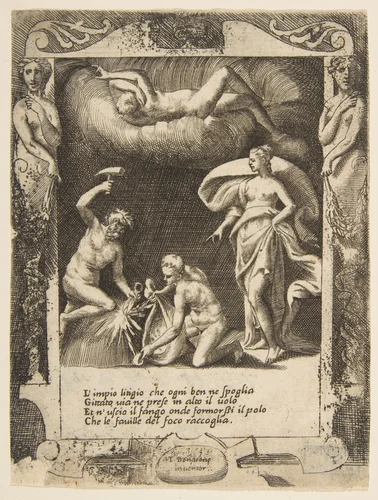
Crucially, Bonasone was not merely a reproductive artist; a significant portion of the Giulio Bonasone prints derives from his own creative designs. The remarkable breadth of his graphic work encompasses mythological and religious narrative, exemplified by dramatic compositions like The Vision of St. Jerome, alongside focused figural studies such as the quiet intensity of Study for Harpocrates (Silentio Deum Cole). His ability to successfully market both reproductive images and original compositions highlights a keen entrepreneurial sense uncommon for a printmaker of the period.
The resulting collection of high-quality prints reveals an artist capable of adopting varied styles, signing his plates under several abbreviations (B., I.B., Julio Bolognese Bonahso). Today, these works are preserved in essential global collections, including the Metropolitan Museum of Art and the Rijksmuseum. Bonasone’s output remains an indispensable resource for scholars studying the dissemination of 16th-century Italian art, with many key works now accessible as downloadable artwork through the public domain.
Source: Wikipedia · CC BY-SA 4.0
![Madonna and Child [Madonna and Child with St. Catherine, St. Joseph and A Bishop] by Giulio Bonasone, print, 1531-1576](https://img.artbee.org/7d1a7eea-9ab5-49b4-a9ec-5c1725afa1a0/small.webp)