Giulio Benso
Giulio Benso (active 1601-1630) was a pivotal Genoese painter whose brief but intense career helped define the transition from High Renaissance refinement to the full-blown Italian Baroque. Active primarily in Genoa, a major center for artistic patronage situated on a crucial maritime route, Benso’s work reflects a sophisticated synthesis of northern Italian dynamism and emerging Roman classicism.
Benso is identified as a direct stylistic inheritor of Luca Cambiasi, the prolific late sixteenth-century artist revered for his sophisticated spatial arrangement and remarkably fluid compositional style. Benso absorbed Cambiasi's dramatic intensity, refining the sometimes angular qualities of Mannerism into something smoother and more kinetic, demonstrating a deep respect for established local masters while signaling an awareness of the theatricality that would soon dominate painting across Italy.
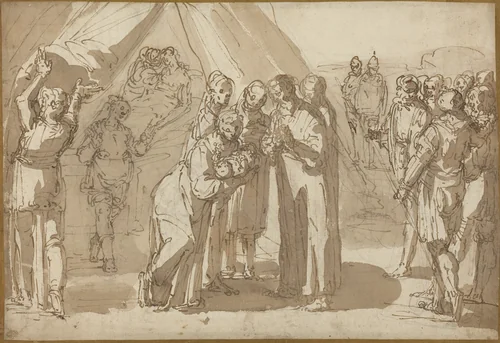
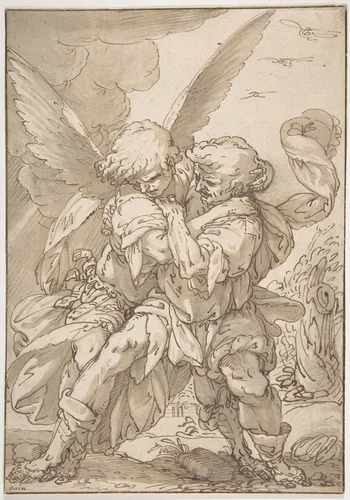
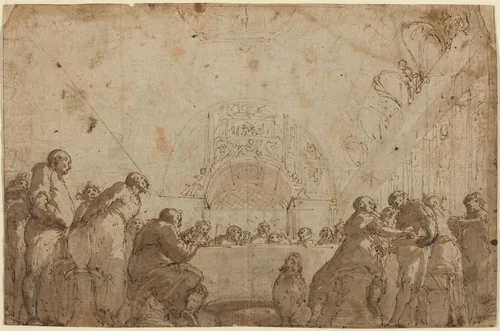
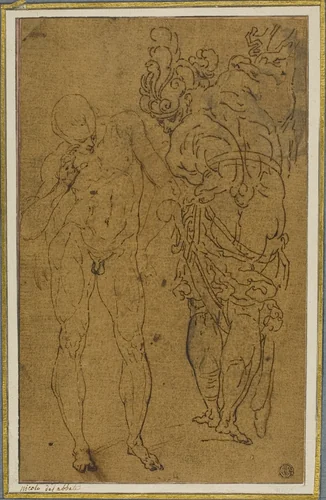
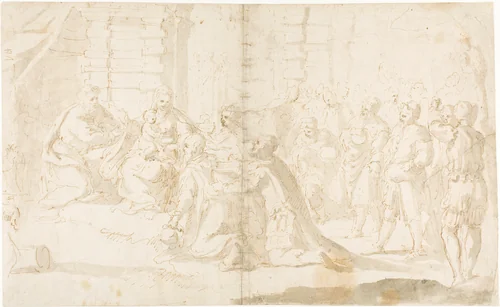
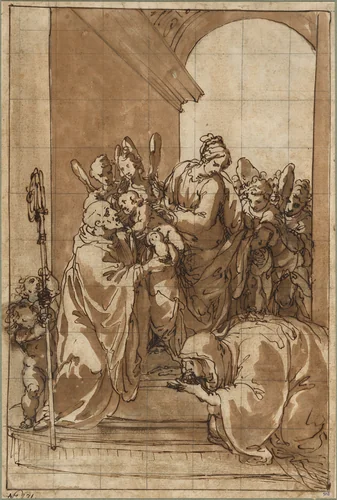
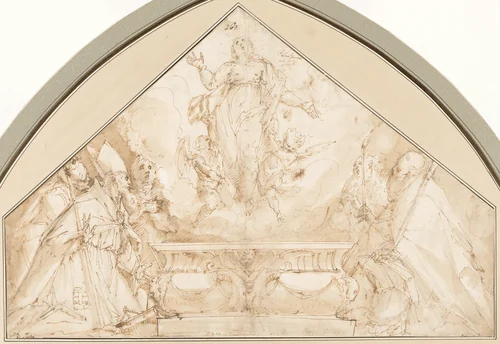
Though few Giulio Benso paintings are definitively recorded today, his technical prowess is clearly visible in the seven known drawings and preparatory studies held in internationally significant North American collections, including the Metropolitan Museum of Art and the National Gallery of Art. These works, which often focus on large-scale religious narratives, confirm his status as an accomplished disegnatore. Works such as the dynamically organized Jacob Wrestling with the Angel and the complex architectural sketch for The Last Supper display a mastery of figure movement and volumetric depth. Further studies, including the specialized focus of Male Nude and Warrior in Armor, showcase the academic rigor of his training, emphasizing anatomical precision and handling of light.
It is perhaps a historical irony that the contemporary reputation of this skilled painter rests predominantly on these highly detailed, working studies rather than on the monumental altarpieces they were intended to precede. These drawings, available today as high-quality prints and downloadable artwork, serve as a vital and intimate link to the technical processes of the Genoese tradition, allowing the modern viewer direct access to the creative genesis of the early Baroque composition.
Source: Wikipedia · CC BY-SA 4.0