Girolamo Rossi
Girolamo Rossi, the Italian engraver active from the mid-seventeenth through the early eighteenth centuries, was a pivotal figure in the documentation and widespread dissemination of European art historical sources. Operating primarily out of Italy, Rossi mastered the complex demands of reproductive printmaking, securing his enduring relevance through the fidelity and technical refinement of his output.
While the name Girolamo Rossi was not uncommon in the period, shared notably by a contemporary physician and a composer, it is the engraver, born circa 1682, whose contributions shaped the visual curriculum of the age. His extended active period, which stretches across seven decades, is a subtle indicator of the consistent demand for his work, bridging the later Baroque style with the emerging clarity of Neoclassicism.
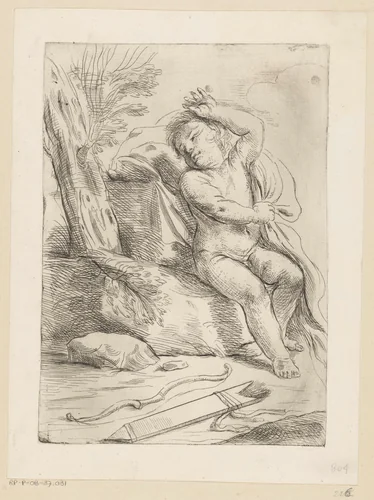
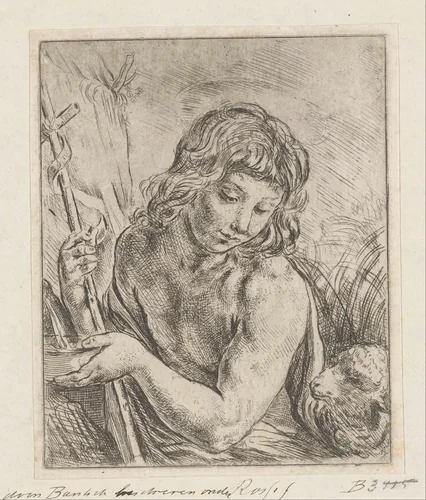
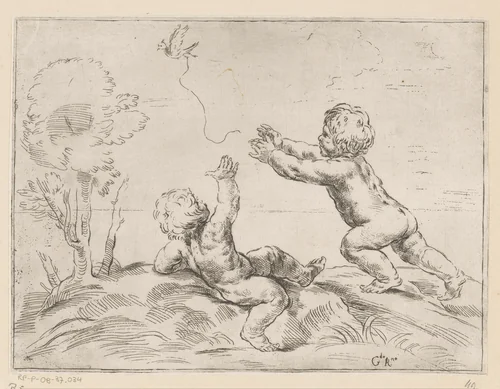
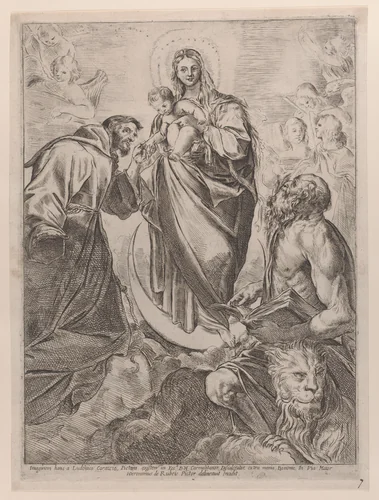
Rossi was equally adept at translating both sacred narrative and antique sculpture into high-quality prints. His devotional works, such as Johannes de Doper (John the Baptist) and the tightly composed The Virgin with Saints Jerome and Francis, were essential to the circulation of Catholic imagery throughout Europe. Simultaneously, he executed evocative standalone subjects like Amor and the charming genre scene Twee kinderen met een vogel spelend (Two children playing with a bird), demonstrating a comprehensive mastery of differing visual registers.
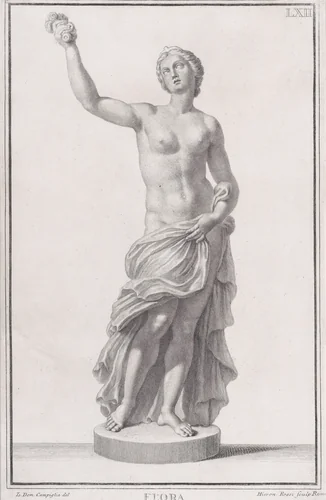
Perhaps his most historically significant work involves his contribution to the comprehensive, multi-volume publishing project Museum Florentinum. Rossi’s rendering of classical subjects, including the definitive Plate LXII (62): Flora, from "Museum Florentinum" (Statuae antiquae dorum et virorum illustrium), helped solidify the visual record of celebrated Florentine antiquities. These detailed engravings granted scholars and students across the continent access to sculptures they might never see in person, fundamentally shaping the developing appreciation for classical form.
Today, the technical integrity of his surviving plates is maintained by leading institutions. Major collections of Girolamo Rossi prints are held by the Rijksmuseum and the Metropolitan Museum of Art. Through their dedication to accessibility, many of these museum-quality reproductions are now placed in the public domain, offering downloadable artwork for researchers and enthusiasts worldwide.
Source: Wikipedia · CC BY-SA 4.0