Girolamo Mocetto
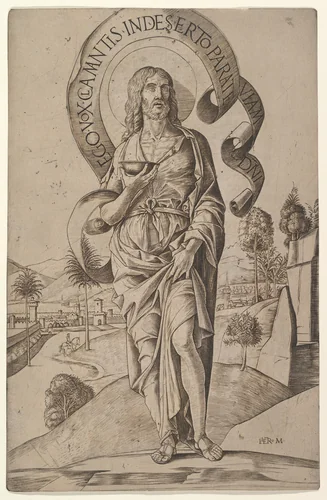
Girolamo Mocetto (circa 1470-1505) was a versatile Italian Renaissance practitioner known across painting, stained glass design, and engraving. While his activity in the latter two fields remains historically significant, it is as a meticulous printmaker that Mocetto secured his lasting reputation. Active primarily at the turn of the sixteenth century, he distinguished himself less through compositional innovation and more through the masterful translation of established artistic visions into the rigorous medium of line engraving.
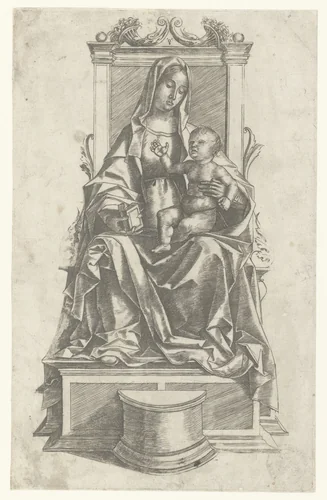
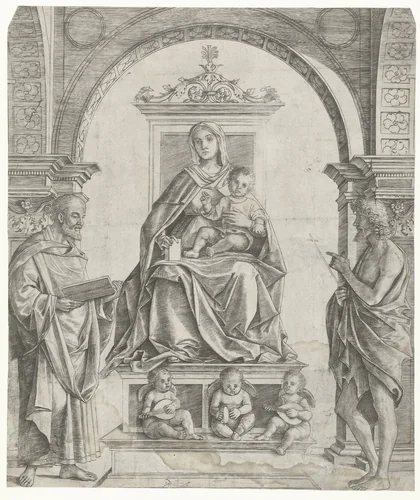
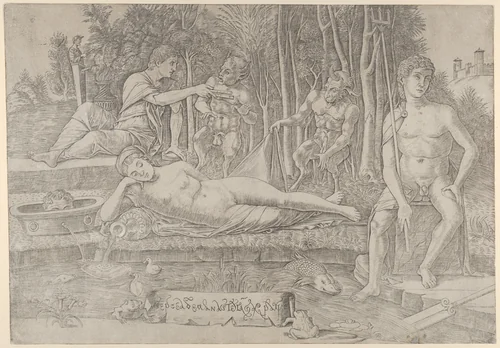
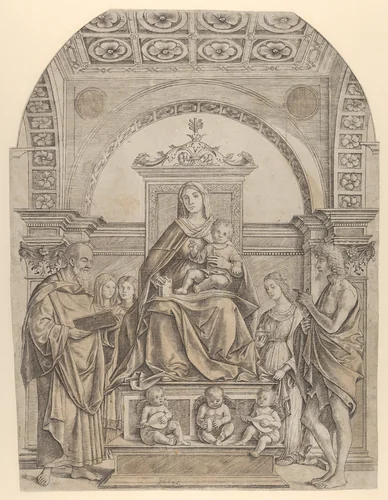
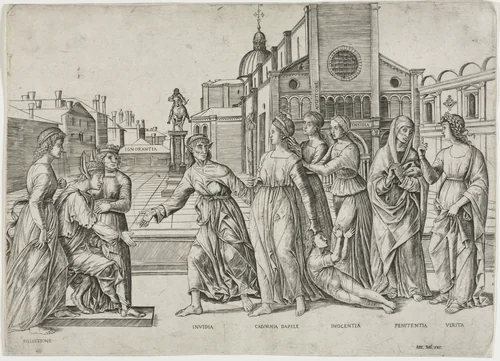
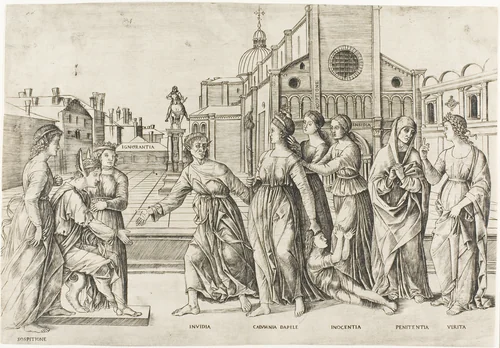
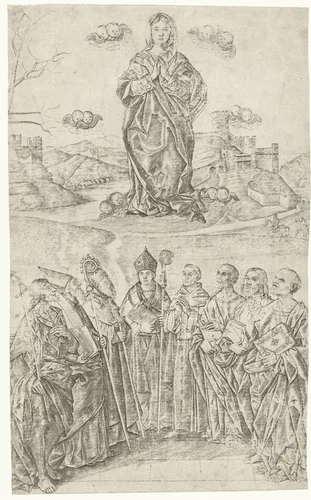
Mocetto’s artistic language was deeply informed by his contemporaries, synthesizing the styles of several major figures active in Northern Italy. He absorbed lessons from Domenico Morone, Giovanni Bellini, Bartolomeo Montagna, and Cima da Conegliano. Crucially, his printmaking technique owes an undeniable debt to Andrea Mantegna, whose severe draftsmanship and sculptural approach to form define Mocetto’s most successful plates. His strength lay precisely in utilizing these influences to reproduce complex narrative compositions, such as the ambitious Maria met kind zittend op een troon tussen Petrus en Johannes de Doper met musicerende engelen en drie vrouwelijke heiligen op de achtergrond or mythological interpretations like The metamorphosis of Amymone. It is perhaps slightly unusual that Mocetto’s most celebrated works, his prints, were often interpretations of others' designs, an observation underscoring the vital role the reproductive engraver played in the widespread dissemination of high Renaissance imagery.
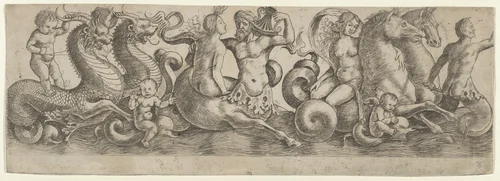
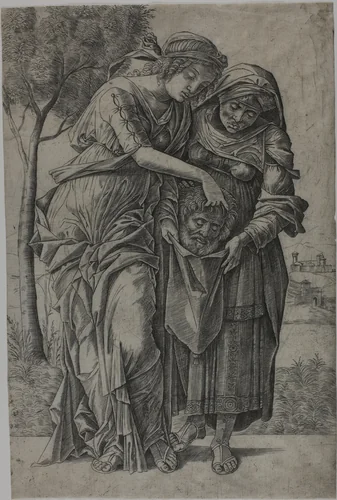
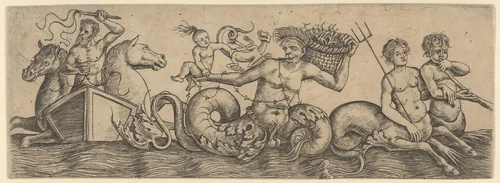
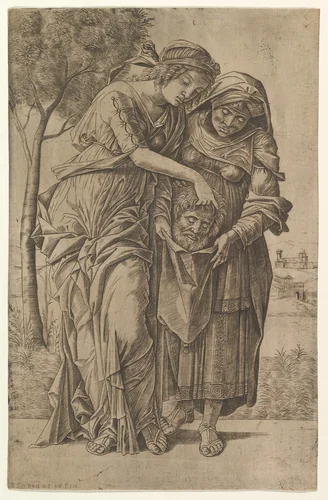
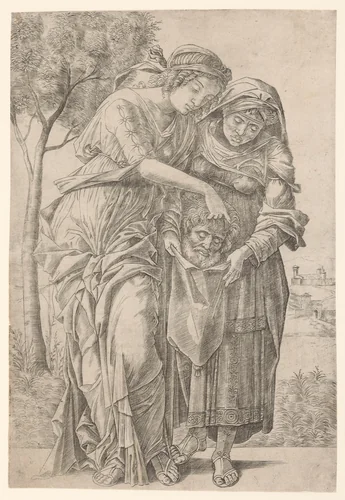
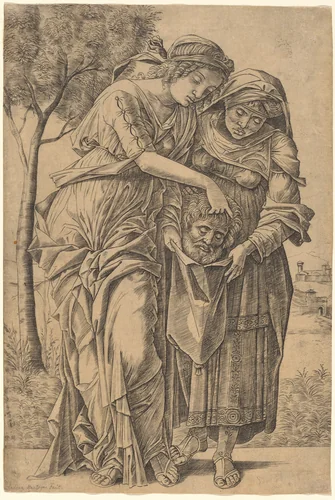
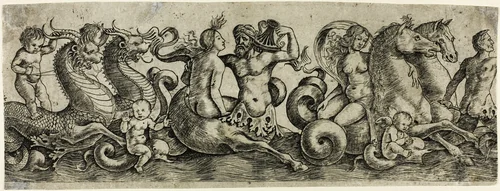
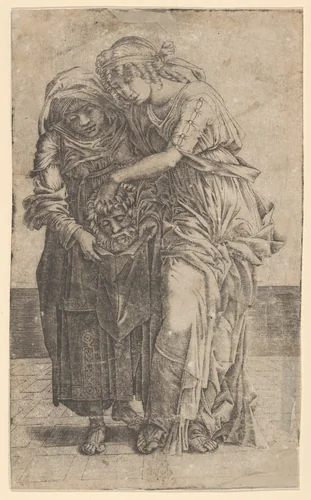
Though the number of surviving Girolamo Mocetto prints is limited, approximately fifteen known plates demonstrate his meticulous technique, spanning religious subjects like Judith with the Head of Holofernes and decorative elements, including the detailed Frieze with Tritons and Nymphs. Today, original impressions are housed in major institutions globally, including the National Gallery of Art, the Art Institute of Chicago, and the Cleveland Museum of Art, securing their status as museum-quality artifacts. Many significant examples of these Girolamo Mocetto prints are now considered public domain, allowing institutions and enthusiasts to access and distribute high-quality prints and other downloadable artwork. This accessibility ensures that the precise, highly-detailed work of the Renaissance engraver continues to be studied and appreciated long after his period of activity.
Source: Wikipedia · CC BY-SA 4.0