Girolamo Genga
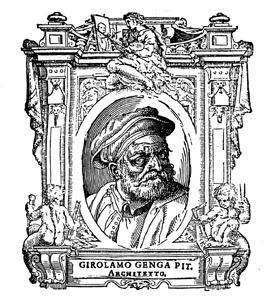
Girolamo Genga (c. 1476-1580) was a pivotal Italian master whose remarkably long career spanned the transition from the late Renaissance to the complex, sophisticated visual language of Mannerism. Distinguished as both a highly skilled painter and a functional architect, Genga worked primarily across the Papal States, defining his style through meticulous preparatory studies that reveal a deeply classical, yet inventive, approach to design.
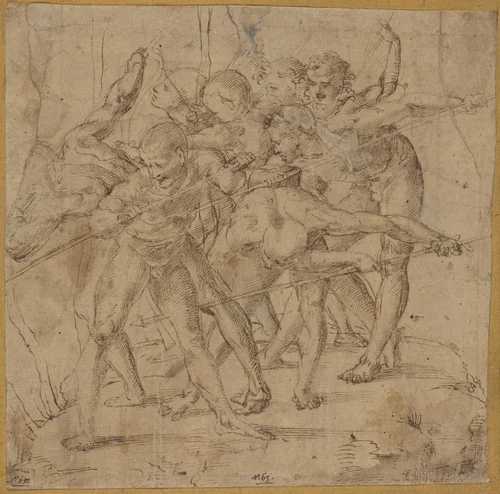
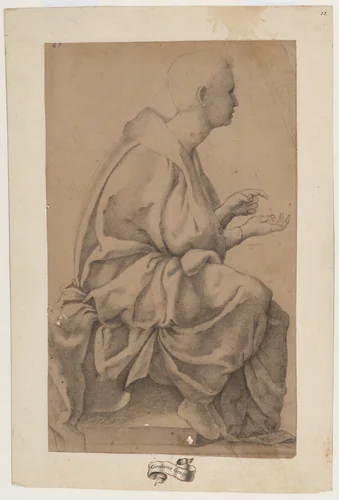
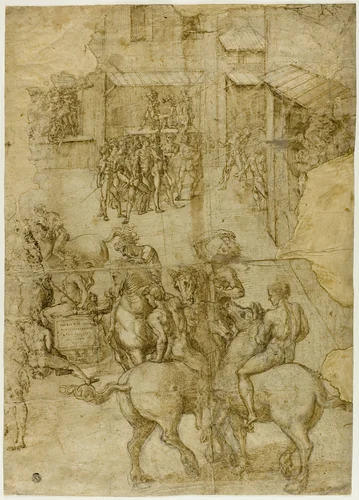
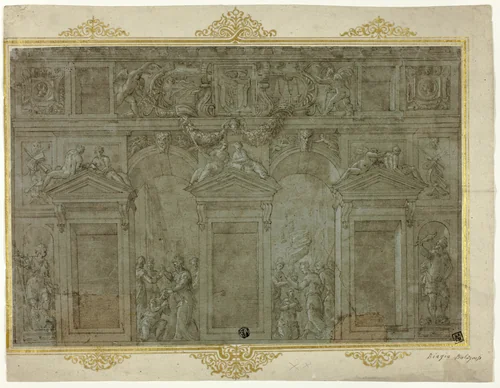
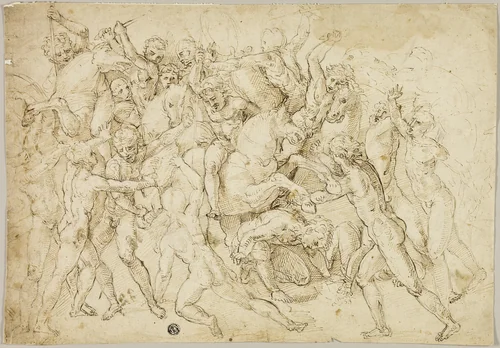
His surviving corpus, represented strongly by his drawings held in prestigious institutions like the Art Institute of Chicago and the National Gallery of Art, underscores an encyclopedic range of interests. Genga moved effortlessly between grand figure compositions, such as the powerful Battle Scene, and detailed anatomical investigations, evident on the verso of his Mythological Pageant. These studies illustrate the rigorous foundation required of the 16th-century Italian artist, demanding mastery of the human form alongside narrative composition.
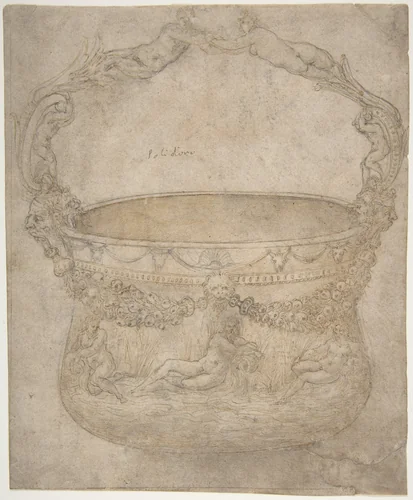
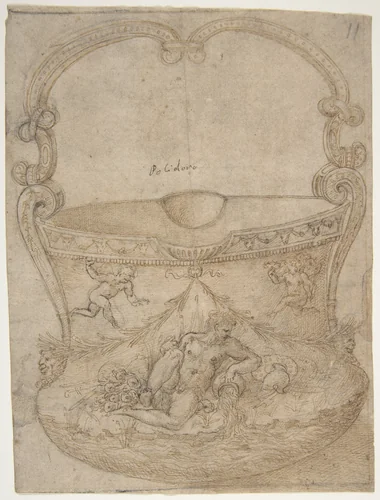
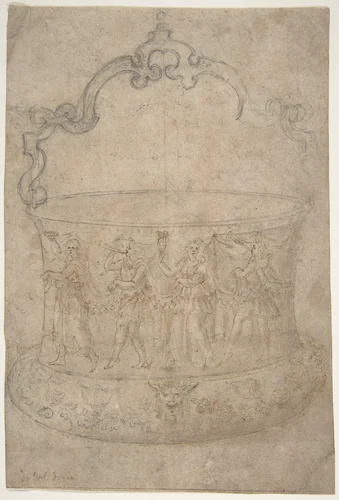
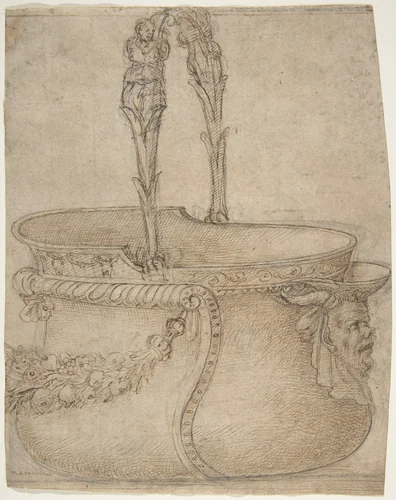
Perhaps Genga’s most unique contribution to the documentation of the period lies in his exceptional facility for the decorative arts. His architectural training informs works like the series of designs for elaborate silver or bronze vessels. Pieces such as the Design for a Bucket-Like Vessel with a Handle of Interlaced Figures, a piece currently held in the Metropolitan Museum of Art, are not mere ornamentation. They are fully realized, three-dimensional concepts integrating classical motifs-bucrania, garlands, and personifications of river gods-into functional objects. This combination of structural logic and ornate fantasy places Genga among the period’s most inventive designers.
Today, the longevity of Genga's influence is evidenced by the scope of collections holding his work. The detail and clarity of his preparatory studies ensure they remain significant resources for understanding sixteenth-century design, offering highly refined visual material. Fortunately, many of these delicate, museum-quality sketches are available as royalty-free images, allowing contemporary students and admirers to access high-quality prints that preserve his masterful technical precision.
Source: Wikipedia · CC BY-SA 4.0