Girard Audran
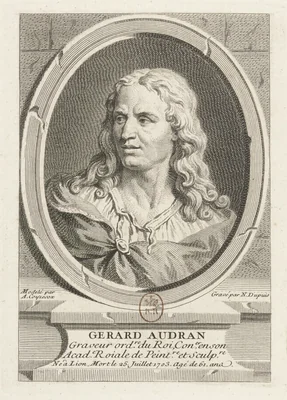
Girard Audran (Gérard Audran), active during the latter half of the seventeenth century, was an important French engraver and a key member of the renowned Audran artistic dynasty. As the third son of Claude Audran, he continued a legacy of highly skilled printmaking that defined much of the visual culture of the Grand Siècle, contributing significantly to the dissemination of academic and classical compositions across Europe.
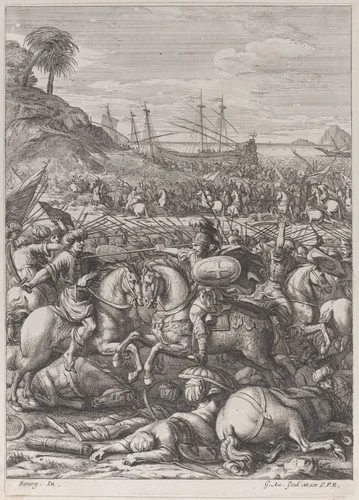
His professional period, roughly spanning 1672 to 1683, yielded a focused body of work demonstrating the technical precision characteristic of the French academic style endorsed by the royal academies. His surviving corpus, represented in major institutions like the Metropolitan Museum of Art, is divided between monumental historical and allegorical subjects, and significant official portraiture. Notable examples include the heroic historical scene The Battle of Antioch and the solemn official likeness Portrait of Pierre Séguier. Audran’s technical mastery in copperplate etching and engraving allowed him to translate the scale and texture of oil paintings into intricate black-and-white visual records.
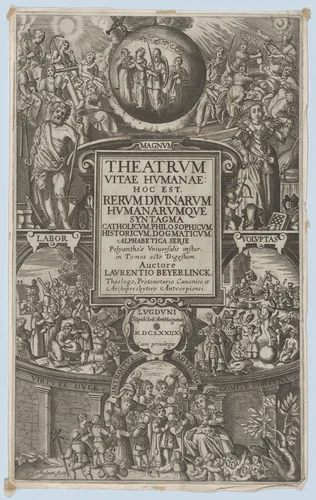
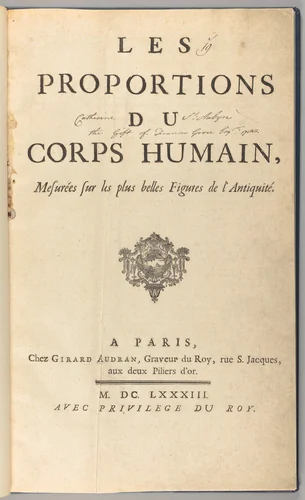
Audran’s contributions extended beyond the replication of large-scale works. His printmaking reveals a deep engagement with the theoretical underpinnings of Renaissance and classical aesthetics, evidenced most clearly by his involvement in publishing instructional or scholarly texts. This is exemplified by Les proportions du corps humain, mesurées sur les plus belles figures de l'antiquité (The proportions of the human body, measured upon the most beautiful figures of antiquity). This detailed study of human form, along with his complex Frontispiece for 'Theatrum Vitae Humanae', underscores his crucial role in systematizing and distributing theoretical artistic knowledge to artists and collectors alike. It is perhaps a telling sign of the era that while his elder relatives focused on grand commissions, Girard secured his enduring legacy by diligently defining the ideal human form, measuring antiquity one perfect curve at a time.
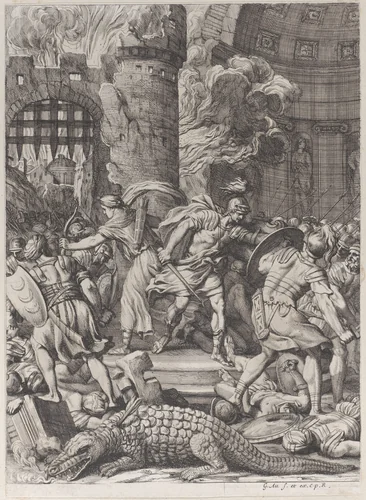
The enduring detail and consistency found in the work of Girard Audran underscore his importance within the highly competitive French workshop tradition. Today, the quality of his draftsmanship ensures that his prints, accessible as high-quality prints in many international collections, retain their museum-quality integrity. The academic rigor applied to works like The Taking of Alexandria makes his output valuable to scholars studying late seventeenth-century French visual documentation, with many of his plates now available as downloadable artwork for public study.
Source: Wikipedia · CC BY-SA 4.0