Giovanni Pietro Possenti
Giovanni Pietro Possenti (1618-1659) was a specialist practitioner of the Italian Baroque, whose brief but focused career placed him firmly within the mid-seventeenth-century tradition of pittura di battaglie, or battle painting. Possenti distinguished himself by focusing on the active depiction of military engagement, a specialized genre that demanded technical expertise in complex figure grouping and dramatic composition. His training was steeped in this tradition, having been tutored by his father, Benedetto Possenti, who was similarly recognized for his canvases depicting clashes of arms. This generational lineage established Giovanni Pietro as a leading, if short-lived, master of the action scene.
While his fame rests primarily on these dynamic scenes of conflict, Possenti maintained a parallel career addressing the demands of devotional art. This duality allowed him to balance the secular market for genre painting with the spiritual requirement of public religious commissions. He provided altarpieces for significant ecclesiastical centers across northern Italy, securing commissions for churches in Bologna, Milan, and Padua, including the church of San Lorenzo. It is a subtle but interesting observation that an artist capable of rendering the brutal chaos of the battlefield could pivot so effectively to the stillness and piety required of the altar.
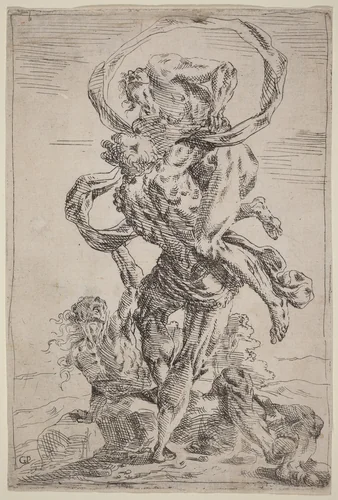
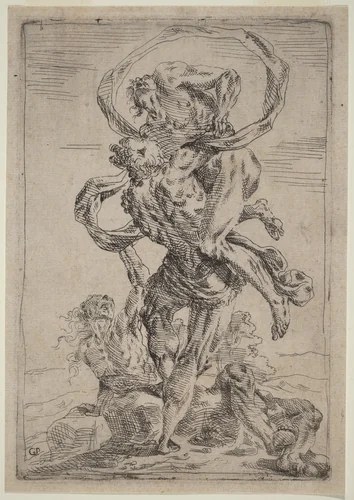
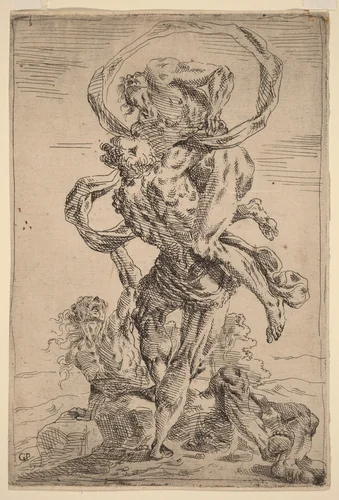
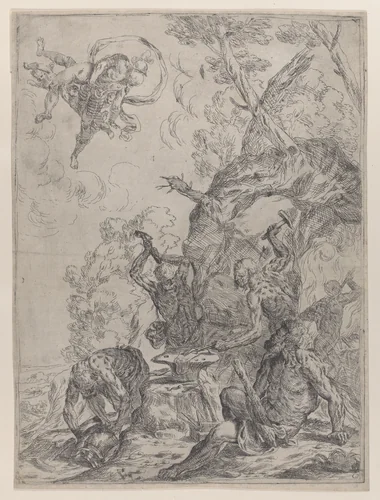
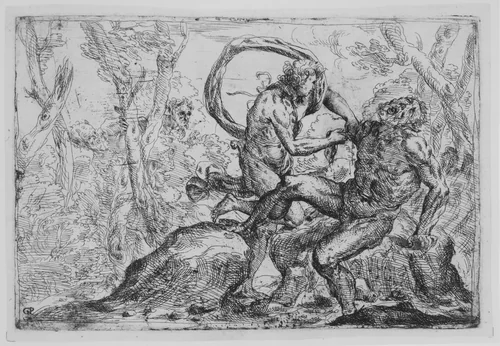
Possenti's technical command extended beyond oil painting, with his graphic output ensuring a prominent place in major institutional collections today, including the Metropolitan Museum of Art and the National Gallery of Art. His prints, such as the mythological wrestling scene Hercules and Antaeus and the intricate, allegorical The forge of Vulcan with smiths striking an anvil with hammers, while Mars and Venus embrace in the heavens above, confirm his skill in creating narrative complexity. These detailed compositions remain essential historical documents for the study of the Italian Baroque printmaking industry. Possenti’s work, preserved in these renowned collections, is often utilized for academic study, with numerous high-quality prints making his compositions widely accessible, cementing the legacy of Giovanni Pietro Possenti prints centuries after their creation.
Source: Wikipedia · CC BY-SA 4.0