Giovanni Guerra
Giovanni Guerra (1544-1618) was an Italian draughtsman and painter whose long career was centered in Rome, making him a critical, if often overlooked, figure in the transition between the strictures of Mannerism and the rise of Baroque design. Hailing from Modena, Guerra is believed to have established himself in the Eternal City as early as 1562, operating within the intense and competitive artistic atmosphere that dominated the latter half of the Cinquecento.
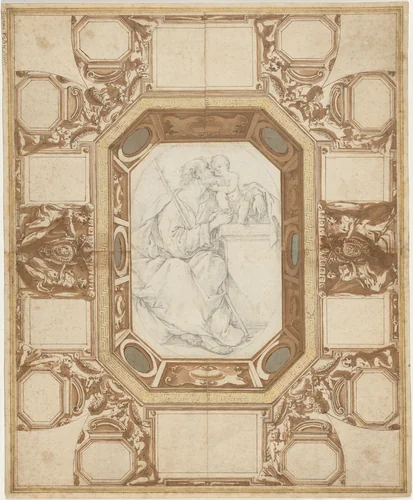
His formal documentation begins around 1583, notably through a commission to fresco allegorical friezes in the Palazzetto Cenci. This project, though modest in scope and for a patron who was not among the city's highest elite, confirmed his capacity for large-scale narrative execution and architectural integration. While surviving Giovanni Guerra paintings exist, his enduring significance rests firmly in his prolific output of preparatory drawings and designs.
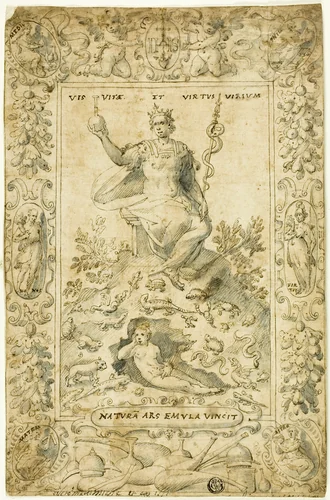
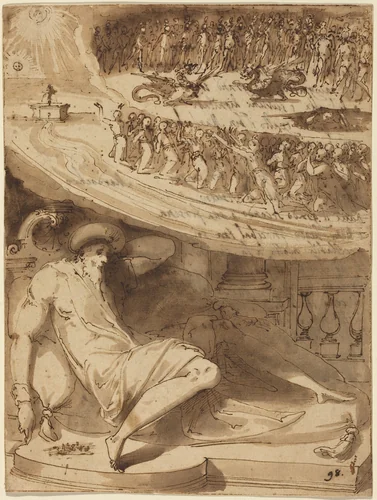
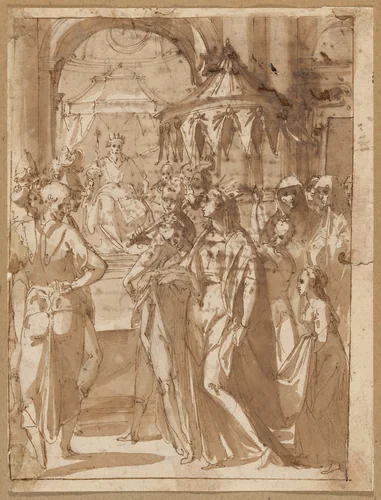
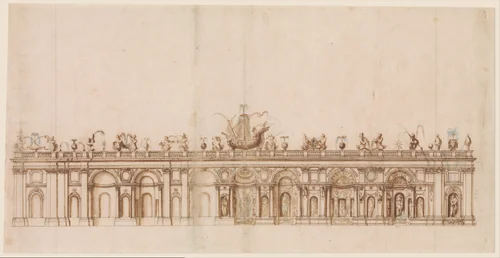
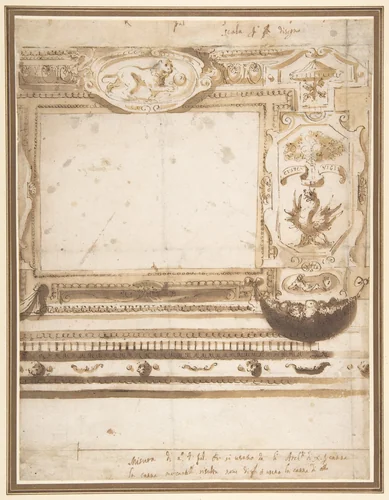
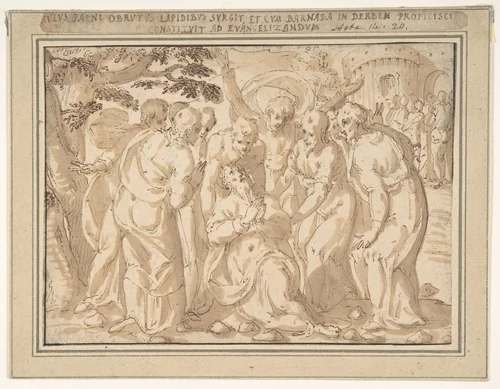
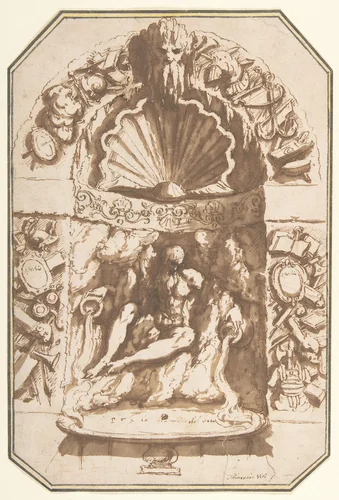
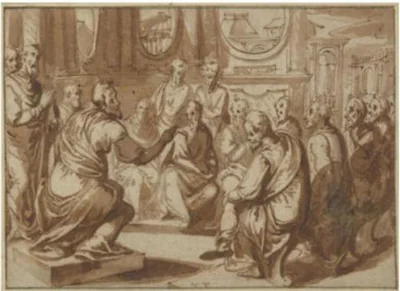
Guerra was less a revolutionary than a highly efficient artistic resource for the city, translating complex intellectual and theological concepts into visual narratives suitable for reproduction. Works such as Design for Emblematic Frontispiece: "Natura Ars Emula Vincit" demonstrate his sophisticated command of allegory, tailored for the booming print market. He specialized in elaborately detailed scenes, often drawn from classical history or the Old Testament, which required clear emotional and dramatic structure, as seen in the compositions The Dream of Mordecai and Esther before Ahasuerus.
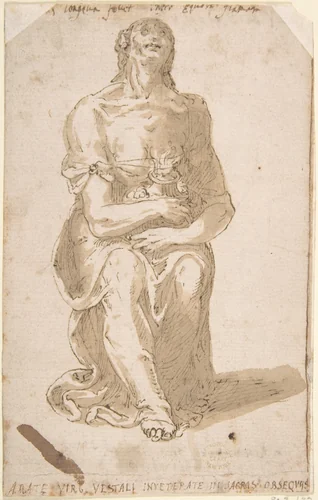
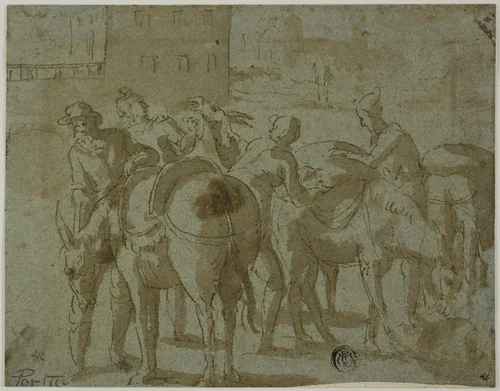
His confidence in rendering both historical costume and everyday observation is also apparent in figural studies like Vestal Virgin and the more immediate genre scene, Muleteers and Mules. Guerra’s sheer industriousness helped shape the visual language of the late Roman court. Today, the high quality of these drawings ensures their status as museum-quality objects, with examples held in major international collections including the National Gallery of Art, the Metropolitan Museum of Art, and the Art Institute of Chicago. Fortunately for researchers, many of these highly detailed studies are available in the public domain, allowing access to Giovanni Guerra prints that continue to inform our understanding of late Mannerist practice.
Source: Wikipedia · CC BY-SA 4.0