Giovanni Girolamo Frezza
Giovanni Girolamo Frezza (1659-1730) holds an important if understated position among the generation of Italian engravers who anchored the reproductive print tradition in early eighteenth-century Rome. Born in Canemorto (Orvinio), near Tivoli, he later centered his professional life and final years in the artistic metropolis of the Papal States. His training, crucial to his meticulous output, was conducted under Arnold van Westerhout, an established Flemish printmaker working locally. This tutelage instilled in Frezza the precise, often painstaking technical skills required for producing complex copperplate engravings that could accurately replicate the nuances of original painted compositions.
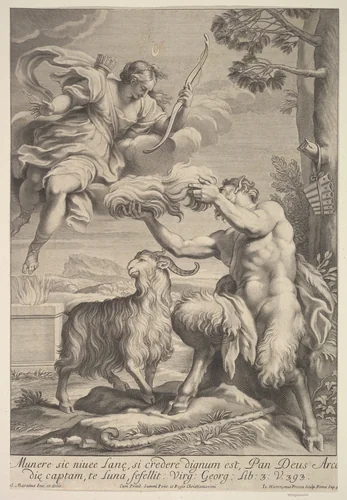
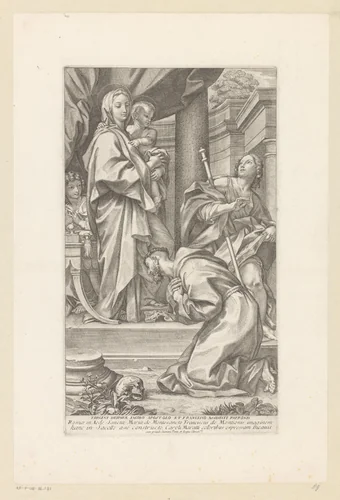
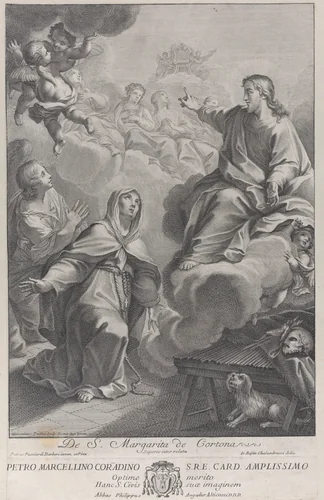
Frezza specialized almost exclusively in the medium of engraving, translating both classical and contemporary compositions into widely distributed sheets. His portfolio, documented across major international collections, including the Metropolitan Museum of Art and the Rijksmuseum, demonstrates a consistent focus on both mythological drama, such as the compelling rendering Pan foiled by Diana, and profound religious subjects like Saint Margarita of Cortona, kneeling before Christ, after Pietro Andrea Pucciardi Barberi. These works were instrumental in disseminating the visual language of the Roman Baroque masters across Europe.
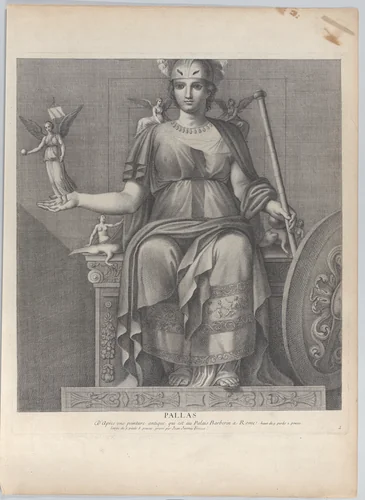
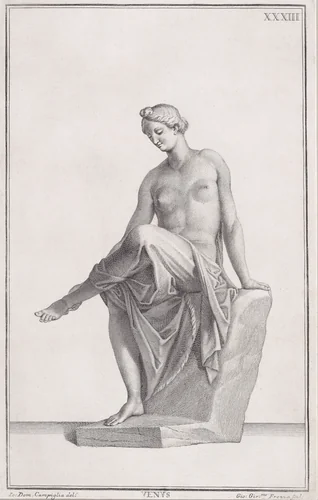
His prints served as vital reference documents for artists and patrons alike, a testament to the crucial role engravers played in the absence of mass photography. This practice of translating paintings for the graphic arts market was fundamental, allowing compositions like the figure study Pallas to circulate far beyond the location of the original canvas. Unlike the highly individualized production of autonomous prints, Frezza’s professional life underscores the essential, cooperative nature of the early modern art market: he was a skilled translator whose dedication popularized the visions of others.
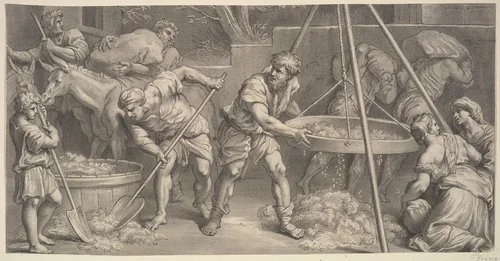
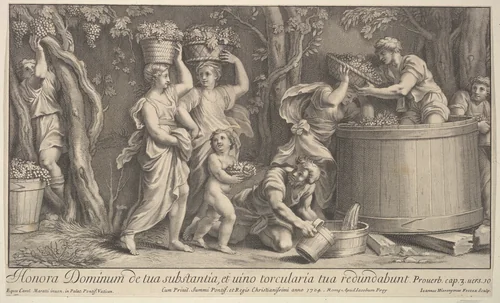
It is perhaps telling, however, that among his more dramatic religious and classical works, he also committed to copper the simple, domestic realism of the genre scene Men with seive, a quiet observation amidst the dramatic mythological subjects he frequently encountered. Given the durability and widespread circulation achieved by copperplate methods, many of his compositions, including detailed devotional works like De heilige Franciscus en Jakobus de Meerdere voor Maria met het Christuskind, are preserved today as museum-quality records of his era. These Giovanni Girolamo Frezza prints are increasingly accessible, often residing in the public domain and available as high-quality prints for scholars worldwide.
Source: Wikipedia · CC BY-SA 4.0