Giovanni Francesco Venturini
Giovanni Francesco Venturini (1650–1710) was a highly skilled Italian printmaker whose career spanned the vital middle years of the Roman Baroque, roughly 1645 to 1691. Although often overshadowed by the major painting and sculpting figures of the period, Venturini played an essential role as a visual chronicler, preserving both contemporary architectural innovations and the rapidly decaying masterpieces of the Renaissance.
Venturini’s technical expertise ensured that his meticulously detailed engravings achieved a certain museum-quality standard, providing invaluable documentation for scholars today. His output served two primary functions: the reproduction of lost or ephemeral art and the careful illustration of current Roman building projects and garden design.
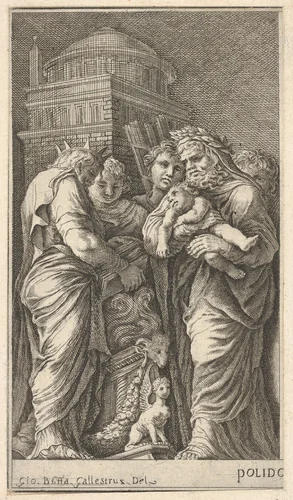
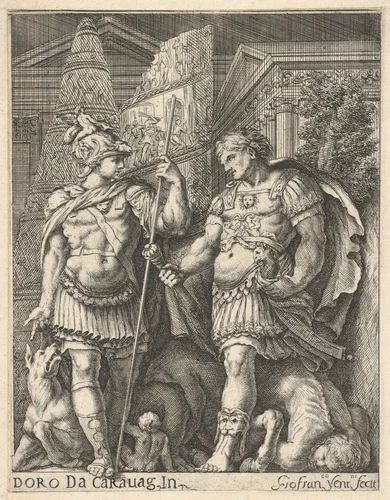
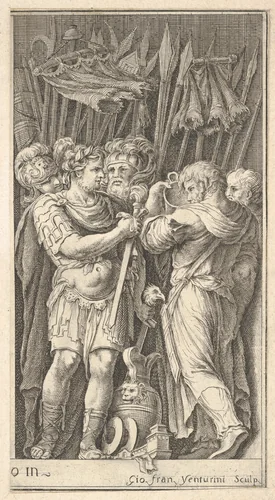
Among his most celebrated works are his engravings after the lost frescoes executed by Polidoro da Caravaggio on the façade of the Milesi Palace in Via della Maschera d’Oro. Prints such as Soldiers, one shown frontally and holding a sword and A Sacrifice capture the dramatic, frieze-like compositions of Polidoro's chiaroscuro style. Because these original exterior decorations were inherently vulnerable to the elements and have since vanished, Venturini’s reproductions are often the only reliable visual record available, confirming his significance not merely as a reproductive artist, but as an essential figure in the history of art preservation.
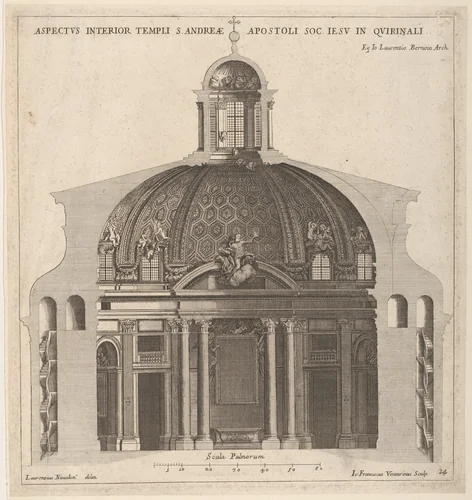
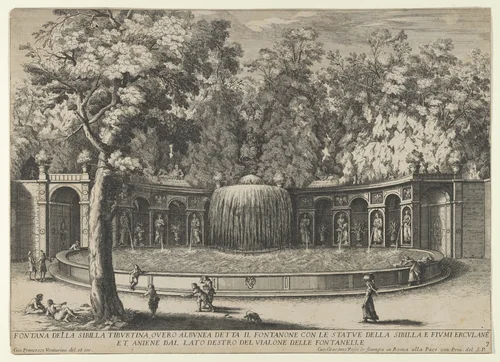
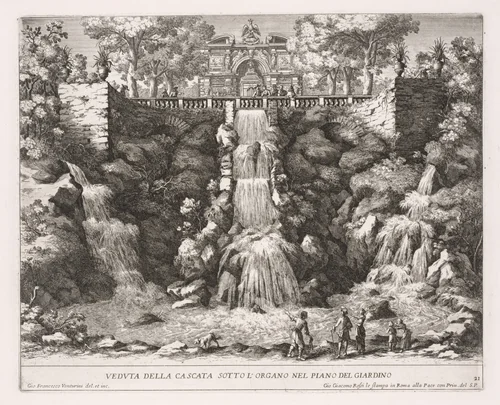
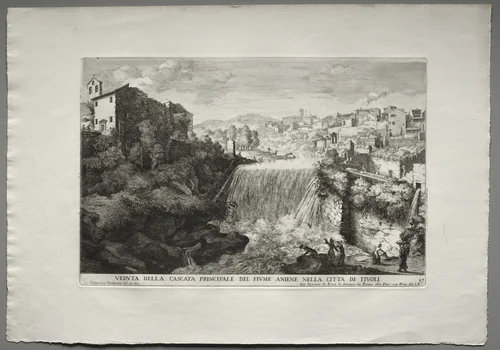
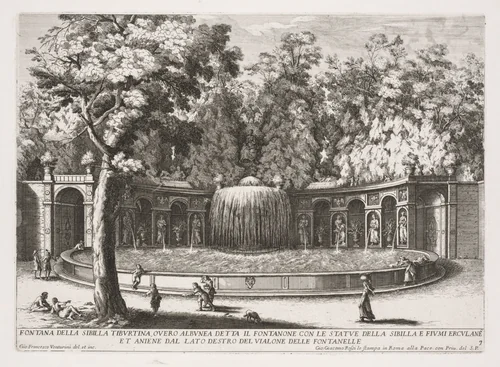
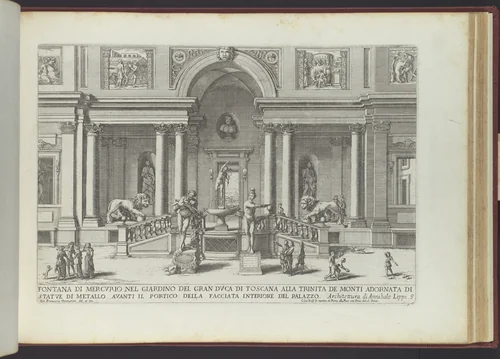
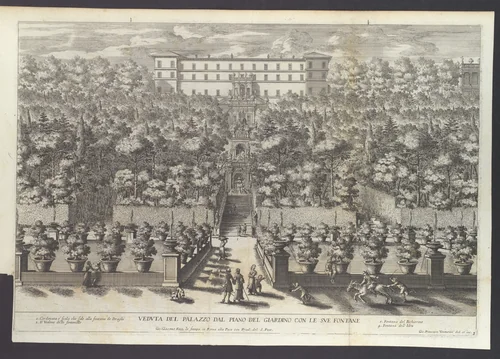
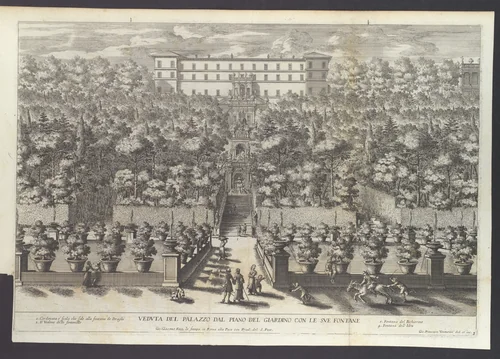
Equally compelling are Venturini’s architectural renderings. His depiction of the Cross-section of the church of Sant’Andrea al Quirinale, for instance, provides a clear, technical understanding of Gian Lorenzo Bernini's masterful design, detailing the lantern, cupola, and altar with precision. His work also captured the era’s fascination with engineered beauty, notably in the volume Le fontane del Giardino Estense in Tivoli ("The fountains of the Este garden in Tivoli"). Here, Venturini elevated the illustration of hydraulics, turning the complicated cascade systems of the Villa d’Este into elegant visual documentation. (It required a steady hand to render water in such volume without succumbing to the temptation of mere flourish.)
Venturini’s extensive output of high-quality prints, which circulated widely throughout the 17th century, ensured his influence extended far beyond Rome. Today, many of these plates have entered the public domain, making his distinctive contribution to Baroque engraving readily accessible through institutional holdings such as the Metropolitan Museum of Art and the Cleveland Museum of Art.
Source: Wikipedia · CC BY-SA 4.0