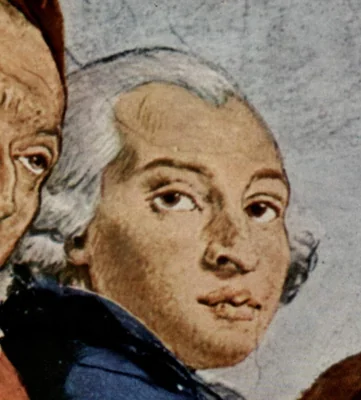
Giovanni Domenico Tiepolo
Giovanni Domenico Tiepolo was a central figure in the transition of Venetian art during the eighteenth century. Although often overshadowed by the monumental fame of his father, Giovanni Battista Tiepolo, Giandomenico established a significant independent career as both a painter and, perhaps more enduringly, as a master printmaker in etching.
Born into the preeminent artistic dynasty of late Baroque Venice, Giandomenico received rigorous training directly from his father, often acting as his chief assistant on major fresco cycles in Italy and abroad, including key commissions in Würzburg and Madrid. His elder brother, Lorenzo Baldissera Tiepolo, also contributed to the family’s influential workshop. While his early work reflected his father’s soaring, dramatic style, the younger Tiepolo developed a unique artistic voice that prioritized narrative clarity, often focusing on genre scenes and a more intimate, psychological perspective.
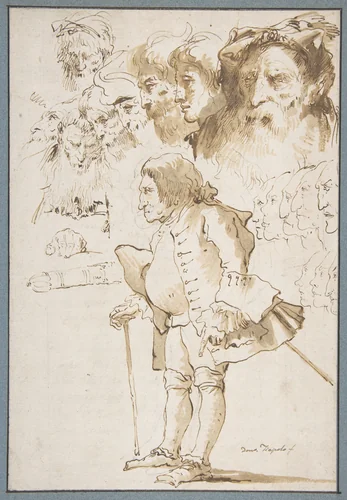
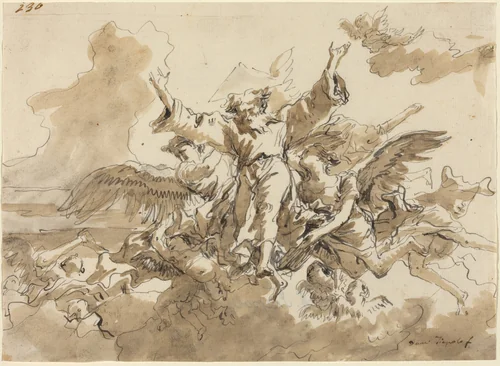
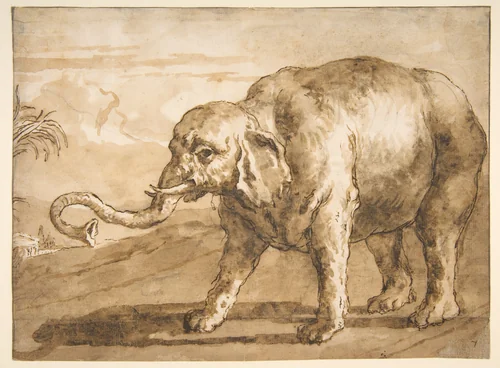
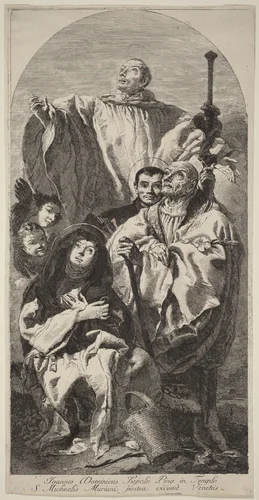
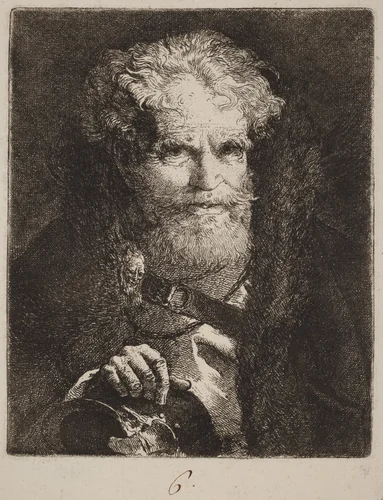
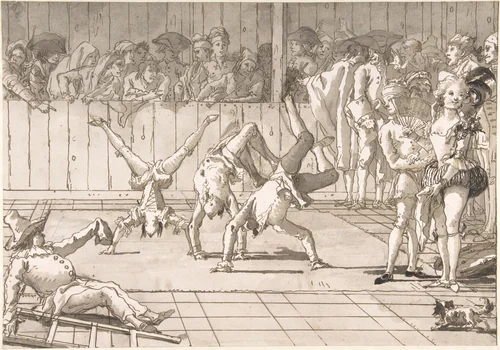
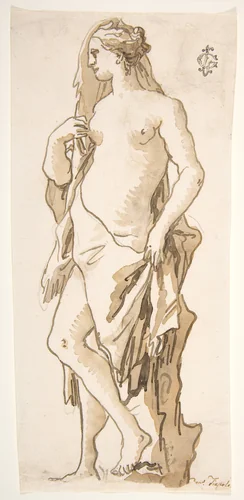
Giandomenico’s true innovations emerged most clearly in his extensive series of etchings and preparatory drawings. He deftly moved away from grand mythological spectacle toward the observed realities of Venetian life and the imaginative, sometimes satirical, realms of the capriccio. His draftsmanship was consistently meticulous and dynamic, evident in striking compositions housed in major institutions like the Metropolitan Museum of Art and the National Gallery of Art.
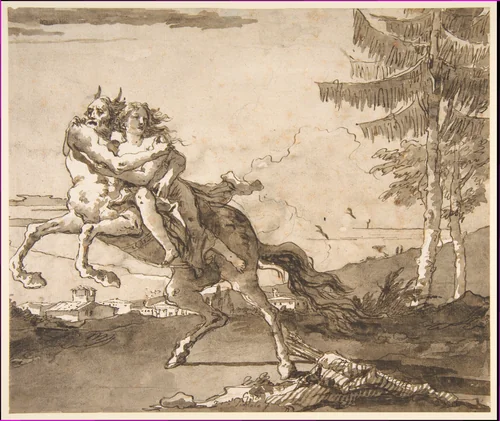
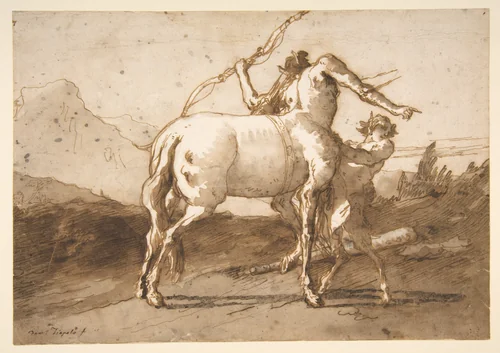
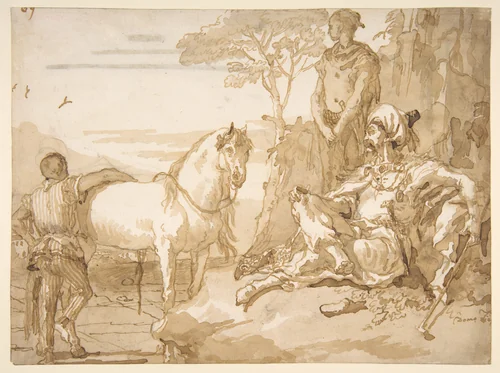
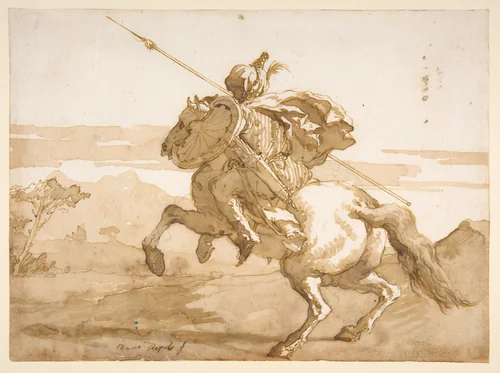
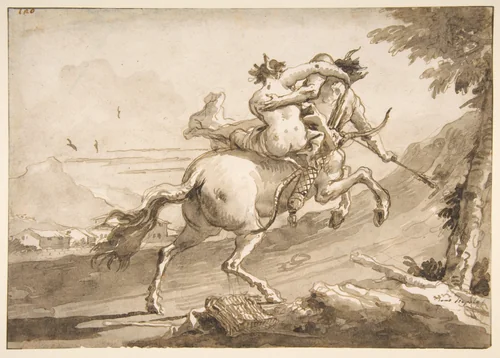
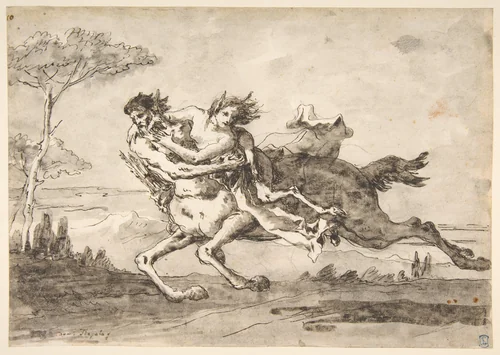
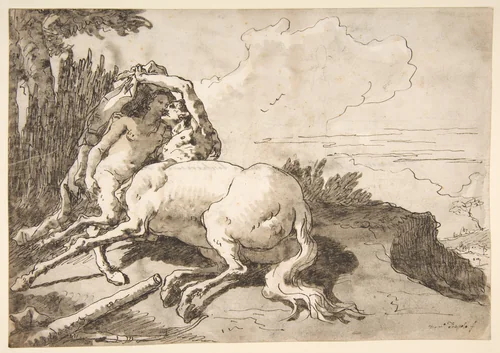
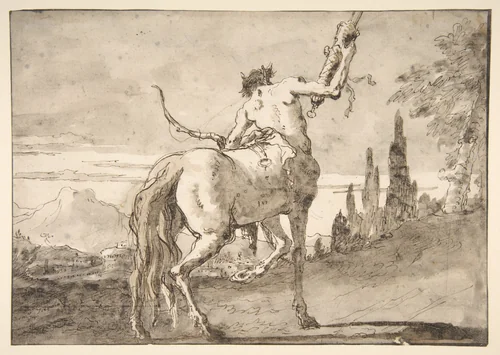
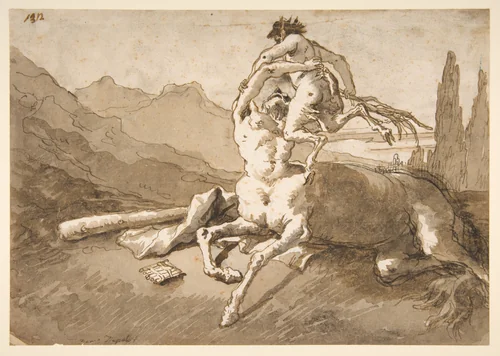
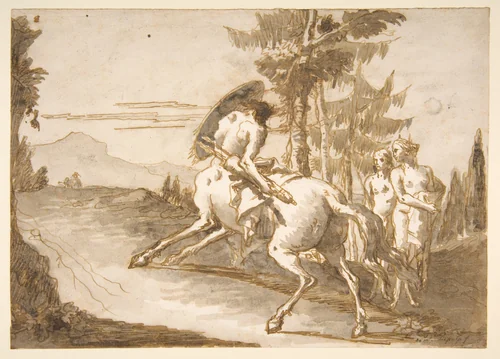
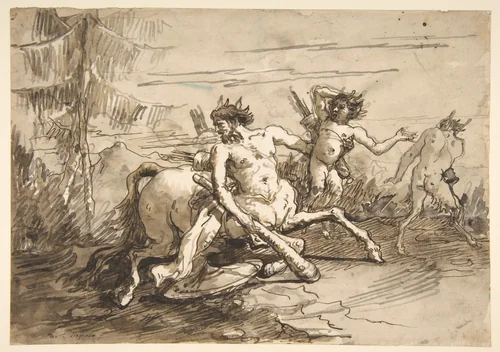
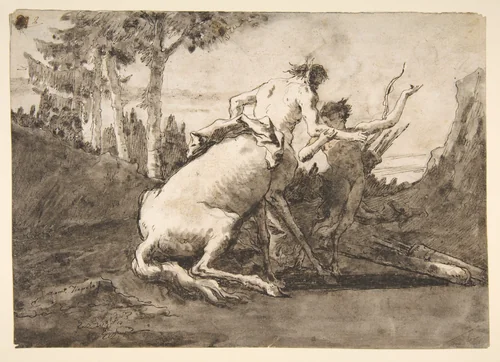
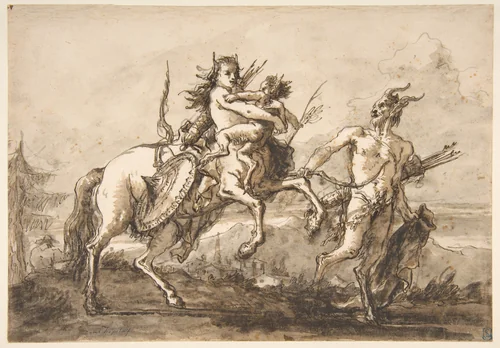
He demonstrated a particular fascination with figures on the periphery of classical myth and contemporary society. His complex graphic works frequently feature unusual subject matter, whether the vigorous action depicted in A Centaur Abducting a Nymph and Back View of a Centaur Abducting a Satyress, or the detailed exotica seen in sketches like An Oriental Chieftain Resting. Giandomenico possesses an almost journalistic curiosity, documenting not just the gods and heroes, but also the daily theatrics and the occasional delightful absurdity of the human, or indeed the semi-human, condition.
Today, scholarship ensures that Giovanni Domenico Tiepolo prints and drawings are recognized for their intrinsic historical and aesthetic value. His influential body of graphic work helped disseminate the Venetian late-Rococo style across Europe. Thanks to dedicated cultural institutions, many of these refined compositions are now in the public domain, allowing enthusiasts and researchers worldwide access to high-quality prints and downloadable artwork, making his oeuvre accessible far beyond the confines of the original museum-quality collection.
Source: Wikipedia · CC BY-SA 4.0