Giovanni David
Giovanni David denotes an influential and often complex corpus of Italian graphic work spanning the period from approximately 1430 to 1770. While the name Giovanni David is notably associated in some historical sources with a celebrated Italian tenor, the visual artistic legacy attributed to this name, encompassing ten substantial prints and five foundational drawings, constitutes a significant archive of Renaissance and Baroque draftsmanship. His pieces are held in major international collections, including the Metropolitan Museum of Art, the Cleveland Museum of Art, and the National Gallery of Art.
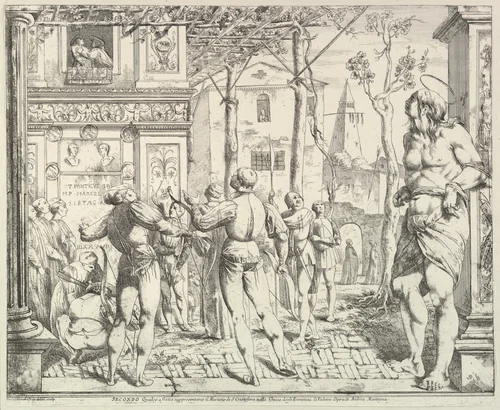
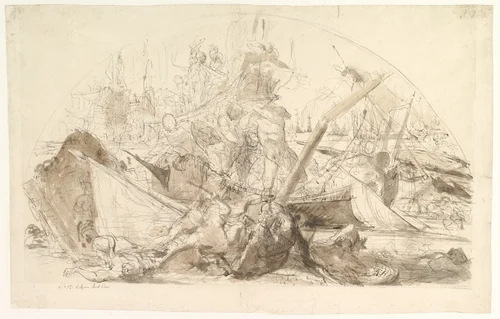
Known primarily for his skilled command of etching and engraving, David’s oeuvre demonstrates a remarkable capacity for both devotional gravity and dramatic, secular narrative. Early works, such as The Martyrdom of Saint Christopher, from "The Story of Saints James and Christopher in the Eremitani Chapel," exhibit the era's dedication to precise detailing and religious complexity. Conversely, the monumental scale and historical dynamism of The Naval Battle of Meloria position David as a significant chronicler of military action, utilizing printmaking to disseminate grand-scale subjects that often rivaled contemporary fresco cycles.
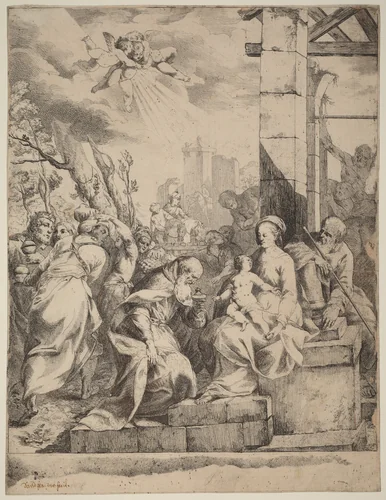
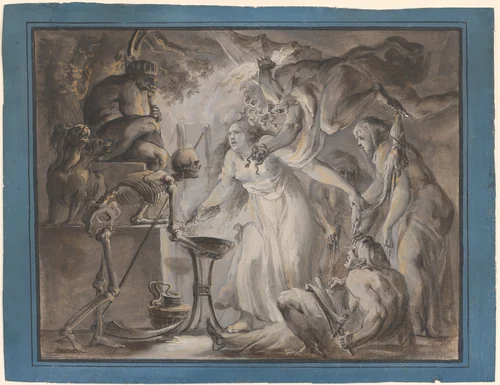
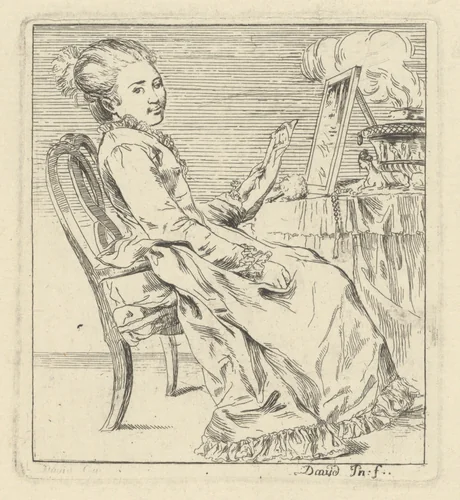
David’s versatility is perhaps best demonstrated by his ability to transition seamlessly from the public epic to the highly intimate. This shift is evident when comparing the structured classicism and formal elegance of The Adoration of the Magi with the deeply unsettling introspection found in the famous drawing A Nightmare. This capacity for psychological realism, contrasted against the delicate control seen in figure studies such as A Seated Young Woman Holding a Letter, establishes him as a transitional figure critical to the evolving role of high-quality prints in Italian art.
His enduring influence is secured not only by the museum-quality nature of his unique drawings but by the substantial accessibility of his printed output. Much of this material is now secured in the public domain, offering historians and enthusiasts royalty-free access to study his masterful technique. It is a subtle irony of cultural history that the name Giovanni David resonates across profoundly different artistic domains, connecting the meticulous visual narrative of the fifteenth-century printmaker with the dramatic flair of a nineteenth-century opera star.