Giovanni da Udine
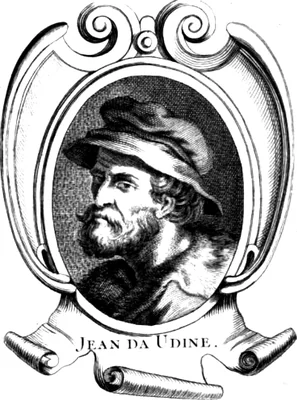
Giovanni Nanni, known to posterity as Giovanni da Udine, was an Italian painter and architect (1487–1564) whose lasting reputation was forged in the refinement and popularization of ornamental design during the High Renaissance. Active across painting, architecture, and the decorative arts, his specialization in classical motifs proved highly influential in the workshops of Rome and Florence, distinguishing him as one of the era’s foremost masters of the intricate and imaginative.
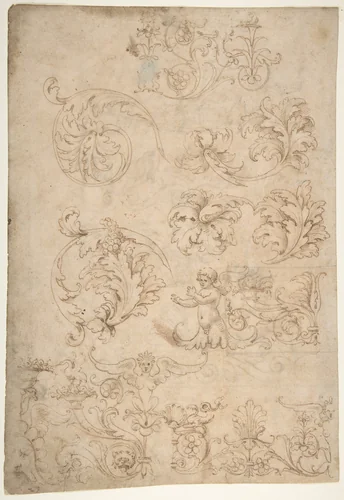
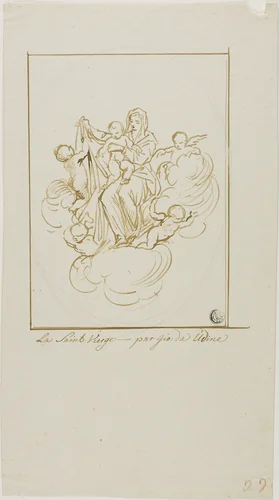
Born in Udine, the artist earned his alternative appellation, Giovanni de’ Ricamatori, a recognition of his expertise in highly detailed decoration, including textile designs. His surviving body of work, comprising five drawings and two documented textile pieces, confirms his essential role as a designer of both monumental architectural spaces and smaller, luxurious objects. This skill set is evident in studies such as Sketchbook Sheet of Ornamental Studies, (recto and verso), which demonstrates his fluency in translating complex classical imagery into practical applications.
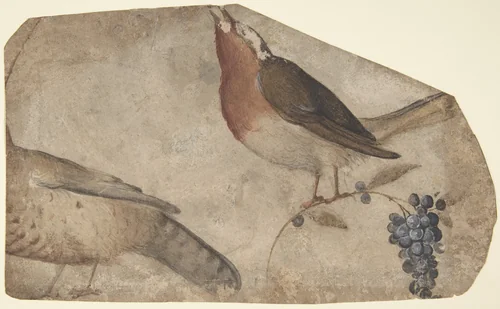
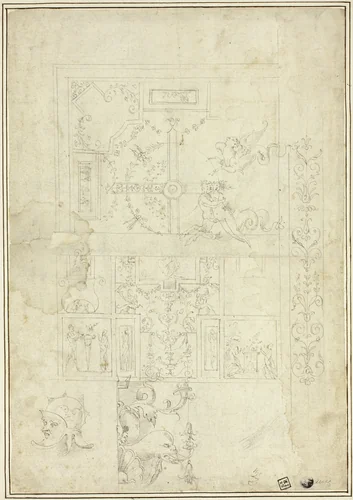
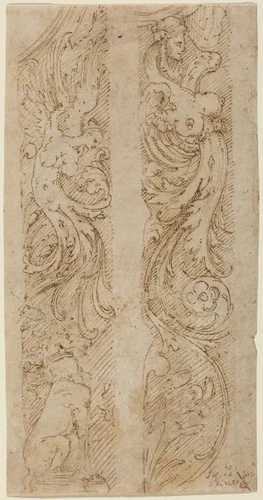
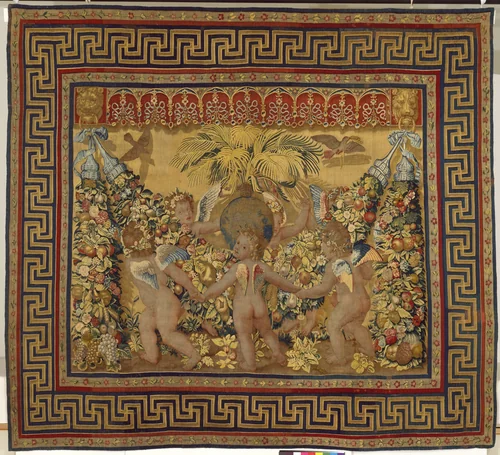
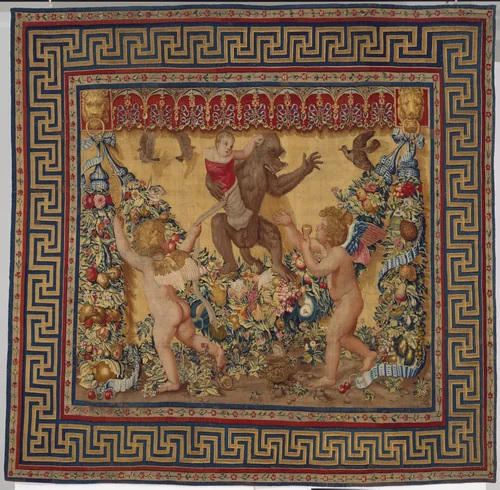
Giovanni da Udine is particularly celebrated for his mastery of the grotesque style—the delicate, often fantastical, wall ornamentation inspired by the rediscovery of ancient Roman palace decorations. Works like Grotesque Decorations for Wall Panels and the set study Six Putti Dancing Around a Globe and a Palm from a set of the Giochi di Putti exemplify his capacity to weave mythology, flora, and fauna into rhythmic decorative schemes. His versatility allowed him to move seamlessly between grand ceiling designs, such as the detailed Ceiling Design, with Sketches of Ornamental Border, Helmeted Head (recto), and keen observations of the natural world, captured in pieces like Bird Eating Grapes (recto); Tigress (verso).
Today, these preparatory sketches and detailed drawings are held in prominent collections, including the Metropolitan Museum of Art and the National Gallery of Art, offering museum-quality insight into the Renaissance design process. His designs demonstrate a precision and wit crucial to the execution of major architectural commissions. It is perhaps a historical curiosity that, decades before this highly respected master was born, another painter named Giovanni da Udine was reportedly exiled from the artist’s native city in 1472. Our Giovanni, however, secured an enduring legacy; his ornamental studies remain highly valued by scholars and enthusiasts, often preserved as royalty-free downloadable artwork, ensuring that the influence of Giovanni da Udine prints endures in contemporary decorative arts.
Source: Wikipedia · CC BY-SA 4.0