Giovanni Benedetto Castiglione
Giovanni Benedetto Castiglione stands as one of the most intellectually compelling figures of the Italian Baroque, a crucial member of the Genoese school celebrated for his relentless experimentation in graphic media. While acknowledged during his lifetime as a painter, draftsman, and sculptor, his most profound historical contribution lies in the field of printmaking. Castiglione is universally credited with inventing the monotype, a revolutionary process that produces only a single impression, underscoring his innovative approach to traditional print media and establishing him as a pioneer in unique surface drawing.
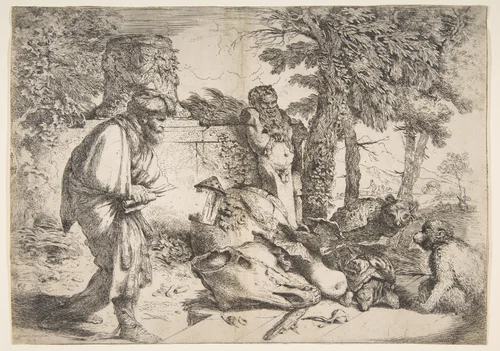
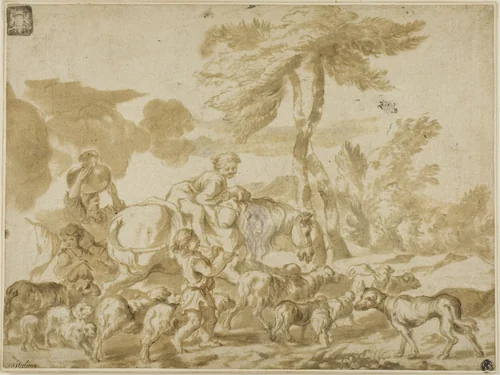
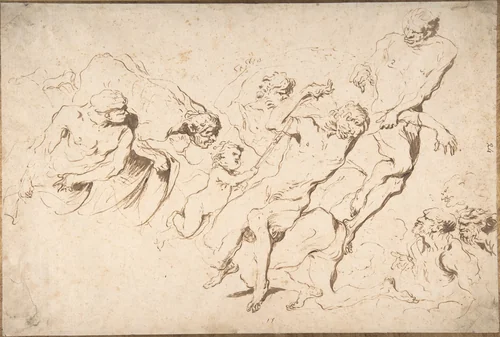
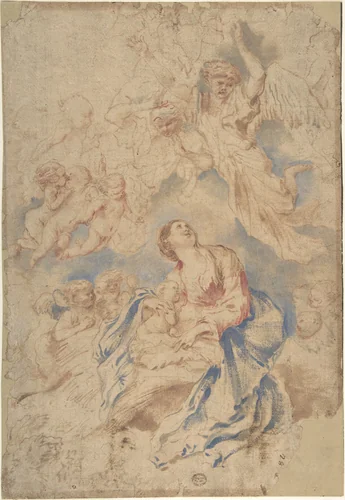
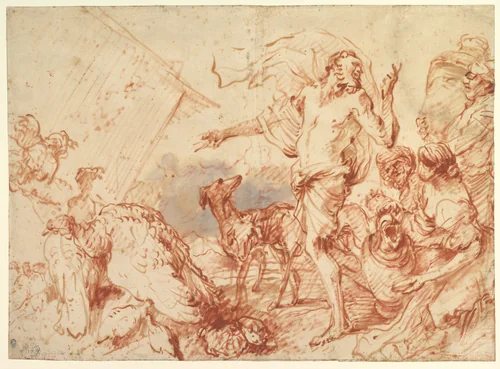
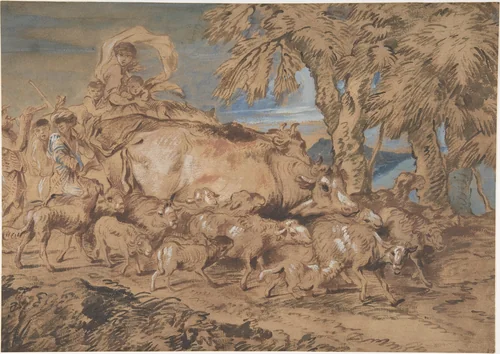
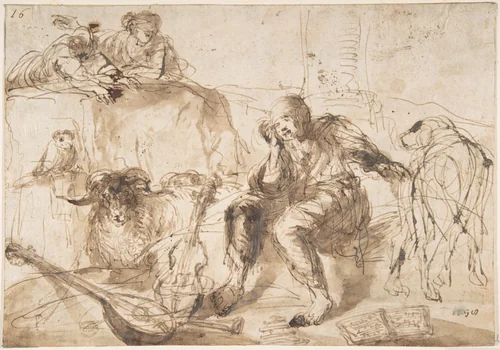
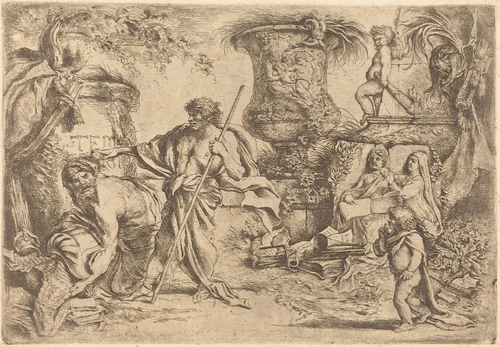
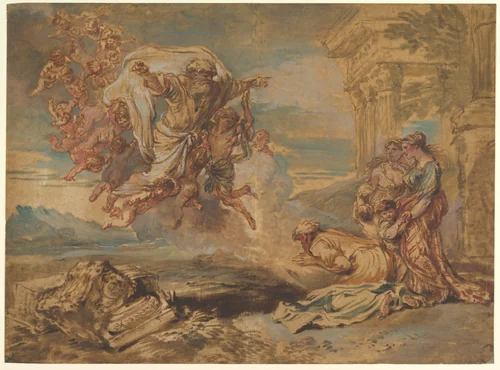
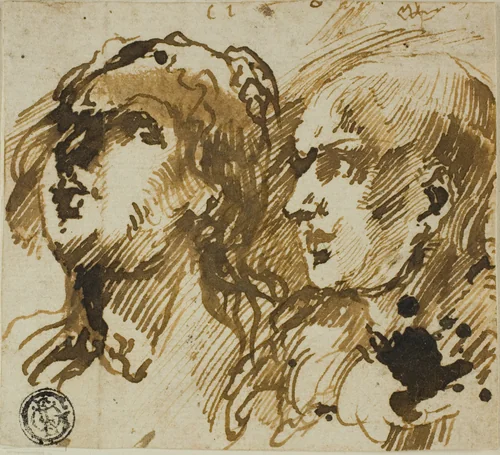
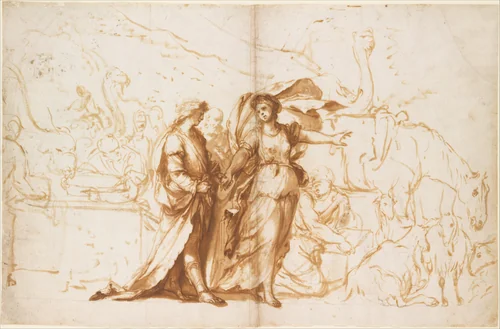
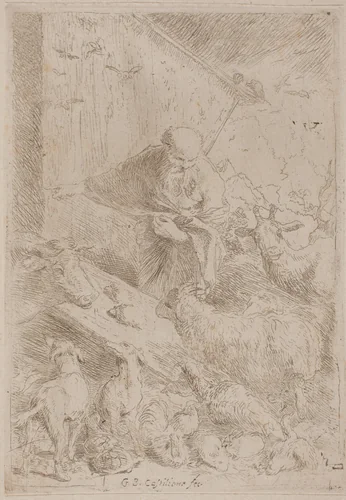
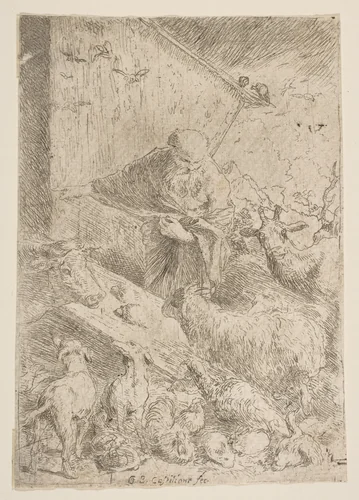
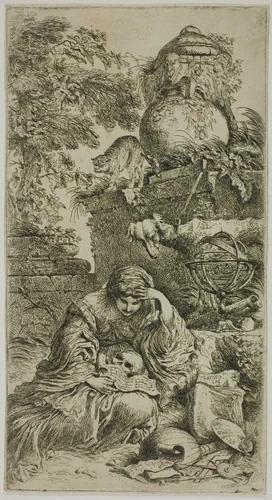
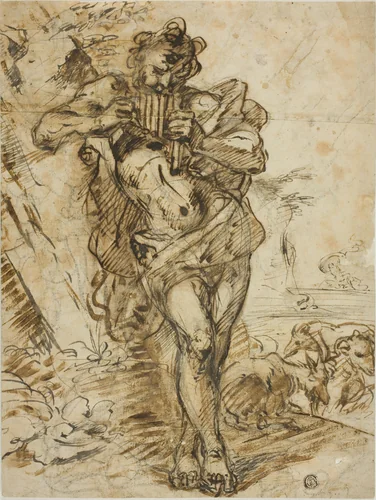
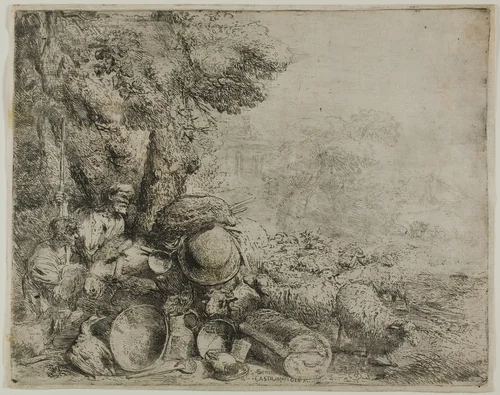
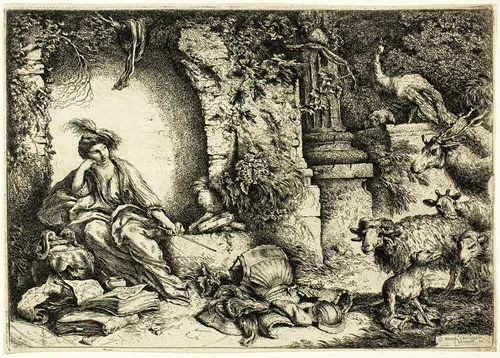
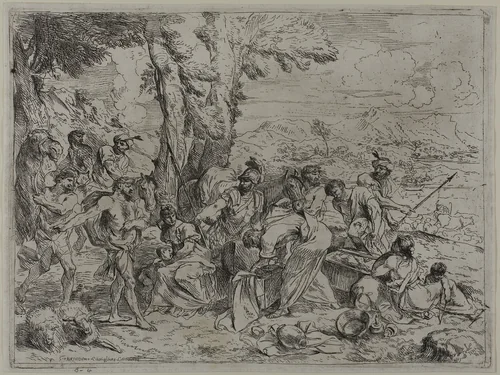
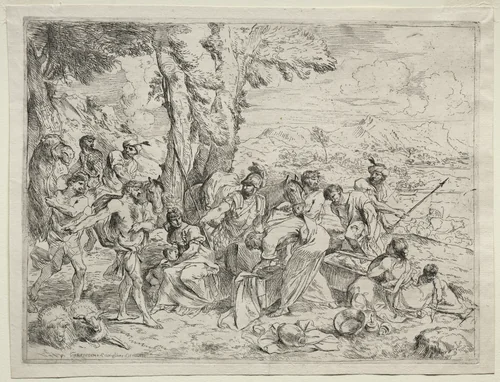
His graphic work, encompassing a significant body of drawings and etchings, is characterized by dramatic theatricality and a restless energy of line. Castiglione mastered the etching needle, using it to create effects of dense shadow and sudden light that reveal his absorption of Northern European masters like Rembrandt. His thematic repertoire was broad, moving fluidly between biblical scenes, pastoral idylls, and sometimes obscure allegorical subjects. His facility with complex narratives is visible in works such as Diogenes in search of an honest man, and the intensity of his figural studies in pieces like Fantastic Subject: Five Nude Male Figures Punishing Another captures the Baroque taste for the expressive and the intense.
Castiglione’s reputation traveled widely; he was known in Italy as Il Grechetto (The Little Greek) and in France as Le Bénédette. It is a subtle observation of his cosmopolitan output that he earned this Italian sobriquet simply for his habit of weaving small Levantine or pastoral motifs into his otherwise monumental compositions. Though his active period spanned the mid-seventeenth century, the enduring power of Giovanni Benedetto Castiglione prints remains palpable.
Today, his legacy is carefully preserved. Major works, including his seminal drawings and unique prints, reside in premier institutions globally, notably represented in the collections of the National Gallery of Art, the Metropolitan Museum of Art, and the Art Institute of Chicago. The technical mastery evident in his output ensures that high-quality prints and detailed studies of his graphic works are widely accessible through public domain resources, confirming his pivotal role in the history of graphic art.
Source: Wikipedia · CC BY-SA 4.0