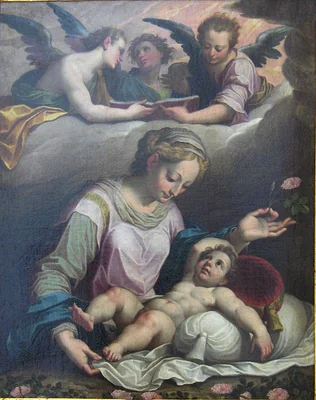
Giovanni Battista Trotti
Giovanni Battista Trotti was a crucial Italian painter and draftsman operating during the pivotal decades of the Late Renaissance. Active primarily between 1500 and 1590, he established major working centers in his native city of Cremona, as well as Piacenza and Parma. This geographical focus placed him at the nexus of several regional artistic styles, allowing him to absorb and synthesize influences from leading Mannerist practitioners, which defined much of his prolific career.
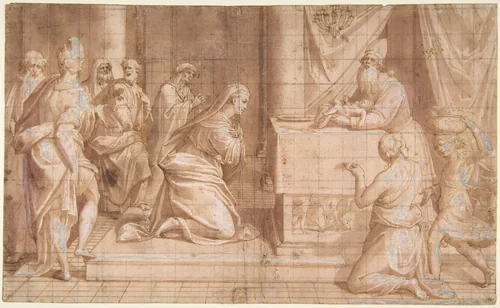
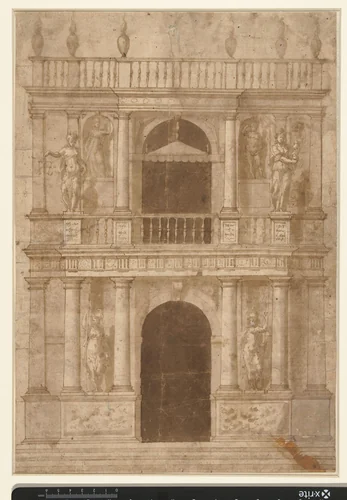
While Trotti is recognized for significant altarpieces and frescoes within these centers, it is often through his meticulous draftsmanship that his preparatory process and artistic intellect are most clearly revealed. The surviving collection of his drawings, housed in prominent international institutions, provides singular insight into the compositional challenges of the era. His hand deftly moved between the sacred and the municipal; for instance, highly charged devotional works like his studies for The Circumcision of Jesus contrast with the structural and practical precision necessary for designs such as Ontwerp voor een façade van een raadhuis (Design for a Town Hall Façade). It is perhaps a subtle testament to the commercial realities of the sixteenth century that the same artist who sketched saints could be relied upon to sketch city governance.
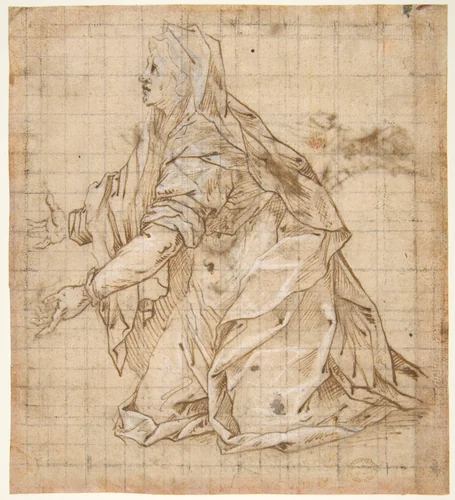
The sustained interest in Trotti’s work confirms his standing in the evolution of Italian painting, and his continued relevance is reflected in the fact that key examples of his oeuvre reside in major collections, including the National Gallery of Art, the Metropolitan Museum of Art, and the Rijksmuseum. His detailed pen-and-ink studies remain vital tools for scholars examining Late Renaissance figural organization. Today, many of these museum-quality preparatory drawings, particularly those concentrated on specific figures such as Woman Kneeling Facing Left, are often available as downloadable artwork for academic and public study, enhancing their accessibility within the public domain. These works not only document the genesis of large-scale commissions but secure Trotti’s legacy as a foundational figure in Northern Italian Mannerism.
Source: Wikipedia · CC BY-SA 4.0