Giovanni Battista Pittoni
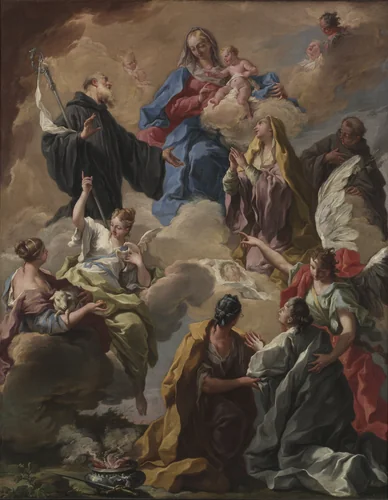
Giovanni Battista Pittoni (1687–1764) stands as a crucial figure defining the aesthetic transition in 18th-century Venice. Operating at the confluence of the late Baroque and the emergent Rococo, Pittoni mastered the fluidity and refined ornamentation characteristic of his time. While he is often identified primarily as a painter, the surviving corpus reveals a significant dedication to draftsmanship and printmaking. His artistic output exemplifies the dissipation of dramatic scale in favor of a lighter, almost decorative sensibility, perfectly suited to the burgeoning tastes of the European aristocracy.
Pittoni’s influence extended beyond the canvas into the institutional framework of Venetian art education. He was integral to the establishment of the Accademia di Belle Arti di Venezia (Academy of Fine Arts of Venice), an institution designed to formalize artistic training and preserve the city’s artistic heritage. This foundational role underscores his commitment to professionalizing the arts. Perhaps the most telling indicator of his elevated status came in 1758 when he ascended to the presidency of the Academy, succeeding the monumental Giambattista Tiepolo. To be the successor to the age's greatest luminary is, in itself, a powerful statement regarding Pittoni’s authority and respected position within the city’s hierarchy.
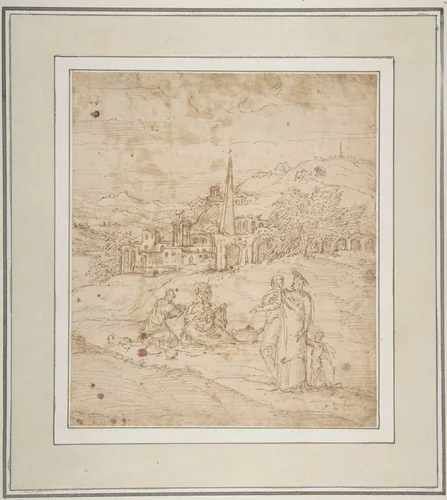
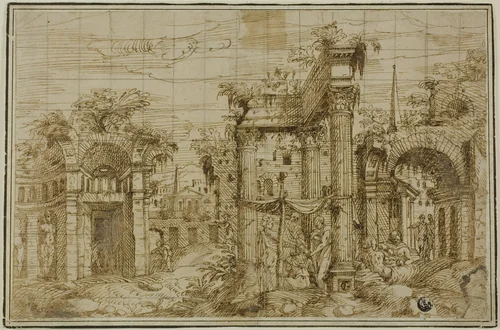
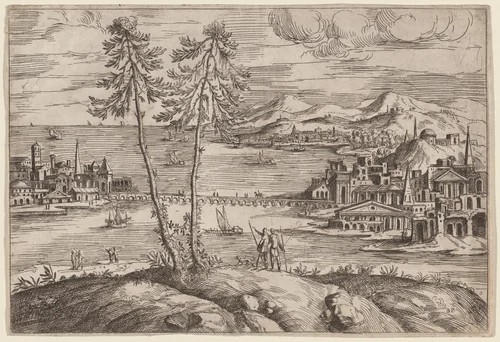
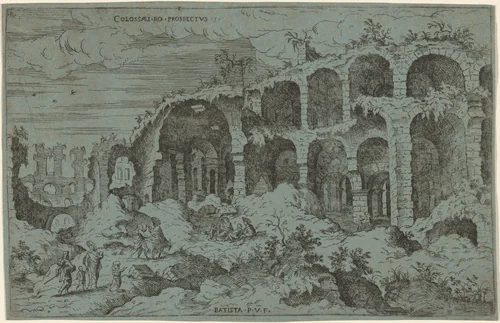
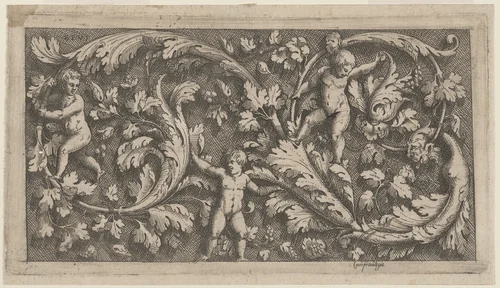
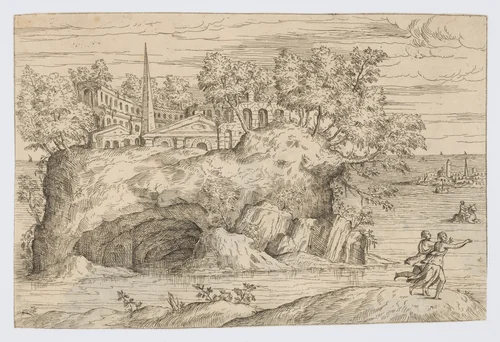
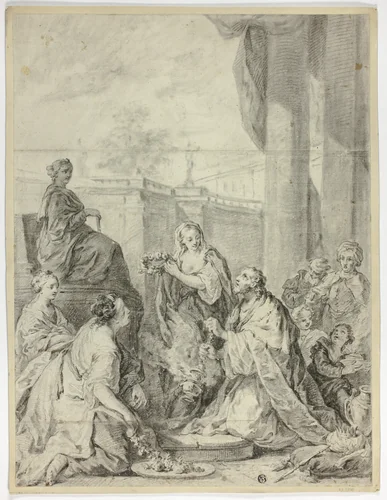
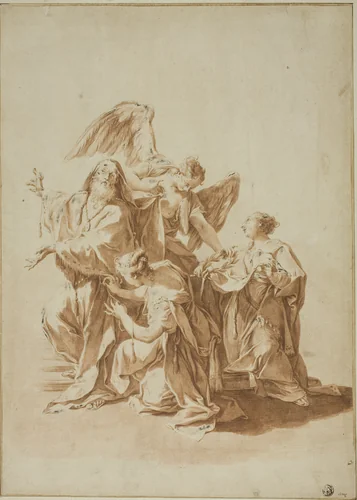
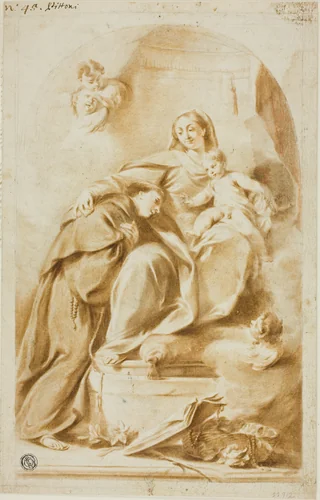
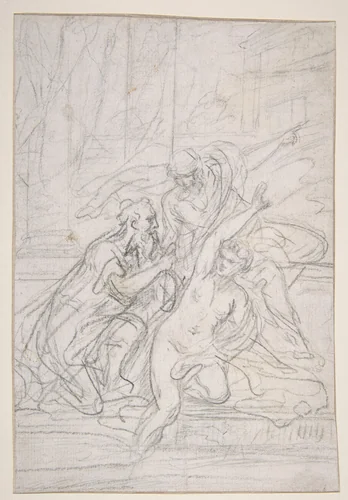
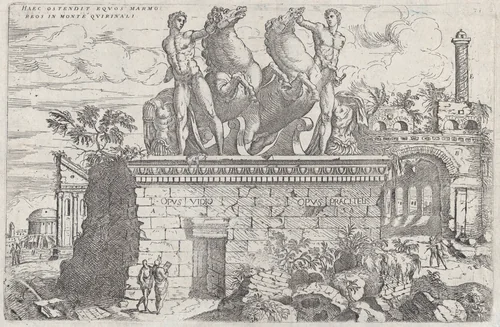
While the vast majority of his most famous commissions remain as large-scale Giovanni Battista Pittoni paintings, detailed works like the delicate drawing Standing and Seated Figures in a Landscape with an Obelisk or the architectural study Ruins of Roman Forum, with Figures demonstrate his technical dexterity in linear expression. His surviving prints, such as the meticulous etching Colossaei. Ro. Prospectus. 3 (Third View of the Colosseum in Rome), show his skill in translating grand, historical spaces into accessible, repeatable formats. It is slightly ironic that an artist so heavily involved in establishing the future of Venetian fine art produced so many detailed views of Rome's ancient past, meticulously documenting ruins hundreds of miles away.
The historical importance of Giovanni Battista Pittoni prints and drawings ensures their enduring presence in premier North American institutions, including the National Gallery of Art, the Metropolitan Museum of Art, and the Art Institute of Chicago. For those studying the Venetian Rococo, his works offer invaluable primary source material. Fortunately, many of his drawings and prints are now in the public domain. This accessibility means that high-quality prints of his detailed studies are available globally, preserving his precise draftsmanship for contemporary study.