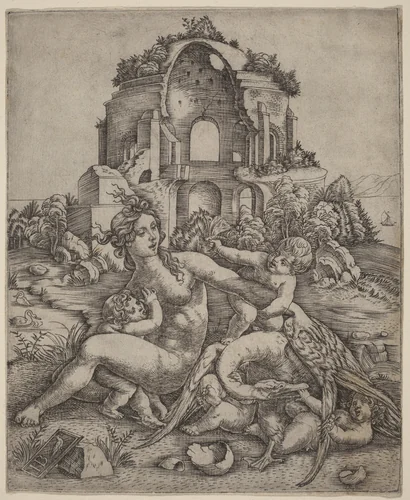
Giovanni Battista Palumba
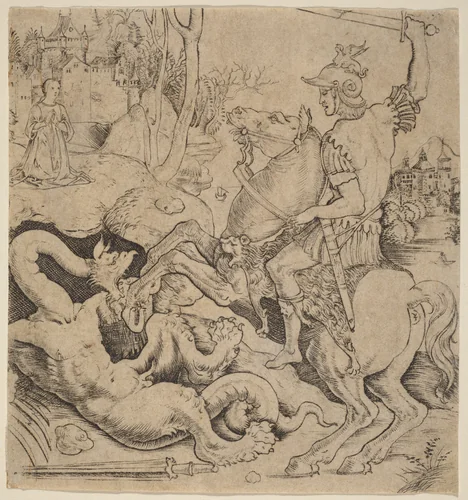
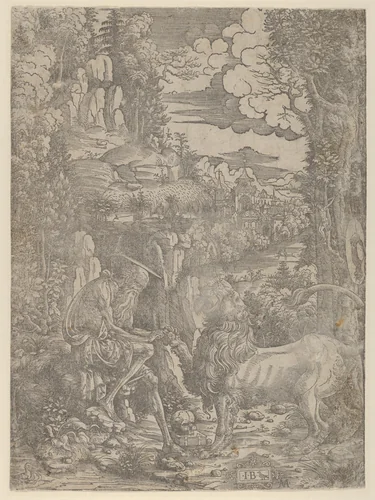
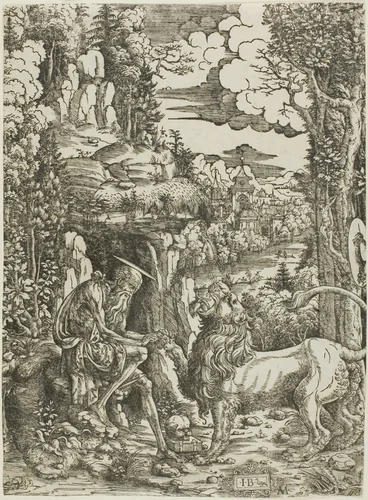
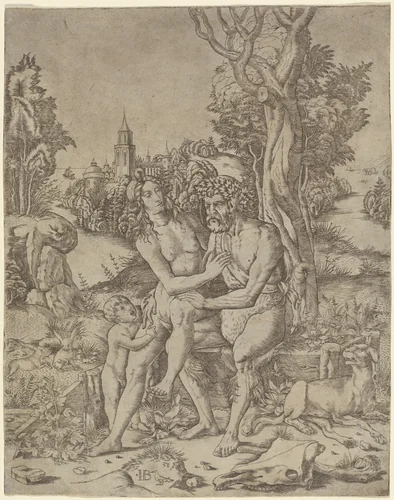
Giovanni Battista Palumba, identified through his characteristic monogram as the Master I.B. with a Bird, occupies a critical position among Italian printmakers working at the transition into the High Renaissance. Active during the late 15th and early 16th centuries, Palumba produced a concise but stylistically sophisticated body of work, generally attributed as comprising fourteen engravings and eleven woodcuts. His career, documented primarily between 1500 and 1511, reflects an artist keenly absorbing the visual innovations of his time.
Though evidence suggests he originated in Northern Italy, Palumba's mature activity in Rome proved formative. This relocation exposed him to the burgeoning classicism of the Papal States, allowing him to develop a style that synthesized regional influences with emerging Roman monumentality. His technical expertise across both engraving and the arguably more challenging medium of the woodcut reveals an artist dedicated to graphic innovation rather than mere reproduction. For a printmaker whose career centered on established media, he frequently demonstrated an ambition in composition and detail that suggests a painterly approach to his subjects.
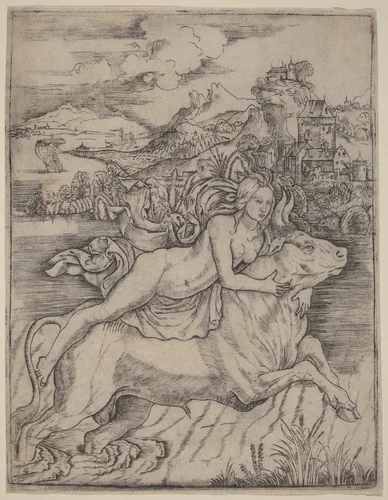
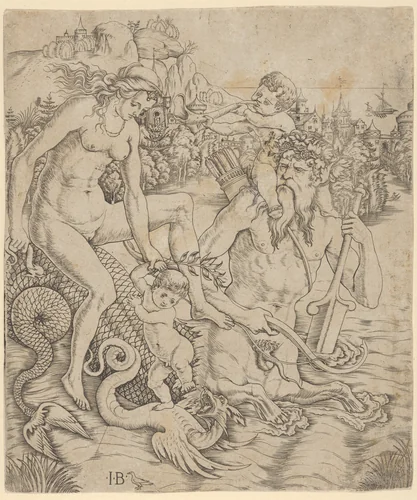
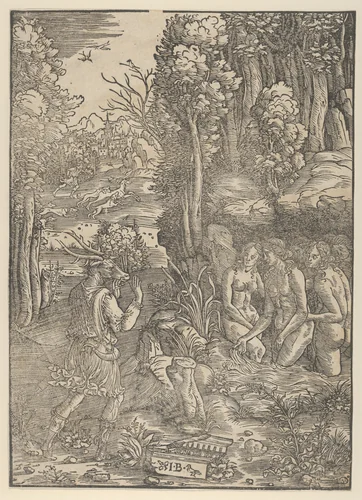
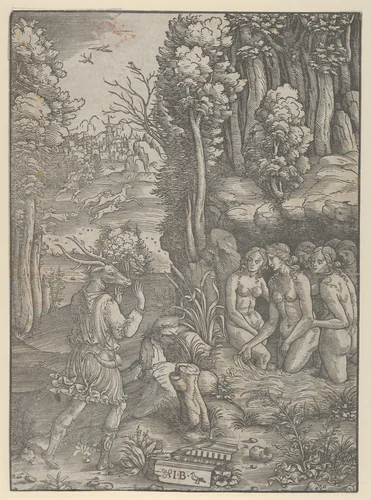
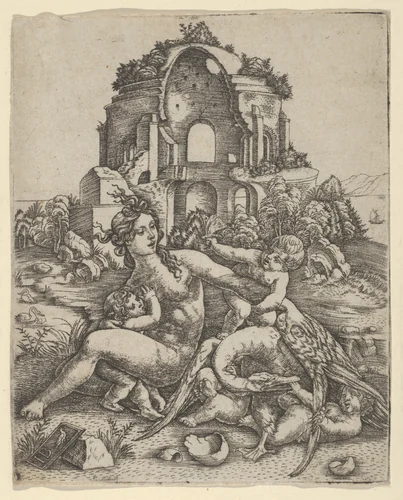
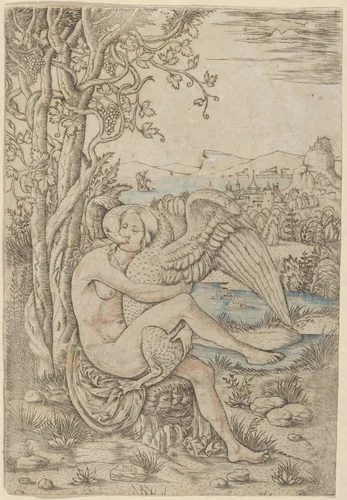
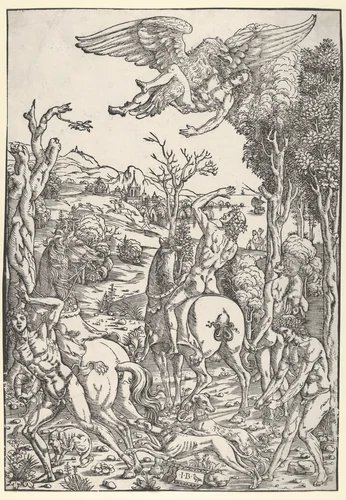
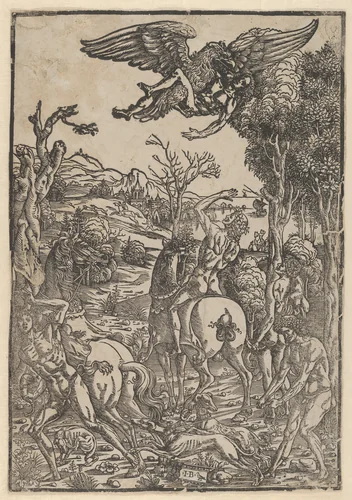
Palumba displayed a clear specialization in classical mythology, treating ancient narratives with a refined elegance appropriate for his Renaissance patrons. His surviving works frequently depict complex figurative groupings and detailed narrative action, such as the dynamic abduction depicted in The Rape of Europa. Further notable examples include the highly detailed interpretation of Diana turning Actaeon into a stag and the charmingly intricate Leda and her children playing with the swan, often set against classical architectural backgrounds.
The enduring clarity and technical proficiency of his work ensures that it remains central to the study of early 16th-century Italian printmaking. Today, Palumba’s original output is considered museum-quality and resides in prominent international institutions, including the National Gallery of Art, the Art Institute of Chicago, and the Metropolitan Museum of Art. His historical designs are widely studied and, through digitization, are often available to researchers and enthusiasts as high-quality prints via public domain collections.
Source: Wikipedia · CC BY-SA 4.0