Giovanni Battista Paggi
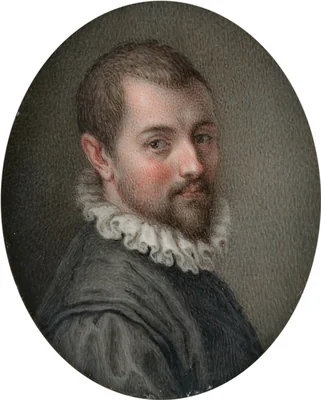
Giovanni Battista Paggi (c. 1551-1627) was a central figure in the transition of Italian art from the mannered elegance of the Late-Renaissance to the dramatic intensity of the early-Baroque. Prolific as a painter, sculptor, and writer, Paggi’s career spanned the late sixteenth and early seventeenth centuries, placing him critically at the juncture of two stylistic epochs. His technical mastery is perhaps best observed in his surviving drawings, which provide direct insight into his compositional process.
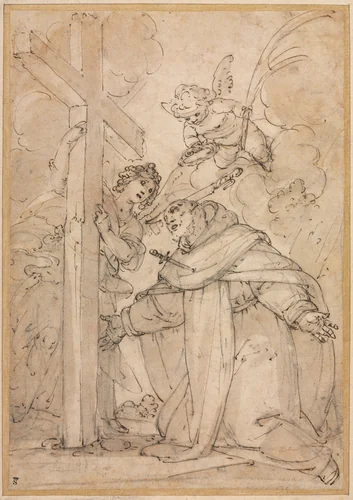
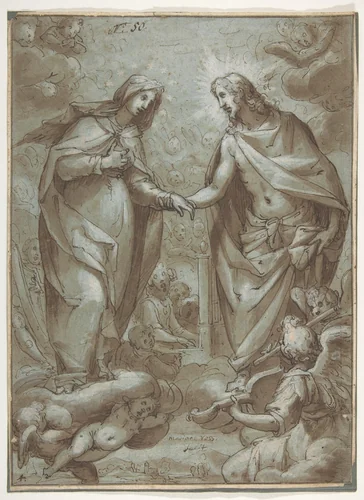
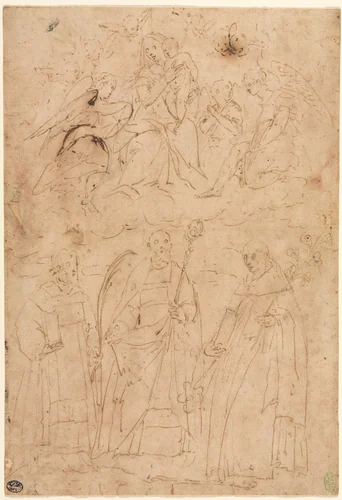
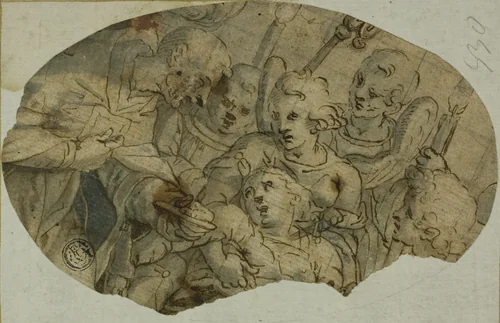
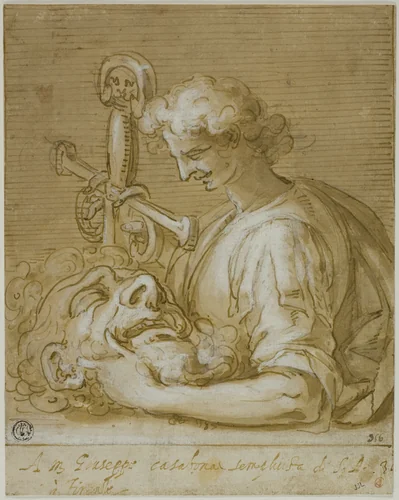
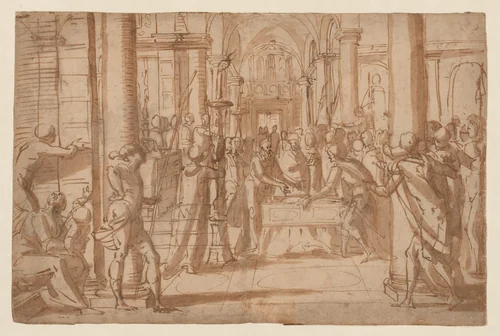
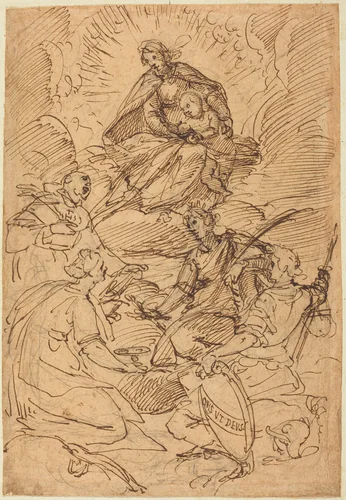
Paggi’s draftsmanship demonstrates both precision and dynamic invention, moving fluidly between devotional subjects and designs intended for secular celebration. Works such as Saint Peter Martyr reveal the meticulous figure studies typical of the Genoese school, while his monumental compositions, including Christ Receiving the Virgin into Heaven, illustrate his aptitude for arranging large-scale celestial narratives. These works, held in major institutions like the National Gallery of Art, the Metropolitan Museum of Art, and the Art Institute of Chicago, confirm his foundational importance to the period.
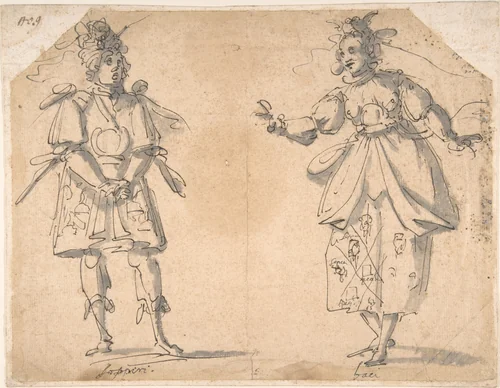
A curious, yet illuminating, aspect of Paggi’s surviving work is his engagement with ephemeral arts. Among the most evocative examples are his preparatory studies, notably the Drawings for Two Masquerade or Ballet Costumes ('Sospiri' and 'Baci'). These spirited designs, translating the abstract concepts of ‘Sighs’ and ‘Kisses’ into wearable forms, reveal an artist capable of applying his serious classical training to the delightful frivolities of court entertainment. They remind us that even the most dedicated old masters were occasionally tasked with designing outfits for a truly memorable party.
Paggi was deeply invested not just in creating art, but in theorizing it, contributing significant treatises on painting that codified the standards of his era. His dual roles as practitioner and intellectual ensured that his influence extended beyond his own canvases and into the academic formation of subsequent generations. Today, collectors and scholars can appreciate his legacy through accessible formats; many of his important studies are now in the public domain, allowing for the creation of museum-quality, high-quality prints and royalty-free reproductions, ensuring wide access to Giovanni Battista Paggi prints well into the future.
Source: Wikipedia · CC BY-SA 4.0