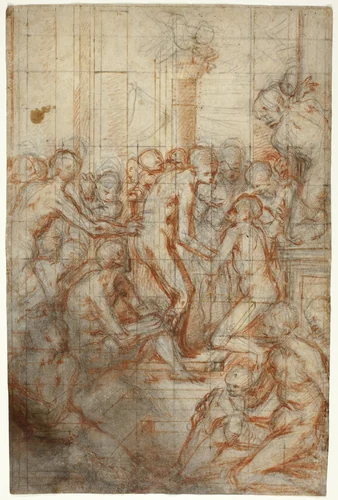
Giovanni Battista Naldini
Giovanni Battista Naldini (1535–1591) stands as a significant, though often overshadowed, figure in the progression of Florentine painting, active primarily in his native city and Rome. His practice coincided with the late phase of Italian Mannerism, a period defined by intense emotionality, sophisticated compositional complexity, and a conscious departure from the rigorous naturalism of the preceding High Renaissance. Naldini excelled in conveying the psychological tension inherent in religious and mythological narratives, rendering figures with characteristic elongation and dramatic, often theatrical, poses.
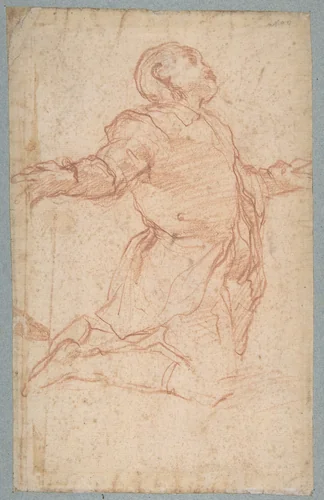
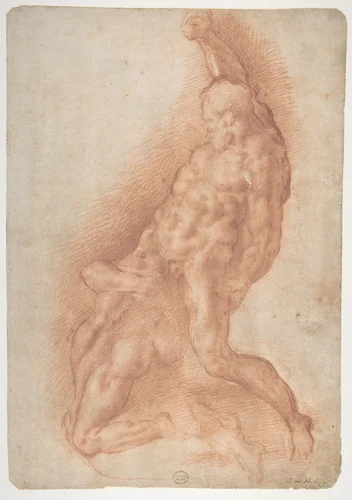
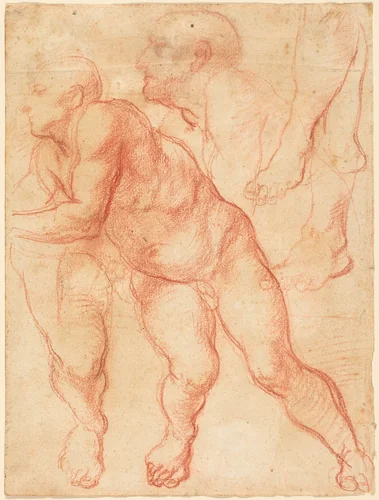
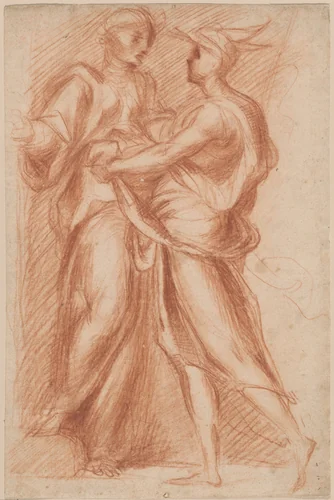
Trained under important masters of the Florentine school, Naldini mastered the demanding discipline of drawing, a core requirement of the academy culture of the time. His graphic output illustrates his profound intellectual engagement with his contemporaries and predecessors. He was particularly adept at reinterpreting the visual language of titans such as Michelangelo, as seen in his energetic interpretation of a classic subject, Samson Slaying the Philistine. Yet, his visual literacy was wide-ranging, extending to the eccentric, expressive forms utilized by early Mannerists like Rosso Fiorentino, whose influence is detectable in the vigorous drawing, Figure of Fury.
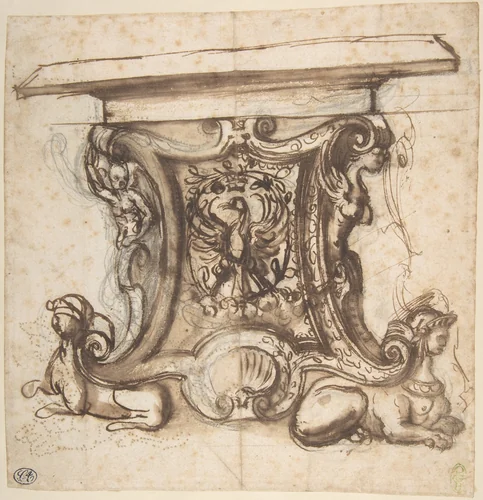
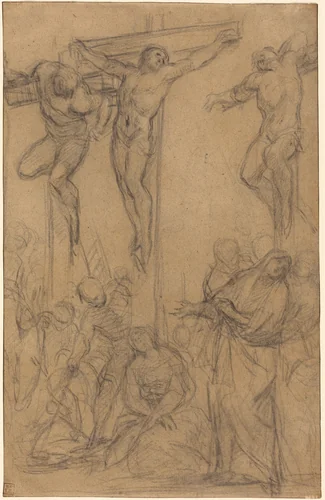
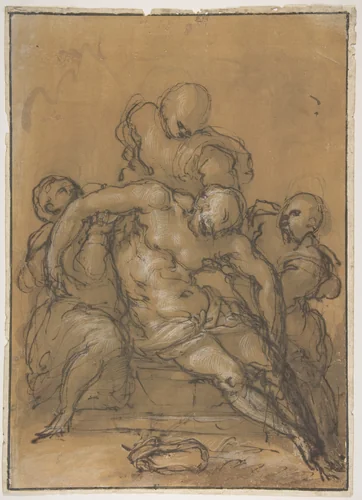
Naldini’s versatility allowed him to move seamlessly between grand-scale devotional works, such as the poignant study The Dead Christ Supported by Three Figures, and highly refined functional art. His ability to apply expressive Mannerist principles to decorative arts, evident in works like Design for the End Pier of a Table, confirms his status as a practical artist keenly aware of contemporary trends in ornamentation and courtly taste. It is in these preparatory studies and highly finished drawings that Naldini's true sensitivity as a draftsman emerges, offering rare insight into the mechanics of 16th-century artistic production.
While many major Giovanni Battista Naldini paintings remain tied to specific church commissions in Italy, his extensive drawing portfolio has achieved global accessibility. These works, collected by institutions including the Metropolitan Museum of Art and the National Gallery of Art, underscore the enduring appeal of Florentine draftsmanship. As an increasing number of these works enter the public domain, providing access to high-quality prints, Naldini’s role as a vital interpreter of late 16th-century style continues to be re-evaluated and appreciated by a wider audience.
Source: Wikipedia · CC BY-SA 4.0