Giovanni Battista Mercati
Giovanni Battista Mercati (1591–1645) was an essential figure in the early Roman Baroque, established primarily through his output as an engraver, although he was also recognized as a painter. Active during a period of intense architectural and religious development in the Italian capital, Mercati’s work provides a precise visual documentation of seventeenth-century Rome, bridging ancient ruins with contemporary structures. His technical mastery of the print medium allowed his interpretations to disseminate widely, cementing his position among the era’s most proficient draughtsmen.
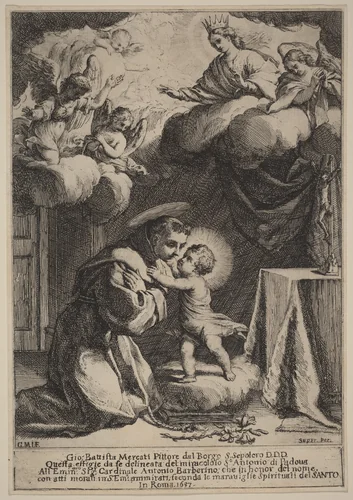
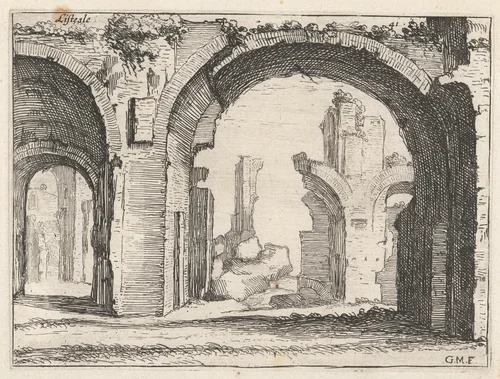
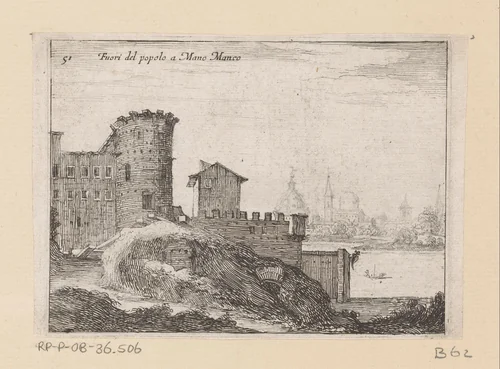
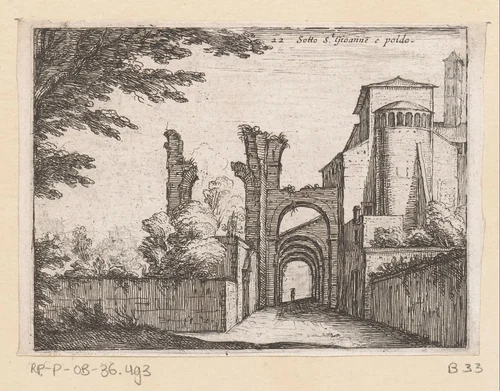
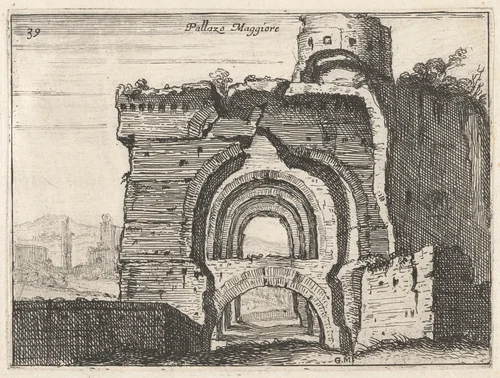
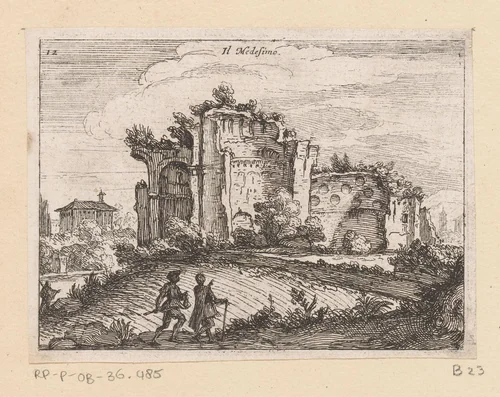
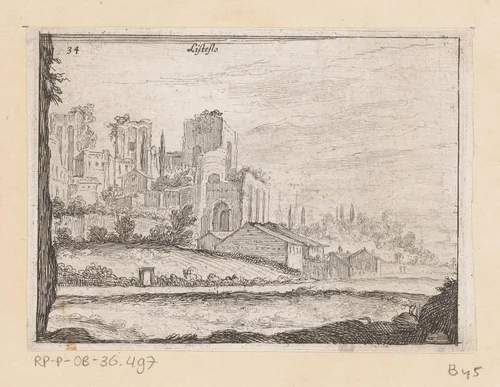
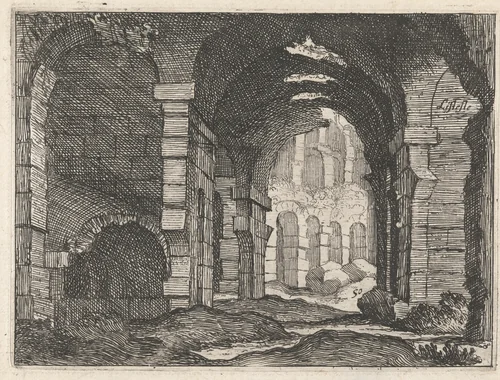
Mercati’s oeuvre of engravings is characterized by meticulous detail and a sophisticated understanding of perspective, vital qualities whether rendering devotional imagery or ambitious architectural settings. His subjects were varied, encompassing sacred figures like Saint Anthony of Padua and exhaustive surveys of imperial landmarks, evidenced by the print Antonine Baths, or Baths of Caracalla. Such works were critical for scholars, providing accurate visual records before the age of photography. He excelled particularly in depicting transitional or ephemeral urban spaces, as seen in the detailed street view Clivus Scauri en de Santi Giovanni e Paolo and the focused study Bouwwerken te Rome, nabij de Porta del Popolo.
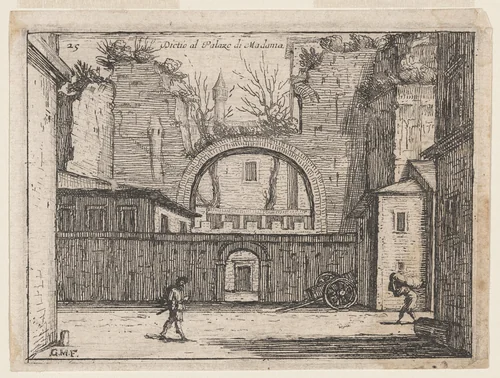
The small but potent collection of surviving prints, currently preserved in major institutions including the Rijksmuseum and the National Gallery of Art, confirms Mercati’s status as a serious contributor to the Baroque graphic arts tradition. His dedication to draughtsmanship ensured that these works maintained exceptional museum-quality detail. Mercati often focused on the fleeting rather than the eternal; one suspects that an artist who dedicates careful detail to documenting a temporary ceremonial structure, such as Dictio al Palazo di Madama, possessed an acute, almost journalistic sensibility alongside his classical training.
In the modern context, Mercati’s legacy is highly accessible. As many of these historical images now reside in the public domain, they are widely available as high-quality prints and downloadable artwork, allowing contemporary viewers to appreciate the clarity and technical rigor of Italian Baroque printmaking. His works remain an invaluable resource for topographical and art historical study.
Source: Wikipedia · CC BY-SA 4.0