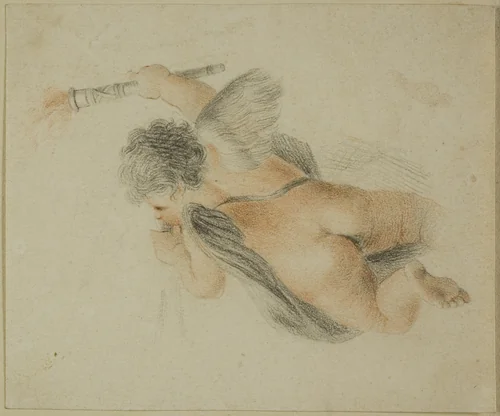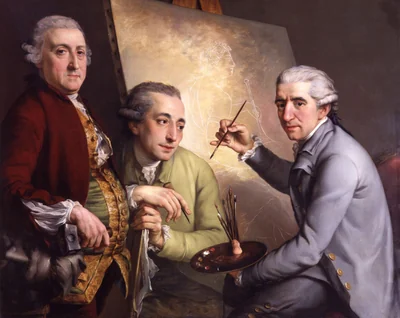
Giovanni Battista Cipriani
Giovanni Battista Cipriani, an Italian painter and engraver frequently referenced as Giuseppe Cipriani in older catalogues, played a crucial, though sometimes understated, role in establishing the aesthetic foundations of the British Neoclassical movement. While initially trained in Italy, Cipriani’s definitive artistic influence developed following his relocation to London in 1755. His significance does not rest primarily on large-scale easel works, but rather on his mastery of design and draftsmanship, a specialization that allowed his compositions to achieve extraordinary circulation and visibility.
Cipriani’s output consisted largely of preparatory drawings and designs intended specifically for the printing press. His precise, elegant style and commitment to classical subjects made him the ideal collaborator for the burgeoning London print market. This professional trajectory culminated in a deeply productive partnership with the celebrated Italian engraver Francesco Bartolozzi, who effectively translated Cipriani’s linear precision into immensely popular stipple and line engravings. This effective division of labor meant that the output of Giovanni Battista Cipriani prints shaped the popular visual culture of the late 18th century, disseminating sophisticated Italianate style throughout Britain and continental Europe.
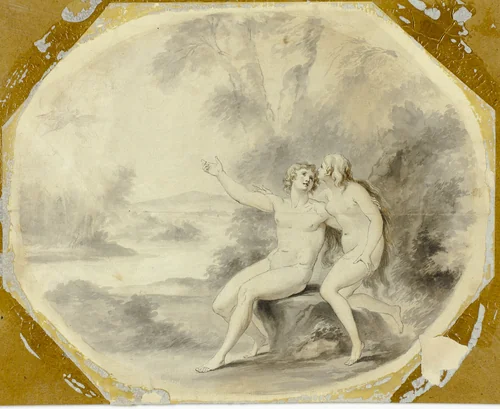
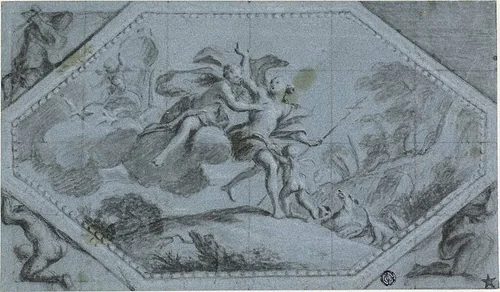
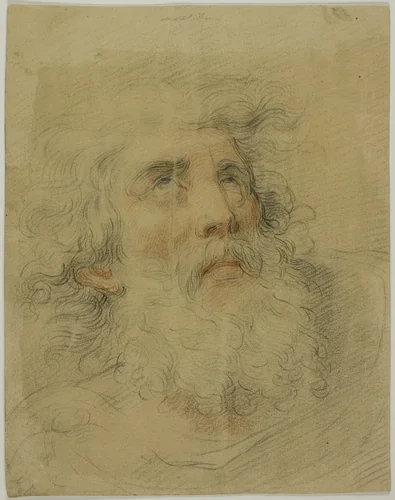
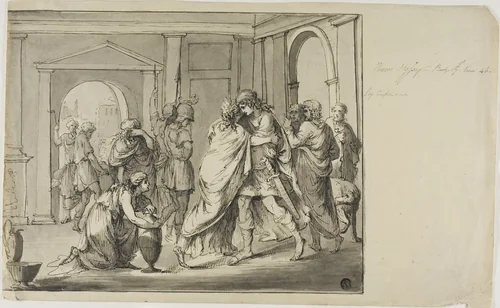
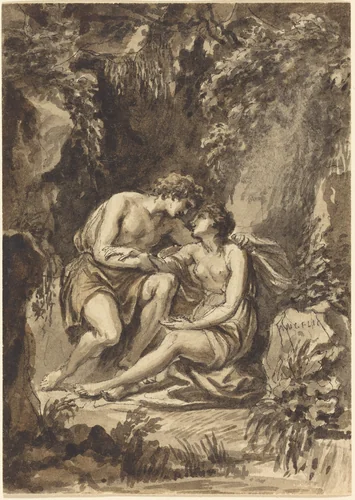
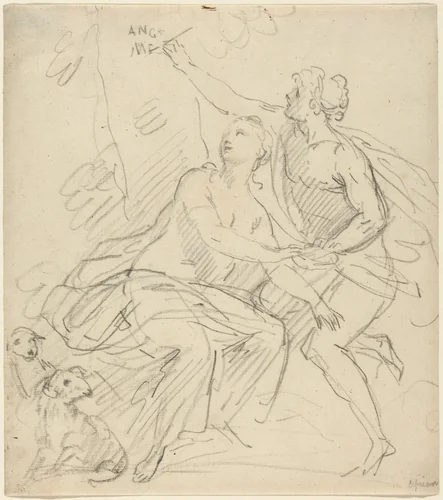
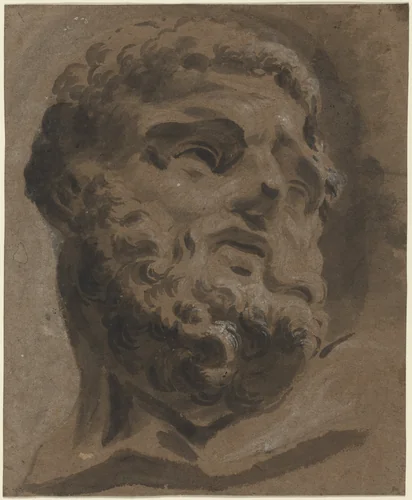
His works, such as the detailed preparatory study A Turk [recto] or the literary interpretations of Angelica and Medoro, reveal a draftsman focused on narrative clarity and formal grace. While he remains a figure crucial to the institutional growth of the Royal Academy, of which he was a founding member, Cipriani seems to have preferred the quiet diligence of the drafting table to the public fanfare enjoyed by some of his flashier contemporaries. His dedication ensured that his compositions maintained artistic integrity even when mass-produced.
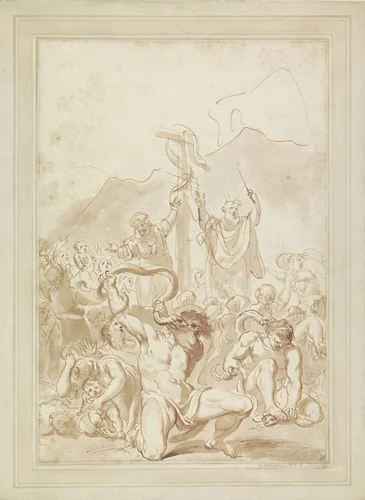
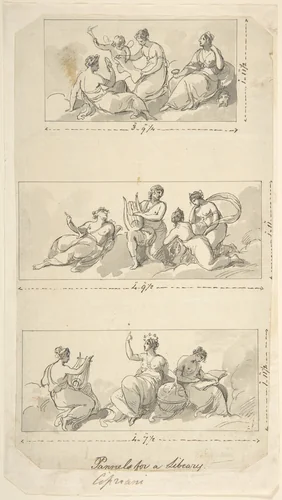
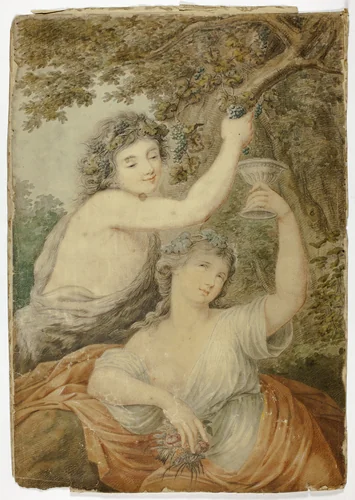
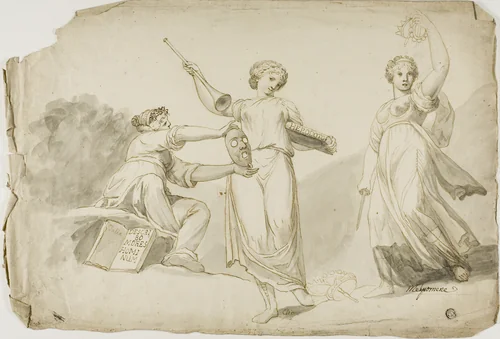
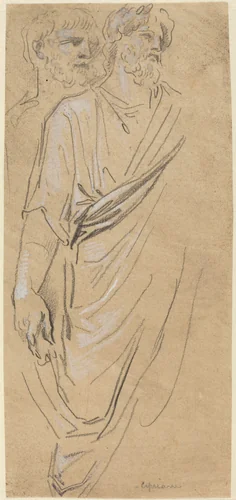
The strength of his drawing corpus, comprising sensitive figure studies and mythological groupings like Thalia, Clio, and Melpomene, has secured his place in major global institutions. Today, a significant collection of his drawings forms the foundation of collections at the National Gallery of Art, the Rijksmuseum, and the Metropolitan Museum of Art. The lasting availability of these compositions in the public domain allows for widespread access, ensuring that high-quality prints and downloadable artwork remain crucial resources for understanding Anglo-Italian artistic exchange during this pivotal period.
Source: Wikipedia · CC BY-SA 4.0
![A Turk [recto] by Giovanni Battista Cipriani, drawing, 1727-1785](https://img.artbee.org/44554f50-c54f-4b44-833a-5bb00664118e/small.webp)
![Figure Studies [recto] by Giovanni Battista Cipriani, drawing, 1727-1785](https://img.artbee.org/3c6d9b1d-f0a5-4aff-8a0a-d134261c30f0/small.webp)
![Figure Studies [verso] by Giovanni Battista Cipriani, drawing, 1727-1785](https://img.artbee.org/518cd25f-6746-40dd-8f41-f385aaf891a8/small.webp)
![Mythological Composition with Chronos and Harpies [recto] by Giovanni Battista Cipriani, drawing, 1727-1785](https://img.artbee.org/b7160f45-0910-4f66-b774-a63d2136747c/small.webp)
![Reclining Woman [verso] by Giovanni Battista Cipriani, drawing, 1727-1785](https://img.artbee.org/0295fb32-70de-4fef-8f9b-58850fae94e0/small.webp)
![Study of Two Putti and a Draped Arm [verso] by Giovanni Battista Cipriani, drawing, 1727-1785](https://img.artbee.org/9d04ac77-25d4-426d-bbc5-f9ca1a0fe8e2/small.webp)