Giovanni Battista Bonacina
Giovanni Battista Bonacina was a central figure in 17th-century Italian printmaking, operating during the high Baroque period from approximately 1620 to 1684. Although sometimes listed as a painter, his enduring legacy resides in his skilled execution of copperplate engravings, many of which now feature in major institutional holdings such as the Metropolitan Museum of Art. Bonacina’s output served a vital function in the era, translating the ephemeral grandeur of painted masterpieces into widely distributable, permanent graphic form.
Born in Milan, Bonacina established a sophisticated style deeply influenced by the Dutch master Cornelis Bloemaert. This tutelage provided him with the precise linearity and technical dexterity necessary to excel in reproductive work, positioning him as an important conduit for disseminating the opulent, expressive aesthetics of Roman masters to a broader European audience.
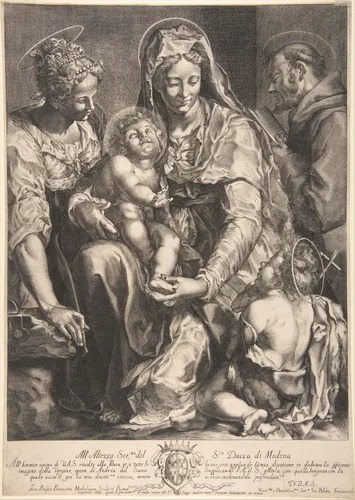
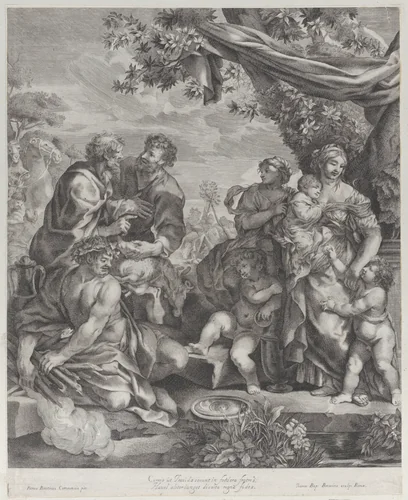
He was instrumental in translating complex compositions from the major artistic forces of the time. Among his significant transcriptions are The Alliance of Jacob and Laban and St. Martin kneeling before the Virgin and Infant Jesus, both executed after detailed designs by Pietro da Cortona, and a Holy Family, with St. Catharine and St. John following Andrea del Sarto. These reproductive efforts highlight his exceptional capability in translating painterly drama and volume into refined monochrome line.
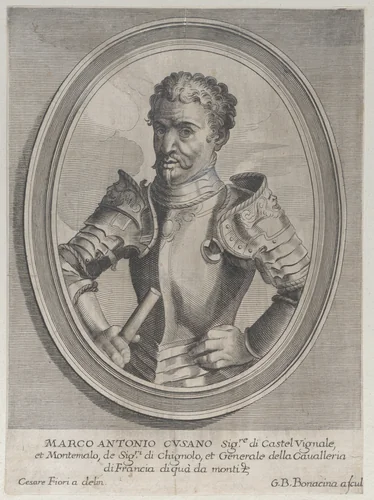
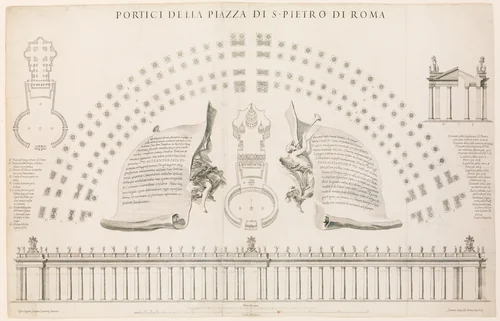
Bonacina’s versatility extended beyond religious narratives. He was a sought-after portraitist, capturing the likenesses of important contemporary figures, including Pope Clement IX, Guido and Hermes Visconti, and Giovanni Battista Conte Truchi. Creating these detailed portraits was critical for the establishment and remembrance of Baroque status; it is worth noting that for an artist of this period, success was measured not only by artistic genius but by the quality of one's patrons. His oeuvre also encompassed architectural documentation, exemplified by the plate Portici della piazza di S. Pietro di Roma, part of a comprehensive visual record of St. Peter’s Basilica.
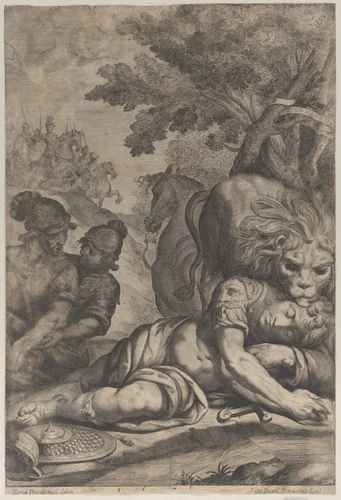
The sustained quality of his work ensures that Giovanni Battista Bonacina prints remain highly valued today. As many of these 17th-century engravings have entered the public domain, they offer art enthusiasts and scholars invaluable access to Baroque-era visual culture. High-quality prints of works like the dynamic military scene A lion atop a fallen horseman at right or the contemplative Virgin and Child with Saint Catherine, Francis of Assisi and John the Baptist are now widely available as museum-quality resources, cementing Bonacina’s status as an important interpreter of the high Baroque style.
Source: Wikipedia · CC BY-SA 4.0