Giovanni Baglione
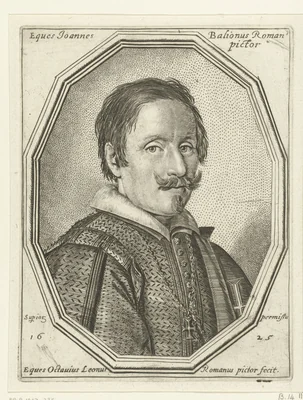
Giovanni Baglione (1566–1601) stands as a pivotal figure in the Roman art world, bridging the stylistic transition between the decorative intricacies of Late Mannerism and the dynamic realism characteristic of the nascent Early Baroque. While recognized by his contemporaries as a prolific painter whose religious and mythological compositions were widely sought after, Baglione’s enduring historical significance rests on his dual identity as an artist and as an essential chronicler of the period.
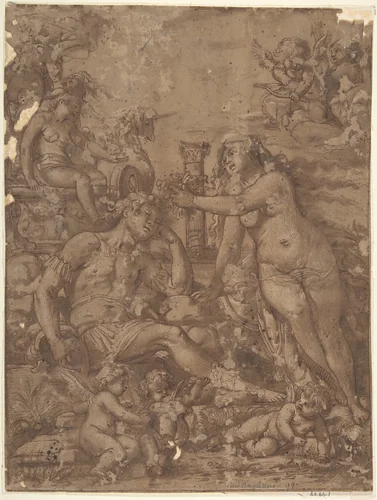
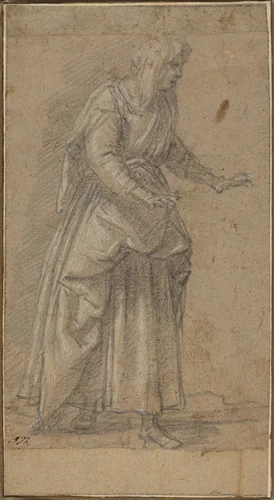
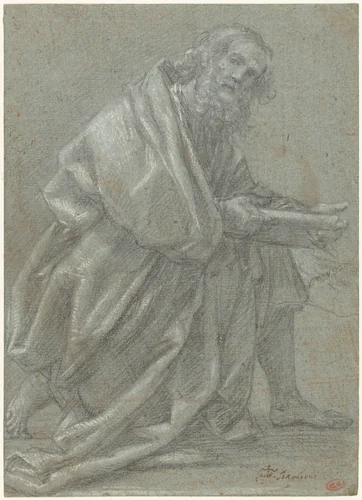
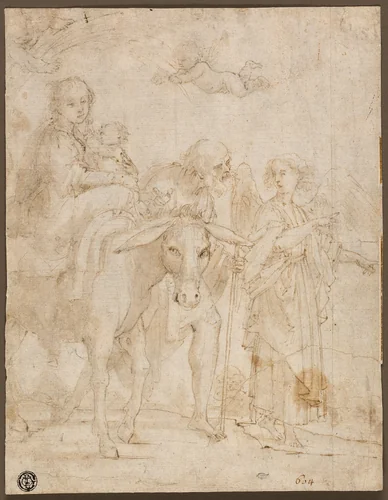
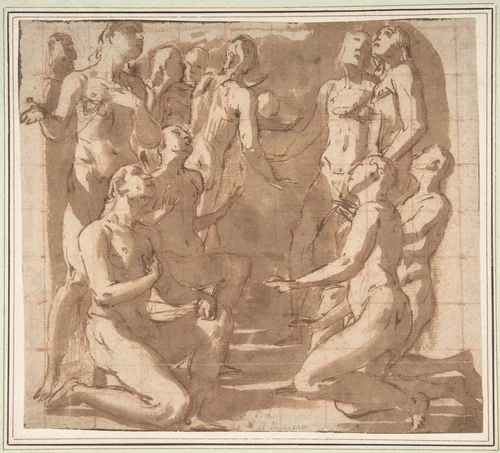
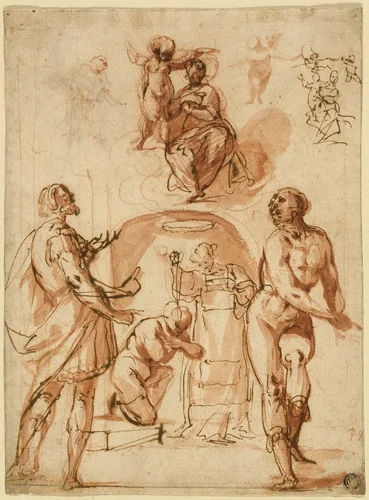
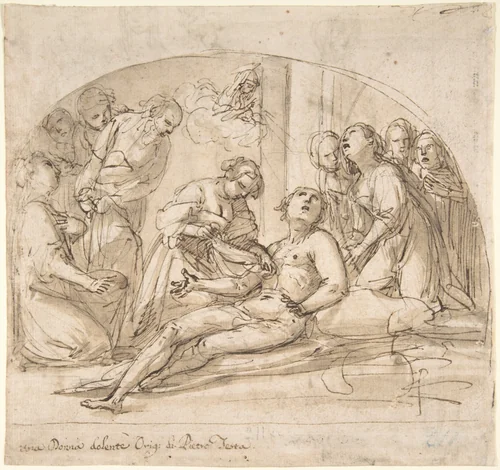
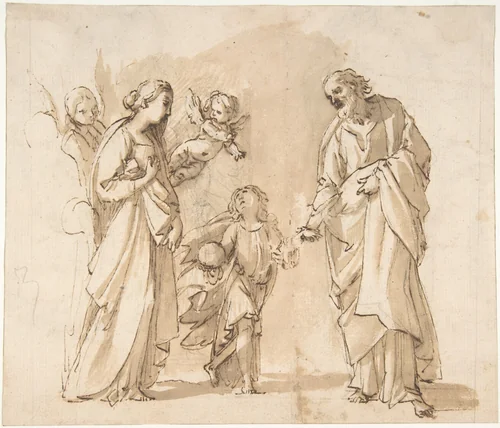
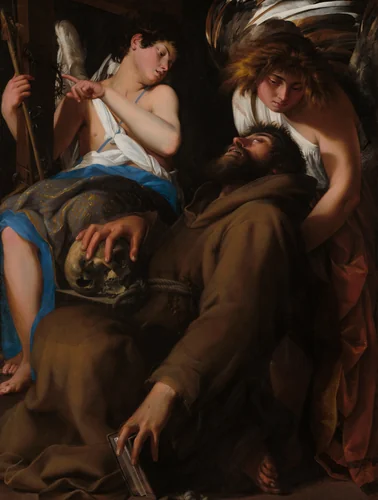
His surviving painted oeuvre, including commissions such as the dramatic narrative Rinaldo and Armida and devotional works like Flight into Egypt, demonstrates his evolving command of light and emotional intensity. His preparatory studies, such as Studie voor een knielende apostel and the detailed Group of Nude Male Figures Kneeling and Standing in Supplication, offer important insights into the academic draughtsmanship and meticulous preparation required of painters working within the Roman academies. Today, these works are preserved in major institutions, with key examples of Giovanni Baglione paintings and drawings residing in the collections of the Metropolitan Museum of Art, the National Gallery of Art, and the Rijksmuseum.
Yet, it is through his expansive writings that Baglione provides the most comprehensive record of Rome’s artistic ferment. His encyclopedic collection of biographies of artists working during his lifetime provides an invaluable window into the professional dynamics and social structure of the città eterna. This literary output, however, is perhaps most famously stained by his bitter rivalry with the slightly younger revolutionary, Caravaggio. The detail with which Baglione documents this acrimonious relationship through both his writing and his art serves as a fascinating, if sometimes biased, primary source detailing the intense competition and shifting artistic values of the seventeenth century.
Although much of his extensive decorative painting has faded or been dispersed, the quality of his surviving drawings and the enduring importance of his critical writing confirm his status. For those interested in studying the complexity of the transition from late Renaissance aesthetics, many key Giovanni Baglione prints and works are readily available in the public domain, often reproduced today as high-quality prints for scholarly examination and collecting.
Source: Wikipedia · CC BY-SA 4.0