Giovanni Antonio Pellegrini
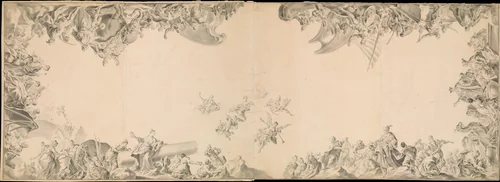
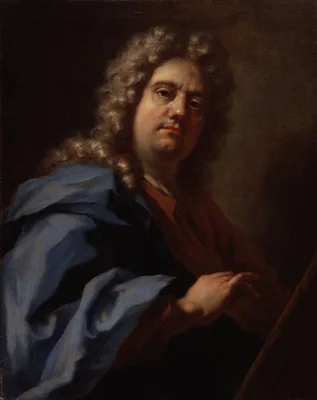
Giovanni Antonio Pellegrini (1675-1718) stands as a foundational figure in the transition of Venetian painting into the 18th century. Recognized as one of the era’s foremost history painters, he successfully synthesized the grand, decorative traditions of the Italian Renaissance, particularly the colorism of Paolo Veronese, with the dynamic flair and dramatic immediacy of the late Baroque, drawing influence from masters like Pietro da Cortona and Luca Giordano. This fusion resulted in a refined, luminous sensibility that marked a decisive step away from 17th-century gravity and helped define the subsequent generation of Venetian art.
Unlike many of his contemporaries who remained localized, Pellegrini was a thoroughly cosmopolitan artist, traveling extensively across Europe to fulfill prestigious commissions. His itinerary, which spanned the Southern Netherlands, the Dutch Republic, Germany, Austria, France, and crucially, England, established him as a major international force. This constant movement meant that he functioned as an ambassador for the burgeoning Venetian style, spreading its lightness and technical facility far and wide. He was one of the first Venetian painters whose primary patronage existed outside of Venice itself, a pattern that became common later in the century.
Pellegrini’s expansive vision and commitment to narrative clarity, evidenced in complex religious and mythological subjects such as The Annunciation and Galatea and Acis with Polyphemus who is about to kill Acis out of Jealousy, marked him as an important precursor to the definitive 18th-century master, Giovanni Battista Tiepolo. His influence extended directly to his students, notably the architectural painter Antonio Visentini.
Though his career was relatively brief, his surviving corpus, including significant holdings of drawings and Giovanni Antonio Pellegrini paintings in institutions like the Metropolitan Museum of Art, the Art Institute of Chicago, and the Cleveland Museum of Art, provides rich evidence of his prodigious output. Today, these seminal works, including penetrating character studies like The Head of Pompey Presented to Julius Caesar, are often placed in the public domain, allowing enthusiasts access to museum-quality high-quality prints and downloadable artwork for personal study.
Source: Wikipedia · CC BY-SA 4.0