Giovanni Antonio Guardi
Giovanni Antonio Guardi (c. 1699-1760), known also as Gianantonio Guardi, stands as an essential, if often understated, figure in the vibrant tapestry of eighteenth-century Venetian painting. Distinguished both as a painter and a nobleman, his principal significance rests not only in his artistic output but in his institutional legacy: he was one of the pivotal co-founders of the Accademia di Belle Arti di Venezia in 1756. This act cemented his role in shaping the future of European art education and provided a formalized structure for the city’s declining, yet brilliant, artistic culture.
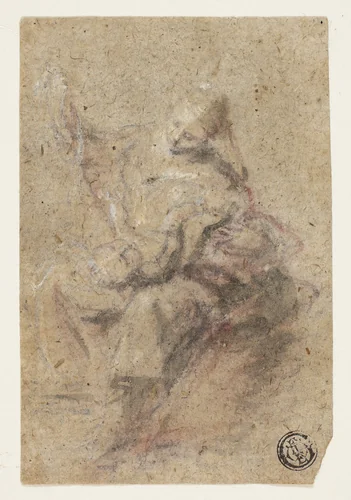
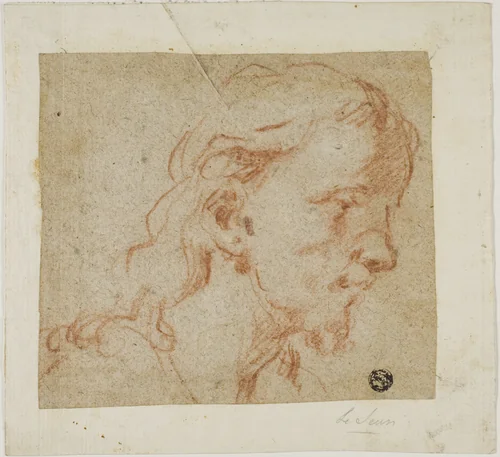
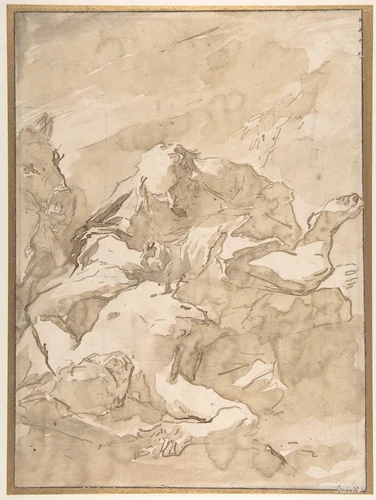
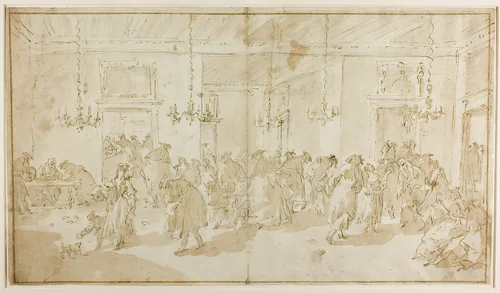
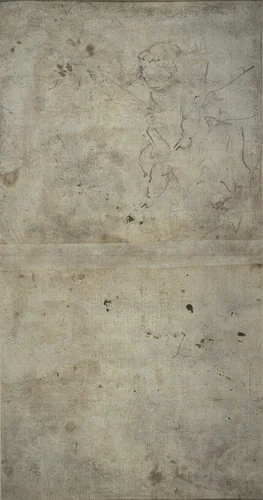
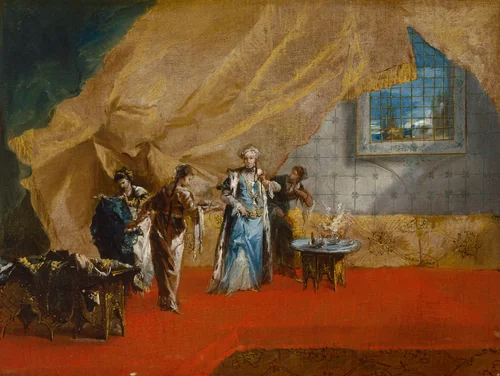
While biographical records suggest a remarkable activity spanning the 1600s through 1742, Guardi’s artistic maturity occurred during the high Baroque and early Rococo periods. He demonstrated a versatile approach, evidenced by the small corpus of extant works ranging from the intimate religious study of Madonna and Child and Head of Christ, in Three-Quarter Profile, to Right, to genre scenes capturing the social milieu of the time, such as Il Ridotto. The surviving documentation, which includes five drawings to only one known painting in the database, suggests Guardi was a highly skilled, and perhaps prolific, draftsman who prioritized immediate visual observation. His renderings, including the narrative focus of The Good Samaritan and the familial sketch of Sketch of Joseph Holding the Christ Child, reveal a delicate touch and an acute sensitivity to light typical of the later Venetian school.
Guardi’s contributions continue to be celebrated in major North American institutions, with representative works held in the permanent collections of the Art Institute of Chicago and the Metropolitan Museum of Art. The accessibility of these museum-quality works underscores his enduring influence. Today, scholars and enthusiasts seeking to study the intricacies of his hand benefit from the widespread availability of Giovanni Antonio Guardi prints. Many important preparatory works and finished pieces are entering the public domain, meaning high-quality prints and downloadable artwork are increasingly used for both academic study and appreciation. Guardi’s institutional authority, coupled with the subtle elegance of his brushwork, ensures his place as a necessary transitional figure connecting the grand traditions of earlier Venetian masters to the refined sensibilities of the succeeding generation.
Source: Wikipedia · CC BY-SA 4.0