Giovanni Antonio da Pordenone
Giovanni Antonio de’ Sacchis, known universally as Il Pordenone (c. 1484-1524), occupies a crucial, and often disruptive, position within the early sixteenth-century progression of Italian painting toward Mannerism. Though trained within the orbit of the Venetian school, Pordenone’s highly individual style offered a starkly dramatic and kinetic alternative to the often lyrical, color-focused output of his Venetian contemporaries. His career was marked by prolific activity across northern Italy, including extensive commissions in his namesake town of Pordenone, Friuli, and Venice.
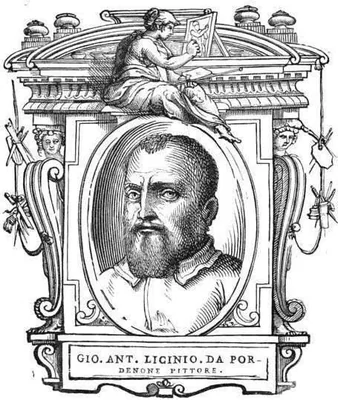
Pordenone’s method emphasized immediate, visceral impact, prioritizing bold composition over delicate finish. Historical accounts describe his working style as characterized by “speed, vigor, and deliberate coarseness of expression and execution”—a deliberate choice intended to engage, if not directly confront, the viewer. Ironically, his fame was so substantial that even his primary biographer, Giorgio Vasari, struggled to identify him correctly, mistaking him for Giovanni Antonio Licinio; a minor factual error that nonetheless confirms the artist’s considerable reputation across the peninsula.
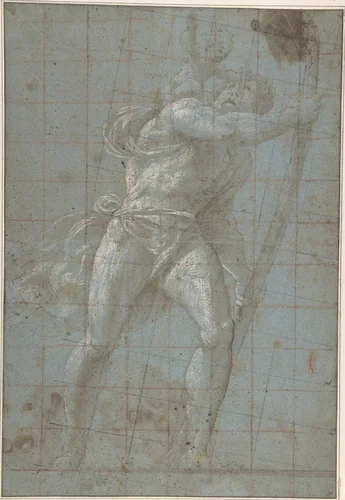
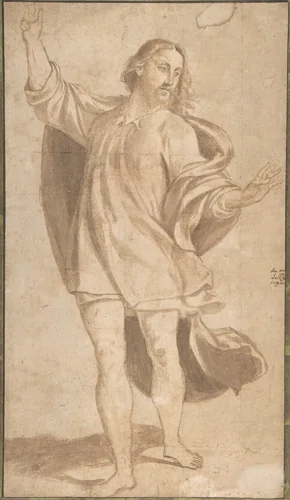
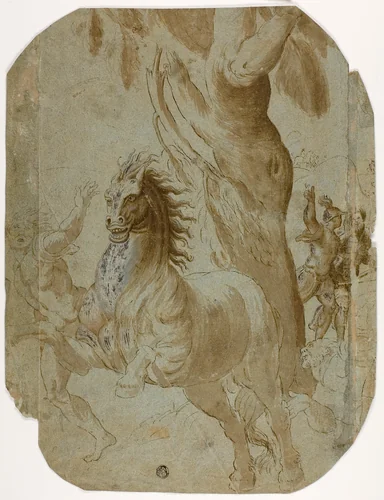
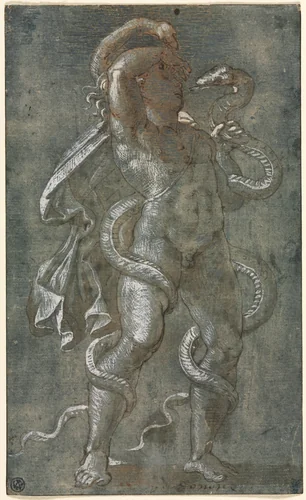
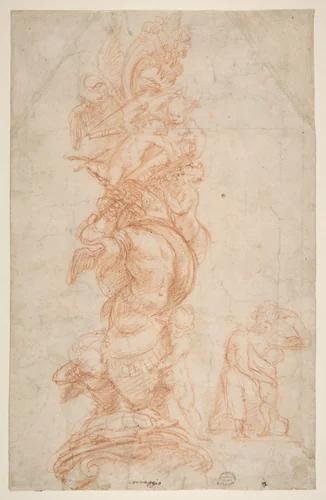
His power lay not only in grand fresco cycles, but in the preparatory work that anchored them. Pordenone was a formidable draftsman, utilizing his sheets to explore extreme postures and complex musculature. This dynamism is beautifully captured in surviving studies, such as the powerful Standing Figure of Christ with Arms Upraised and the technically sophisticated Conversion of St. Paul (recto); Man Seen from Back (verso). These works reveal his intellectual commitment to translating overwhelming narrative energy into visual form.
Today, the uncompromising character of Pordenone’s art can be studied in international collections, including the Metropolitan Museum of Art and the Art Institute of Chicago. While many of his definitive Giovanni Antonio da Pordenone paintings remain affixed to the architectural settings they were designed for, the vitality of his graphic output provides vital insight into his innovative approach. These important historical examples of his draftsmanship and design are increasingly available for scholarly use, often obtainable as high-quality prints or downloadable artwork, allowing for contemporary engagement with this often undervalued master of the High Renaissance transition.
Source: Wikipedia · CC BY-SA 4.0