Giovanni Antonio da Brescia
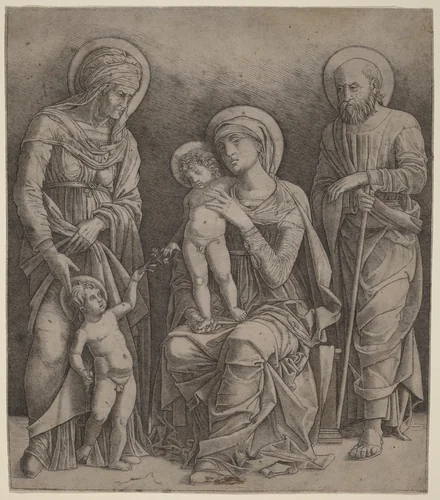
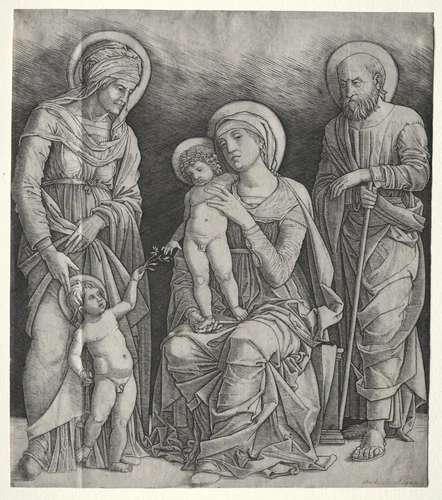
Giovanni Antonio da Brescia stands as a pivotal figure among early Italian Renaissance engravers, active primarily between 1490 and 1519 in Northern Italy. His significant, though numerically limited, oeuvre of approximately fifteen identifiable prints helped popularize master compositions across Europe, making him central to the study of artistic transmission during the period.
For many years, historical scholarship obscured his identity, attributing a group of approximately twenty early works signed "Z.A." to a distinct printmaker named Zoan Andrea. Modern research has conclusively demonstrated that GAB and the artist known as "Z.A." are one and the same, the initials representing an abbreviation of "Zovanni Antonio"—where "Zovanni" is the regional North Italian spelling of Giovanni. It is a neat, if slightly confusing, historical irony that the documented Zoan Andrea was merely an obscure painter active in Mantua during the 1470s who produced no known engravings. Following this initial period, around 1507, GAB abandoned the ambiguous initials in favor of clearer formulae such as "IO.AN.BX." and occasionally full signatures on later works.
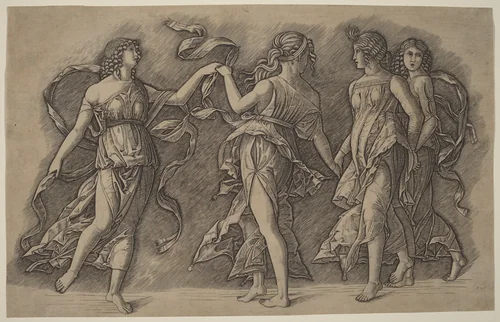
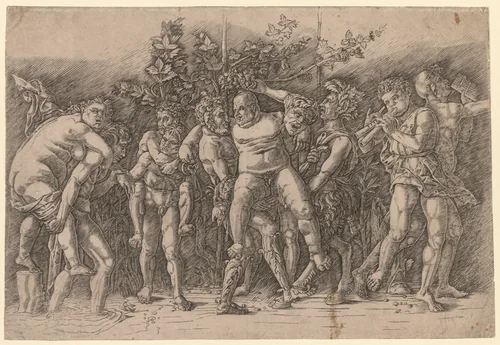
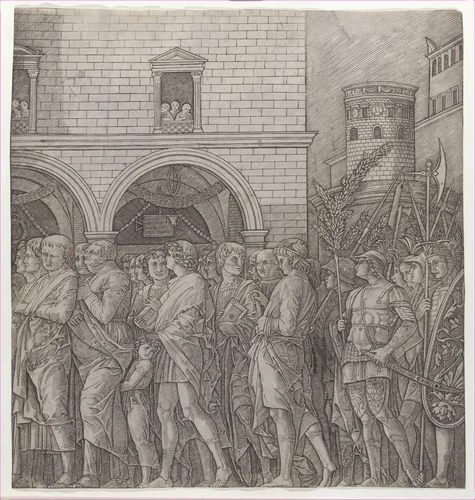
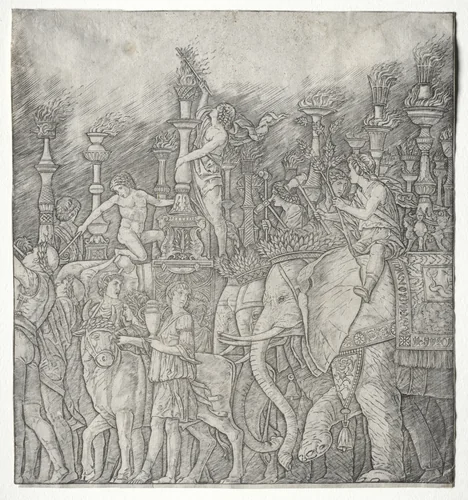
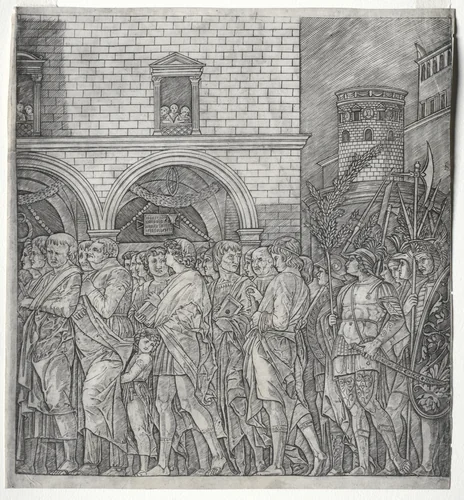
GAB specialized in classical and narrative subjects. His greatest contribution was the meticulous reproduction of Andrea Mantegna’s monumental Triumphs of Caesar series. Prints such as The Triumph of Caesar: the senators and The Triumphs of Caesar: The Elephants were crucial vehicles for disseminating Mantegna’s demanding style and influence across the Italian peninsula and beyond. These reproductions, executed with technical precision, stand among the most sought-after Renaissance imagery, recognized today as museum-quality documents of classical revival. In parallel, his mythological works, including the sophisticated Four Dancing Muses and Bacchanal with Silenus, demonstrate his independent skill in handling dynamic figure groups and complex compositions.
The enduring importance of these graphic works ensures that Giovanni Antonio da Brescia’s legacy remains vital. His oeuvre is preserved in the permanent collections of major institutions worldwide, including the Cleveland Museum of Art, the Art Institute of Chicago, and the Metropolitan Museum of Art. His influential images are increasingly entering the public domain, providing access to high-quality prints for scholars and enthusiasts globally.
Source: Wikipedia · CC BY-SA 4.0