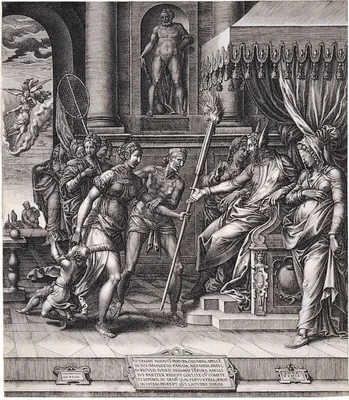
Giorgio Ghisi
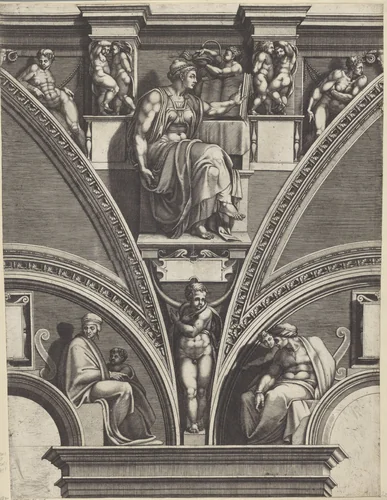
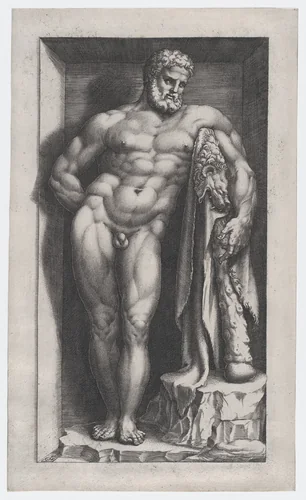
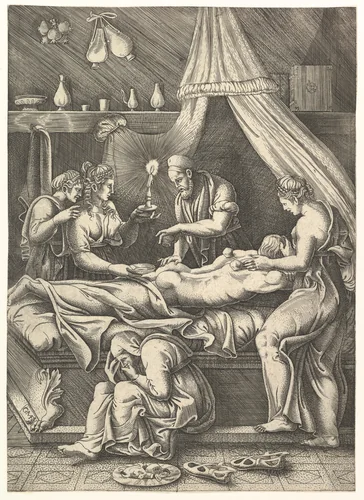
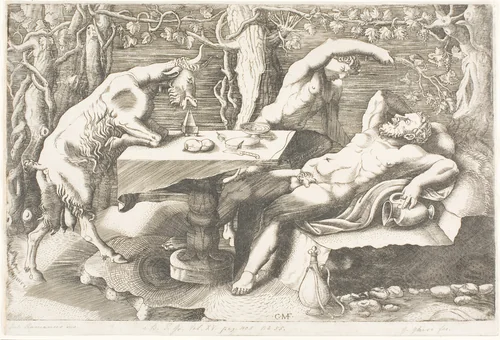
Giorgio Ghisi holds a pivotal place in the history of 16th-century Italian printmaking. Hailing from Mantua, the sophisticated artistic center dominated by the Gonzaga court, Ghisi developed a rigorous engraving technique that allowed him to translate the muscular aesthetic of the High Renaissance into the reproducible medium of the print. His significance is underscored by his international career, which took him from Italy across the major artistic hubs of Europe, including Antwerp and France, confirming his status as an itinerant master who circulated crucial visual ideas across borders.
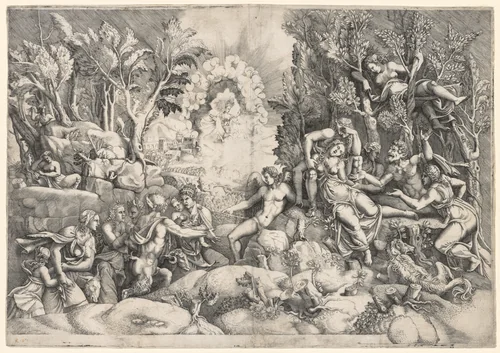
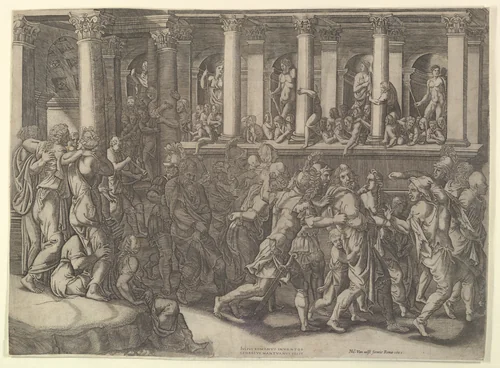
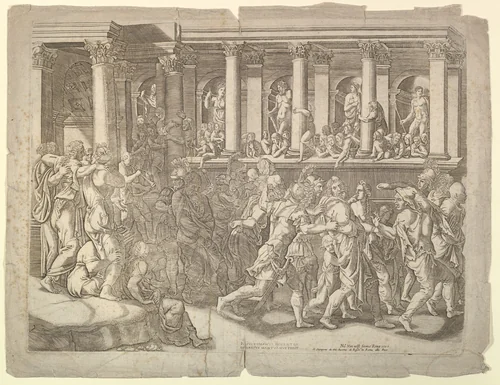
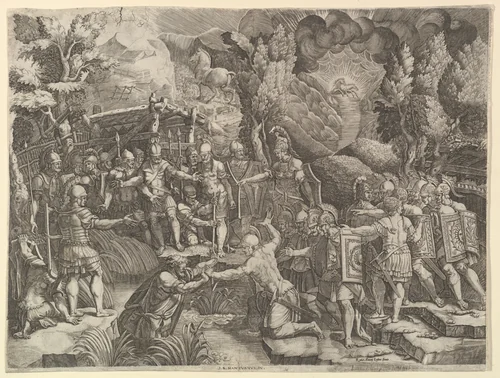
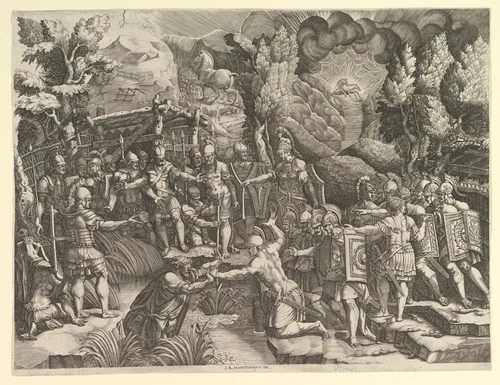
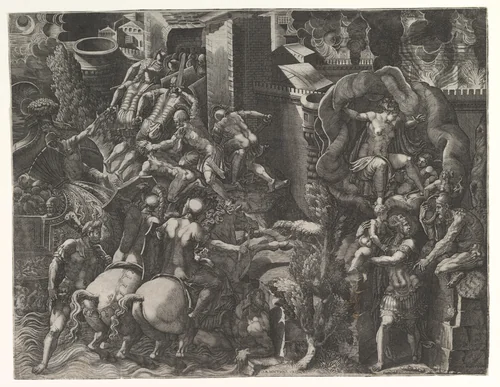
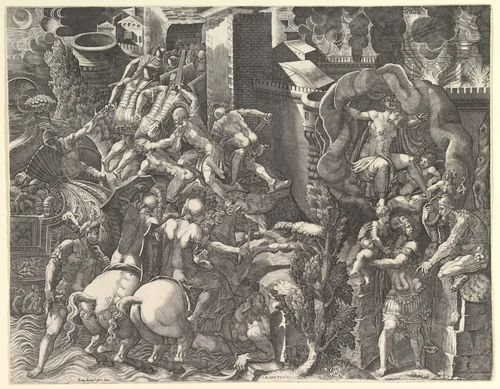
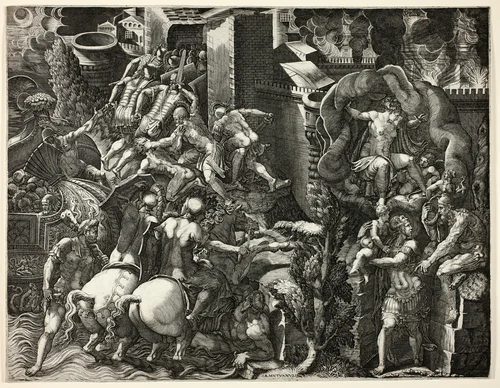
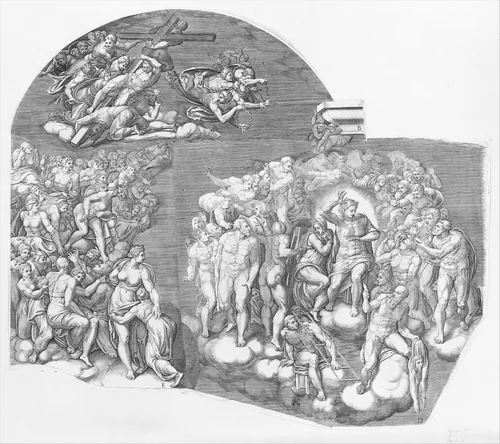
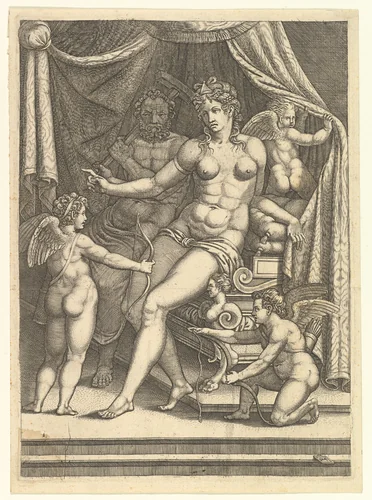
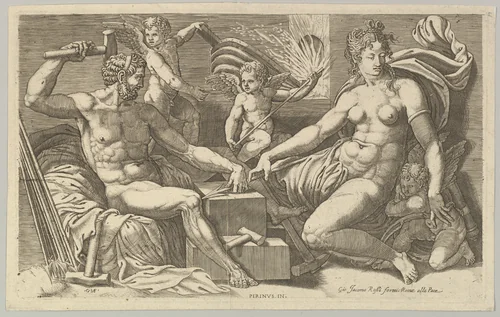
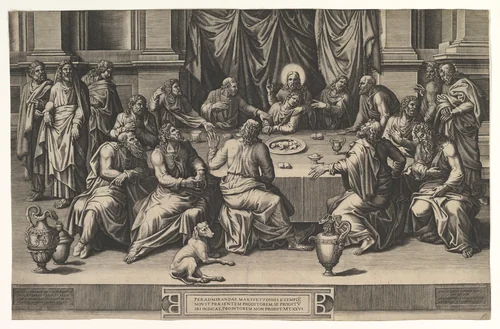
Ghisi worked firmly within the late Mannerist idiom. This highly intellectual and dynamic style is evident in the convoluted arrangements and dramatic tension found in his mythological and classical scenes. Works such as Seated Neptune holding a conch shell to his mouth, accompanied by a seated triton and another emerging from the water at bottom right demanded exacting draftsmanship, relying on complex cross-hatching to achieve deep shadows and textural realism across his compositions. His surviving corpus of approximately fifteen prints includes complex narrative works like Apollo and the Muses and the historically oriented Roman Soldiers Before an Emperor.
While known primarily for his achievements on paper, Ghisi possessed a versatile practice that extended beyond engraving. He was also a master of damascened metalwork, creating intricate designs inlaid in steel. Curiously, only two pieces of this demanding metalwork are known to have survived, rendering him a celebrated printmaker by historical accident, if not by primary vocational choice, confirming that paper often holds history more reliably than metal.
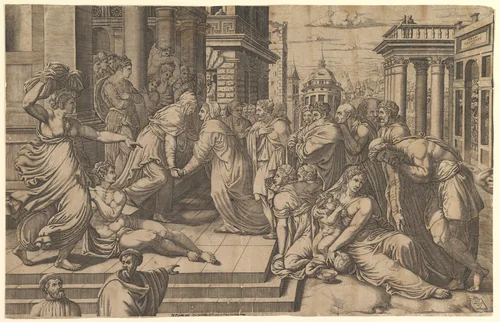
His printed achievements demonstrate a remarkable range, spanning mythology, allegory, and portraiture. Emblematic works include the refined study Emblem of Lucrezia Gonzaga and the clear narrative of Angelica and Medoro; the couple embracing, Medoro carving their names in the bark of a tree. The technical proficiency and scale of Giorgio Ghisi prints made them highly desirable collector's items across the continent. Today, Ghisi's work is foundational to major global institutions, including the Metropolitan Museum of Art, ensuring that the visual complexity of this traveling master remains available as downloadable artwork and high-quality prints for scholarly study and public appreciation.
Source: Wikipedia · CC BY-SA 4.0