Gino Severini
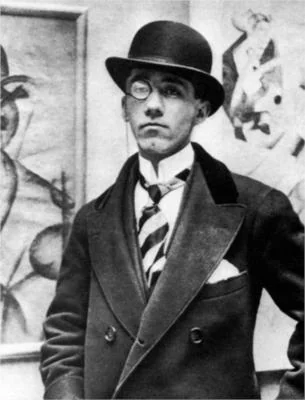
Gino Severini stands as a foundational contributor to Italian Futurism, the movement dedicated to capturing the dynamism, speed, and fractured reality of the modern era. Active primarily between 1912 and 1915, his pivotal works synthesized the temporal intensity of Italian ideology with the structural fragmentation of Parisian Cubism. Severini was uniquely positioned for this synthesis, dividing his productive life between Rome and the French capital. This transatlantic artistic exchange lent his work a distinct refinement, often focusing less on the overt depiction of machinery and more on the scintillating energy of urban life, particularly the spectacle of dancers and lights.
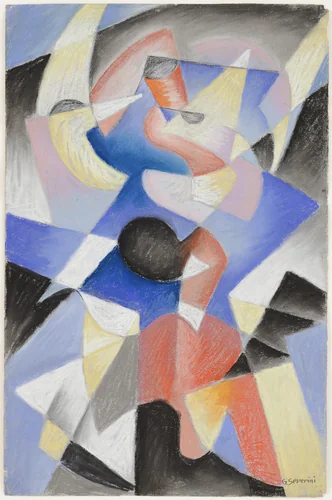
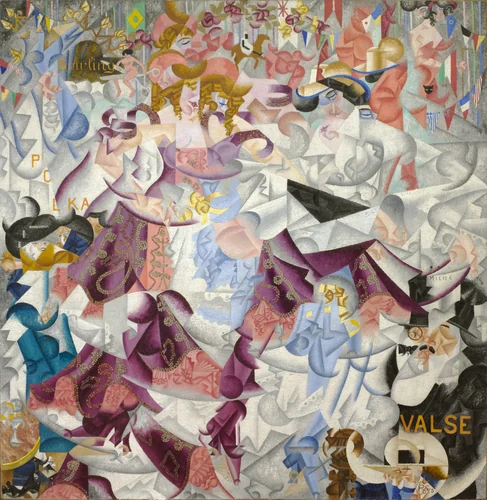
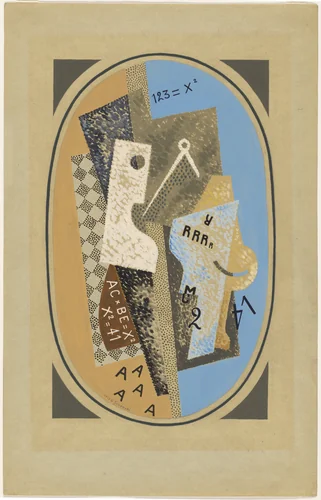
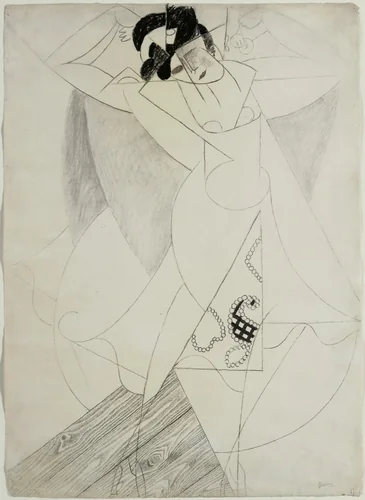
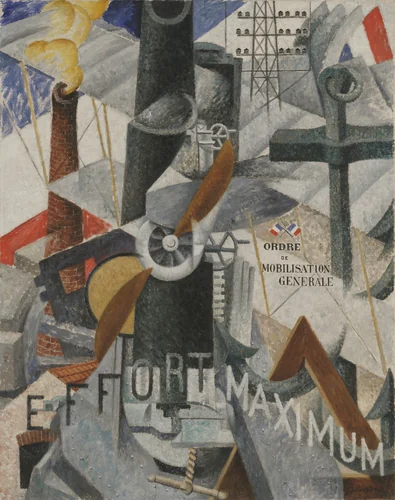
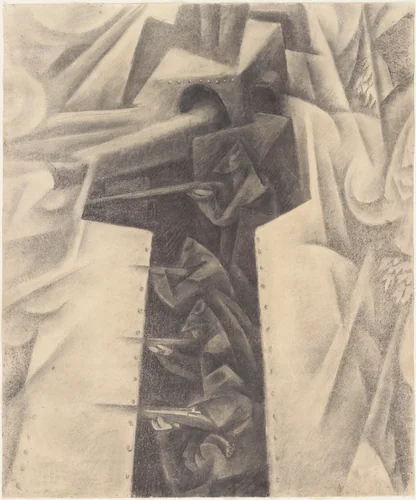
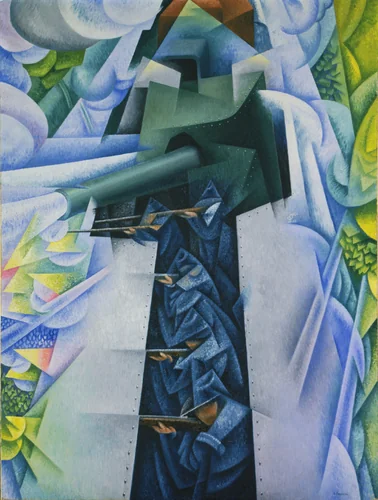
This focus is evident in his seminal canvas, Dynamic Hieroglyphic of the Bal Tabarin, which uses shimmering, rhythmic planes to dissolve the boundaries between subject, atmosphere, and perception. He consistently explored motion and form through geometric abstraction, demonstrated further by the charged energy of Spanish Dancer and the purely structural challenge posed by Oval Composition. Even as the movement engaged with political themes, Severini translated conflict into structure, as seen in Visual Synthesis of the Idea: "War".
Following the global upheaval of the First World War, Severini participated in the widespread European “return to order.” This period marked a significant, yet seamless, pivot to classical representation and Neo-classicism, confirming his remarkable technical versatility. While other pioneers of Futurism struggled to transition from abstraction, Severini embraced figuration, working prolifically across a variety of media, including mosaic and fresco, throughout his later career.
His consistent pursuit of both stylistic innovation and formal excellence earned him lasting institutional recognition, including accolades from major bodies such as the Rome Quadrennial. Today, major museums worldwide, including the Museum of Modern Art, hold his key works. For collectors and researchers, many early Gino Severini prints and drawings are now available in the public domain, offering access to these revolutionary visions. The accessibility of high-quality prints ensures that the visual grammar Severini established remains central to studies of early twentieth-century modernism.
Source: Wikipedia · CC BY-SA 4.0