Gillis van Coninxloo
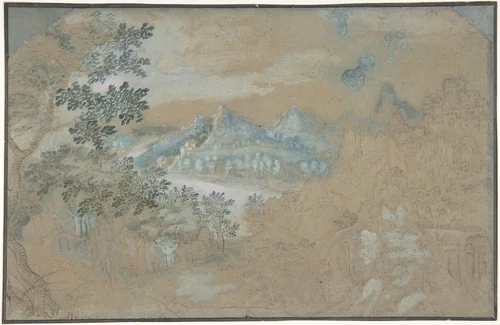
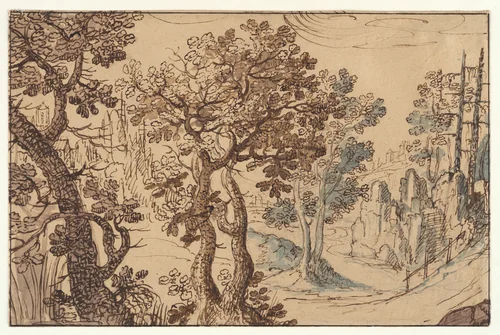
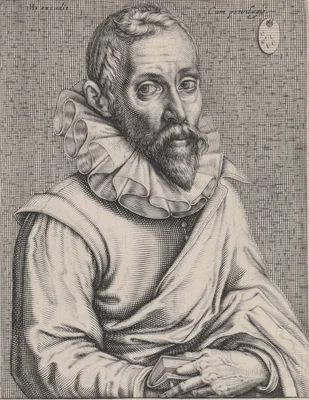
Gillis van Coninxloo (1544-1607) was a Flemish painter whose influential work fundamentally redirected the course of Northern European landscape art at the close of the 16th century. His primary innovation lay in the intensive elaboration of the forest view, transforming generalized panoramic vistas into intimate, immersive depictions of dense woodland.
Coninxloo began his professional life in Antwerp, then a powerhouse of artistic production and printmaking. However, his most transformative period coincided with his departure from the city. For the last two decades of his life, he was active abroad, first working in Germany and later establishing himself within the burgeoning artistic communities of the Dutch Republic. This itinerant career was critical in disseminating his distinctive style across the Low Countries just as the independent landscape genre was solidifying.
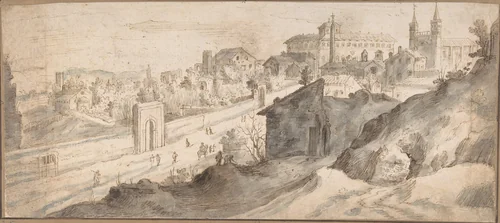
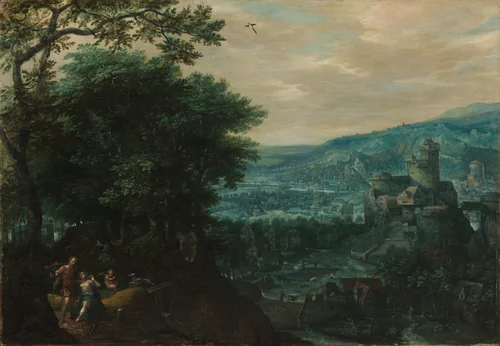
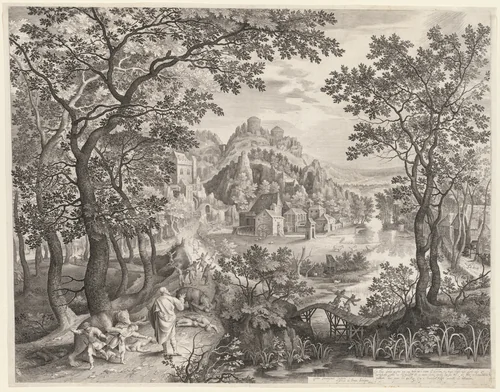
Where predecessors focused on distant, sweeping horizons, Coninxloo excelled in the near-view, using carefully constructed masses of foliage and towering tree trunks to create compositions of remarkable depth and atmosphere. His works, such as the surviving drawing View of St. John Lateran, Rome and the painting Landscape with Venus and Adonis, demonstrate a refined sensitivity to light filtering through the canopy, giving his forest scenes a palpable realism. This focus on the specific structure of the woods made him the indispensable progenitor of the great 17th-century Dutch silvan landscape painters.
The impact of his legacy is clear in the fact that works ranging from detailed drawings to monumental Gillis van Coninxloo paintings are held in leading global collections, including the Metropolitan Museum of Art and the Cleveland Museum of Art. His historical importance ensures that high-quality prints documenting his diverse output, including scenes like Elisha Cursing the Children of Bethel Who Are Being Devoured by the Bears, remain a cornerstone of Renaissance landscape study. It is, perhaps, a fitting irony that an artist so devoted to rendering the fixed, enduring nature of the primeval forest spent his most productive years constantly transplanting himself, establishing fresh artistic roots across Central Europe.
Source: Wikipedia · CC BY-SA 4.0