Gian Antonio Burrini
Gian Antonio Burrini (1656-1715) stands as a crucial figure in the transmission of the Bolognese tradition, deftly bridging the theatrical intensity of the Late-Baroque movement with the emerging lightness of the Rococo style. Active primarily in Bologna, his career spanned a vital period of stylistic recalibration in Italian painting, placing him centrally in the transition from dramatic illusionism to decorative elegance.
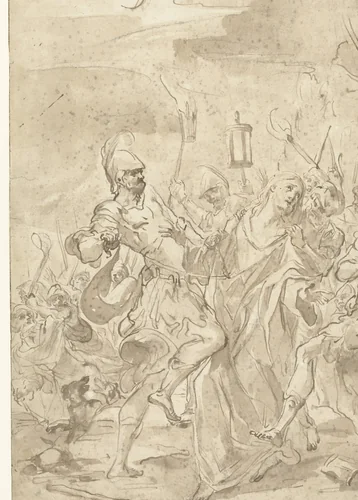
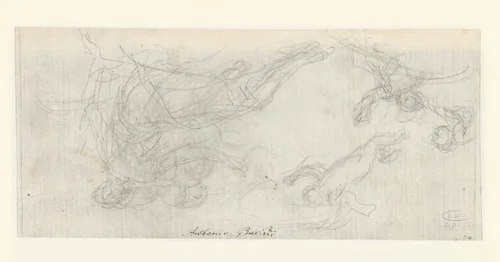
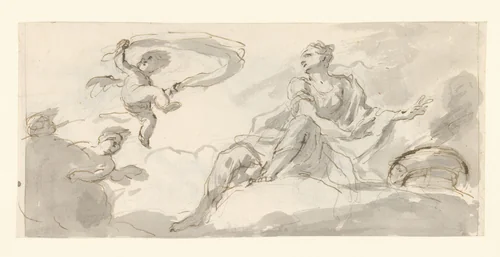
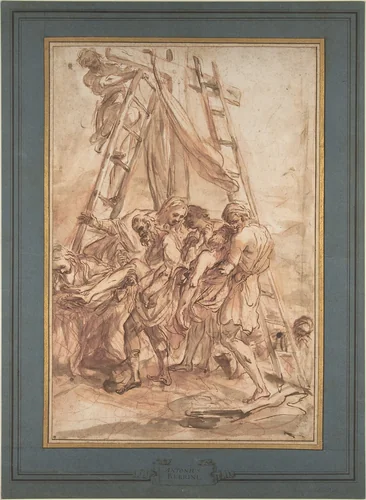
Burrini’s significance extends beyond his easel work; he was a founding member of the Accademia Clementina, established in 1706. This commitment to institutionalizing artistic training reveals his status as a master whose influence shaped the next generation of Bolognese painters and solidified the school's historical reputation. His surviving graphic output, held in major international collections, demonstrates a strong mastery of form and movement, evidenced in works such as De gevangenneming van Christus and the dynamic ceiling preparation Studie voor een allegorische plafondschildering. Even his smaller figure studies, like the charming Vrouw en putti in de wolken, showcase his facility with dramatic foreshortening and atmospheric suggestion.
Historically, Burrini is noted as a professional competitor to Sebastiano Ricci, a detail that underscores the high stakes of the art market at the turn of the 18th century, where major commissions determined the fate of artistic schools. This rivalry was ultimately a beneficial tension that sharpened the aesthetics of both masters. While many of his major Gian Antonio Burrini paintings remain fixed in historical sites, his graphic works offer an intimate view into his process.
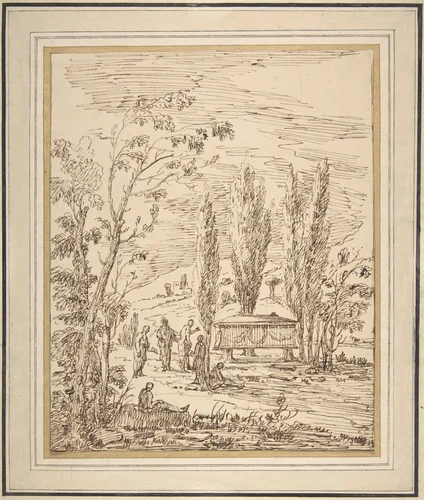
Today, these studies, including the meticulously detailed Landscape with Figures near a Tomb, provide invaluable insight into the period’s drawing practices. His work is increasingly accessible; many of his drawings have entered the public domain and are widely sought after as high-quality prints for scholarly study. Burrini’s enduring legacy is rooted in his ability to sustain the grandeur of the preceding century while incorporating the softer palette and graceful rhythms that defined the new age.
Source: Wikipedia · CC BY-SA 4.0