Giacomo Quarenghi
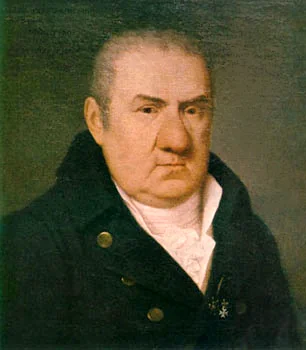
Giacomo Quarenghi (1744-1837) stands as the definitive figure of Neoclassical architecture in Imperial Russia. Born in Italy, his long and immensely productive career centered almost entirely on Saint Petersburg, where he shaped the city’s monumental urban core under Catherine the Great and her successors. Quarenghi was more than a designer; he was an ambassador of classical rigor, successfully transplanting the measured ideals of Andrea Palladio directly onto the banks of the Neva and providing the aesthetic foundation for Russia’s transformation into a European capital.
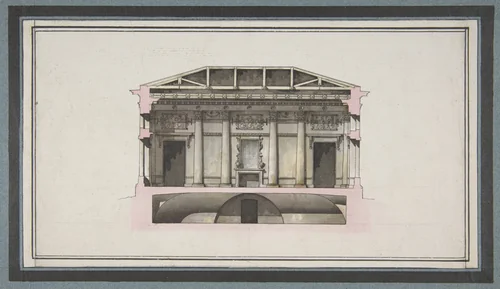
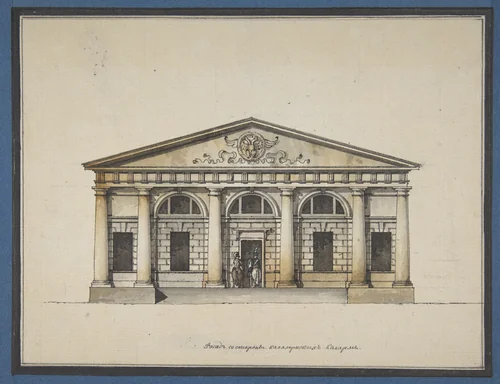
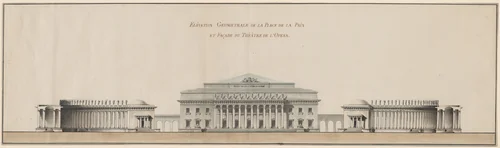
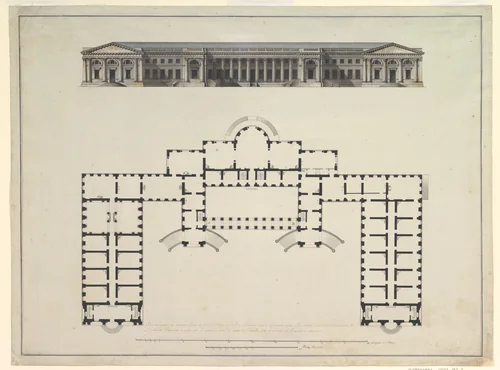
His architectural signature was marked by a strict adherence to monumental scale, favoring clean lines, grand porticos, and severe, rational compositions. This original and compelling style became the recognized standard throughout the empire, setting the tone for public and private buildings across Russia and extending its influence into the Grand Duchy of Finland. The sheer breadth of his commissions speaks to his dominance. Examples of his mastery range from imperial residences, such as the intricate Project for the Alexander Palace, Tsarskoe Selo (Section), to ambitious infrastructure, illustrated by the commanding Project for the Riding-School of the Horse Guards in Saint Petersburg - Elevation of the Side Entrance. It is a quiet observation on Quarenghi’s tireless activity that his production defined the aesthetic sensibility of the Russian court for over four decades, often simultaneously overseeing multiple, vast projects designed to articulate imperial power.
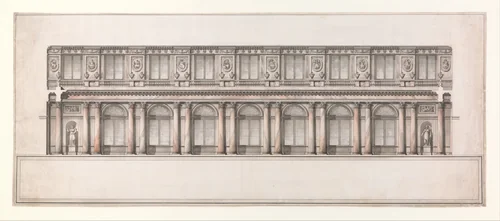
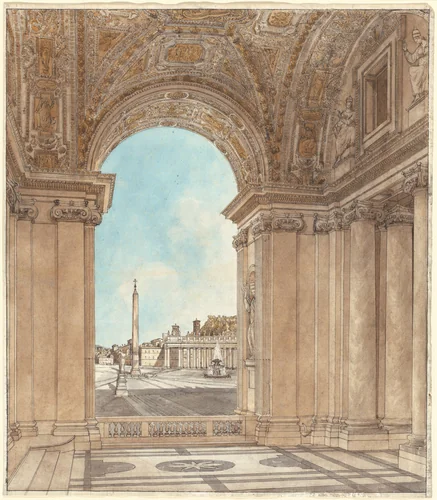
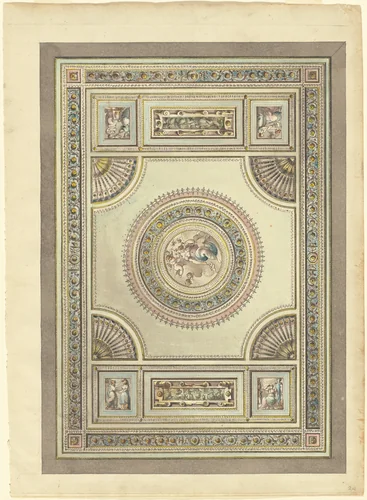
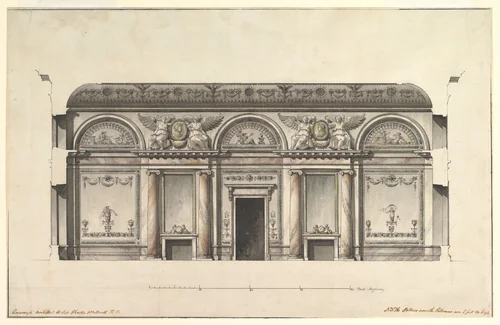
Crucially, Quarenghi’s legacy survives not only in the stone of Saint Petersburg, but in the precision of his preparatory architectural drawings. These works, held in major institutions like the Metropolitan Museum of Art and the National Gallery of Art, reveal his meticulous process of planning and execution. Technical renderings such as the Longitudinal Section of Great Throne Room (Saint George's Hall), Winter Palace, Saint Petersburg, demonstrate his command over the spatial complexity of immense interiors, even when rendered solely on paper. His earlier studies also captured essential European motifs, seen in his rendering of The Piazza of Saint Peter's Seen through an Arch of the Basilica, confirming his grounding in Italian tradition before his lengthy tenure in Russia. Because much of his highly detailed work, including many Giacomo Quarenghi prints, now resides in the public domain, these museum-quality documents are widely accessible for study and available as high-quality prints.
Source: Wikipedia · CC BY-SA 4.0