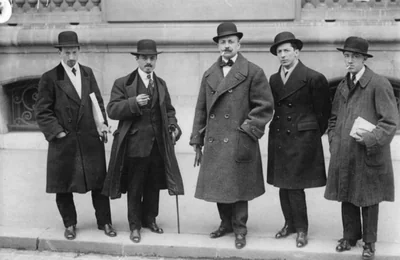
Giacomo Balla
Giacomo Balla was an influential Italian painter, art teacher, and poet, best recognized as a foundational figure and vital theoretician of Futurism. Active primarily between 1909 and 1924 within this revolutionary movement, Balla translated the group's manifesto objectives into visual language, focusing on the sensory experience of modern life. Unlike many of his contemporaries who often embraced the aggressive aesthetic of industrial violence or the raw power of machinery, Balla was fundamentally concerned with the physics of perception: how light is refracted, and how speed is accurately recorded by the human eye.
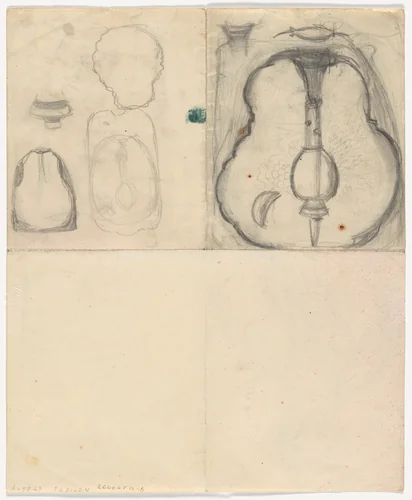
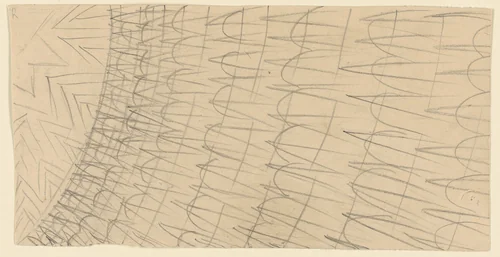
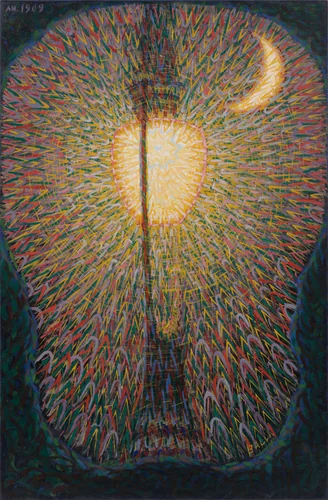
Balla utilized Divisionist techniques, derived from his early career, to systematically break down light and movement into sequential fragments. This methodology is perfectly encapsulated in works like Street Light and the seminal studies for that painting, where the nocturnal glow of electric illumination is rendered as a radiant burst, analytically mapped across the canvas. His dedication to capturing the trajectory of objects at velocity led to a series of highly sophisticated works focused purely on kinetic energy.
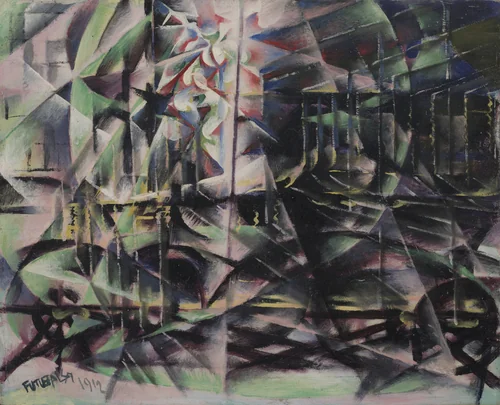
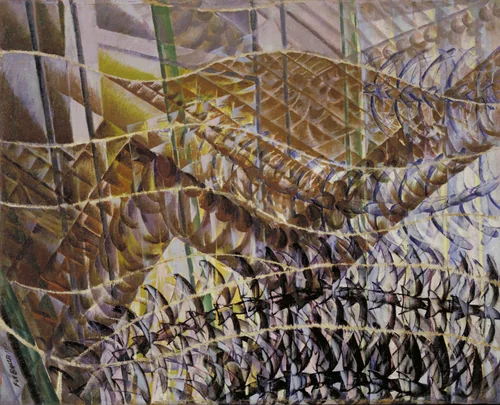
Pieces such as Speeding Automobile and the detailed sequence Swifts: Paths of Movement + Dynamic Sequences move beyond simple representation, presenting a sophisticated, almost scientific record of motion across space and time. This tendency towards the playful and analytical observation of dynamic phenomena often distinguishes Giacomo Balla paintings from the more severe output of the movement. He demonstrated that speed did not always necessitate severity, often leaning toward the witty and whimsical rather than the aggressively polemical.
Balla’s artistic production spanned painting, drawing, and design, offering a comprehensive view of Futurism’s visual possibilities. Major institutions, including the Museum of Modern Art, hold these foundational works in their collections. Today, much of his foundational corpus, now in the public domain, allows access to high-quality prints for enthusiasts worldwide who seek to study his innovative representation of urban velocity.
Source: Wikipedia · CC BY-SA 4.0