Giacinto Gimignani
Giacinto Gimignani, an influential Italian artist spanning the 17th and early 18th centuries, was a pivotal figure in the Roman Baroque period. Known primarily as a sophisticated painter of large-scale historical and mythological narratives, Gimignani maintained a distinguished career in the highly competitive environment of Papal Rome, ensuring his long-term success through both his brush and his burin.
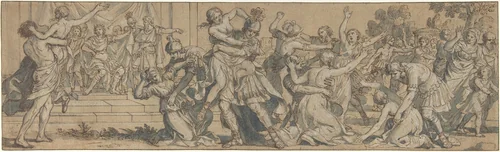
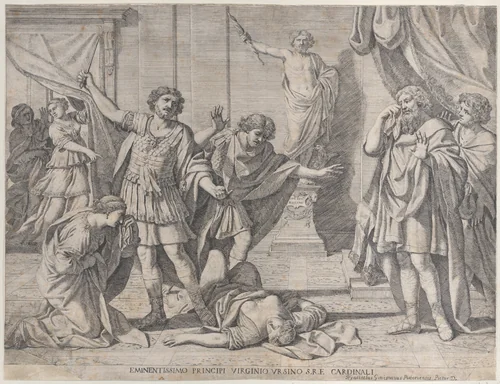
Gimignani was equally adept as an engraver, employing the technique of aquaforte (etching) to translate his complex compositional ideas into reproducible graphic works. This duality allowed his artistic vision, characterized by dramatic action, classical musculature, and elaborate drapery, to travel beyond the confines of the noble palaces and churches where his Giacinto Gimignani paintings were typically installed. His surviving corpus of drawings and prints, such as the dynamically staged The Rape of the Sabines and the poignant The Death of Virginia, confirms his mastery of line and narrative compression.
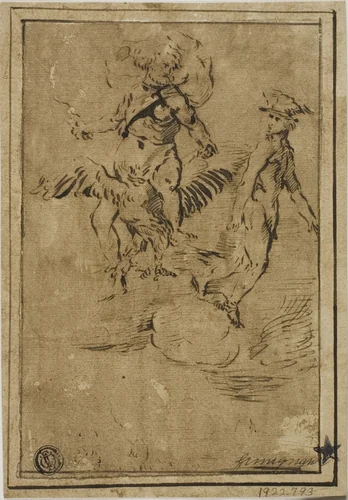
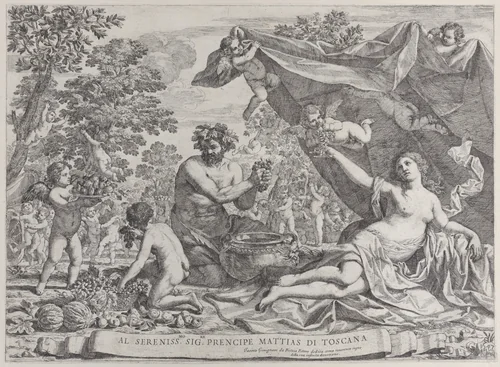
A defining characteristic of his work is the ability to infuse classical subject matter, frequently drawn from Ovid or Roman history, with contemporary Baroque intensity. Whether depicting the turbulent cloud drama of Jupiter and Mercury in the Clouds or the lush, overflowing imagery found in Garden of Venus with Bacchus Squeezing Grapes, Gimignani specialized in compositions that were both scholarly and visually engaging. He consistently demonstrated a particular talent for capturing the precise emotional zenith of a story, a quality critical to the era’s artistic demands.
While he dedicated his life mainly to the canvas, today, much of his widespread recognition stems from his smaller-scale output. His drawings and high-quality prints are essential holdings in prestigious institutions, including the National Gallery of Art, the Art Institute of Chicago, and the Rijksmuseum. Due to their institutional tenure, many of these Giacinto Gimignani prints have entered the public domain, ensuring that his meticulous approach to classical drama remains readily available as downloadable artwork for scholars and enthusiasts around the globe.
Source: Wikipedia · CC BY-SA 4.0