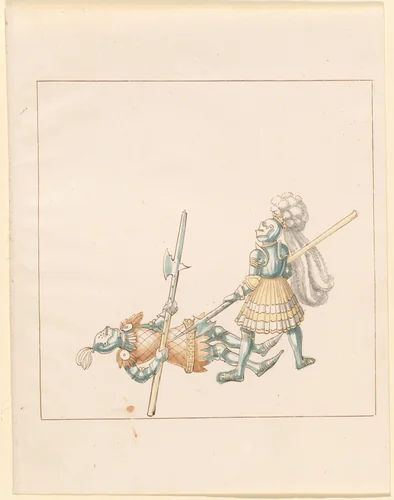
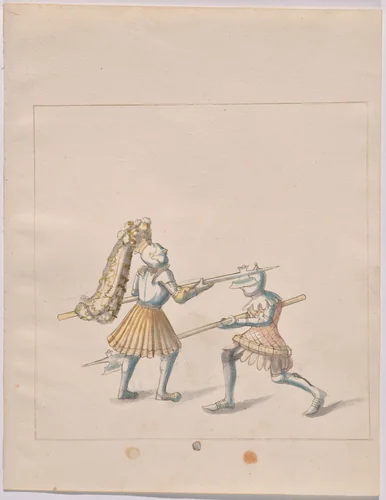
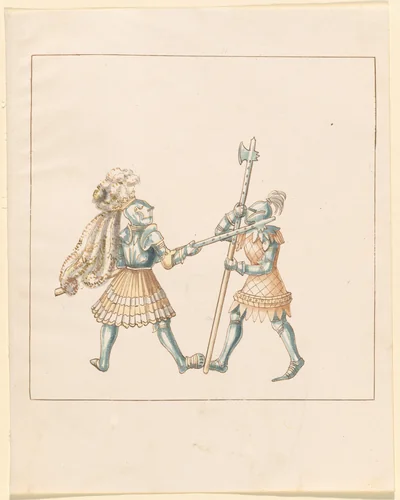
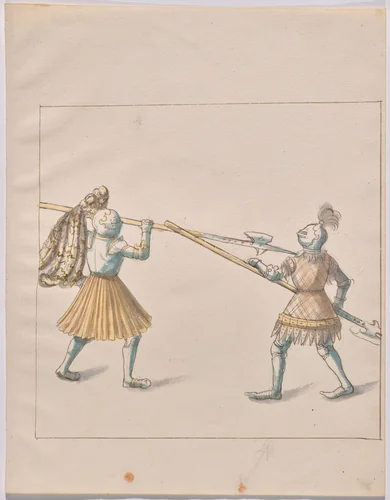
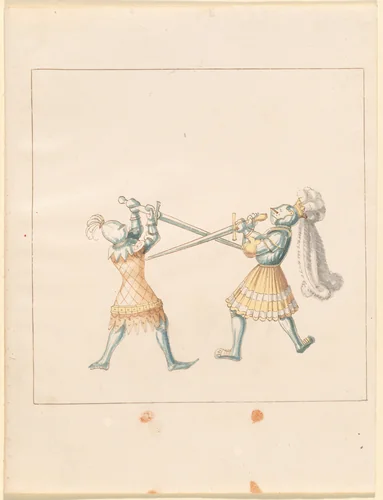
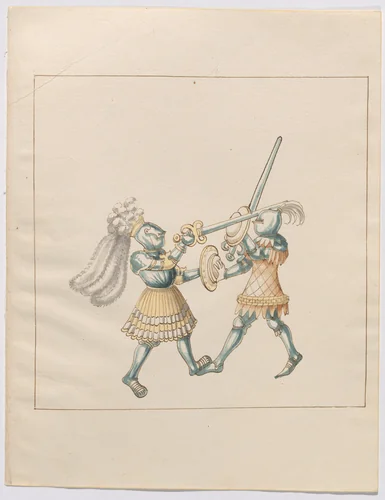
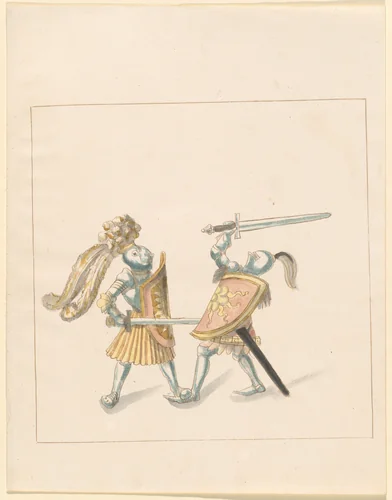
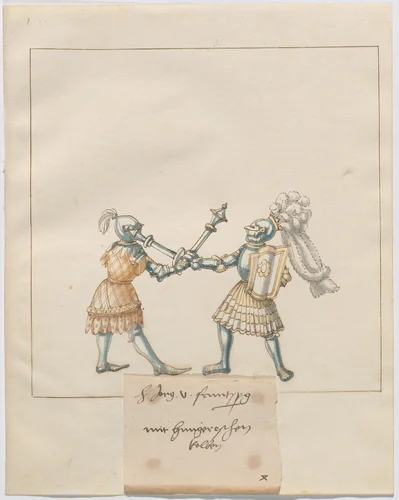
German 16th Century
The designation German 16th Century refers to an anonymous printmaker active in Northern Europe during a focused five-year period spanning 1495 to 1500. This unidentified master was a producer of German 16th Century prints, contributing to the graphic output of the early Northern Renaissance.
The artist's oeuvre is documented primarily through surviving examples of their works held in public institutions. Fifteen prints by the German 16th Century master are represented in museum collections, including important examples held at the National Gallery of Art. These museum-quality works demonstrate proficiency across sacred, mythological, and educational subjects.
Notable compositions include the religious narrative Moses and the Burning Bush and the depiction of the Passion, Christ on the Cross. Secular and allegorical works also form a key part of their output, such as the mythological composition Apollo Dancing with the Nine Muses, the commemorative Funeral Monument to the Daughters of Feuerabend, and the instructional block book segment Alphabet for a Primer. Because of their age, many of these historical prints fall within the public domain, making high-quality prints available for study and historical reference.