German
The corpus of works designated under the broad umbrella of “German” art spans nearly four centuries, chronicling the profound aesthetic and technical evolution of Northern European visual culture from the high Gothic through the early Renaissance. Active between 1234 and 1600, this diverse body of material represents the enduring craft and devotional intensity characteristic of regional artistic production, with masterworks found today in prestigious collections such as the Metropolitan Museum of Art and the Art Institute of Chicago.
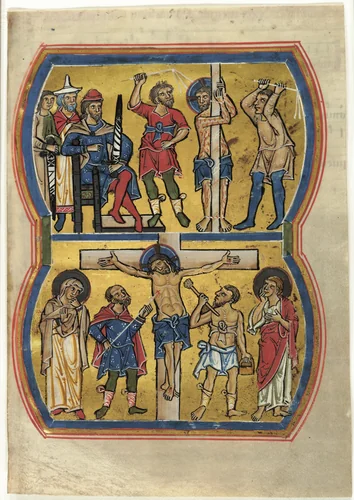
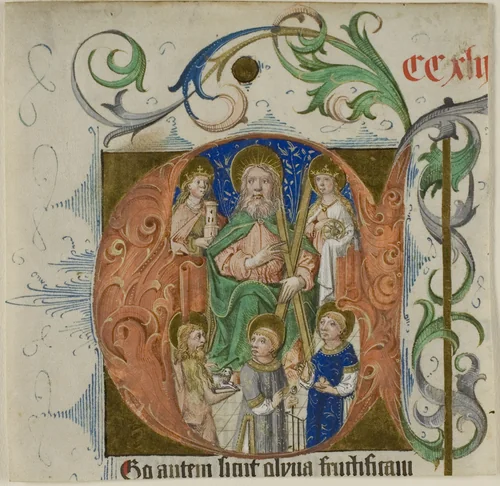
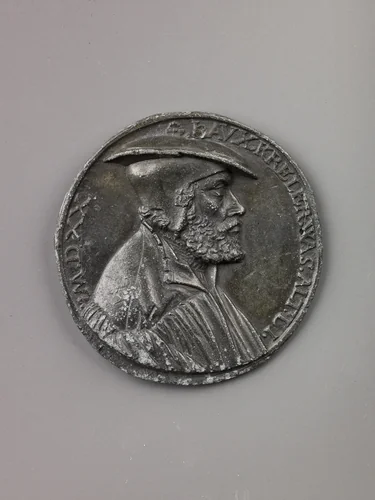
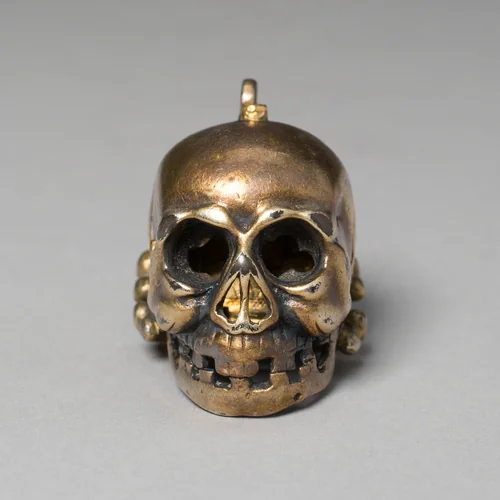
The preserved output demonstrates exceptional versatility across media, encompassing four significant paintings, two intricate metalworks, and a singular drawing. A crucial element of this tradition lies in the mastery of illumination and small-scale composition. Early examples, such as the paired scenes The Flagellation and The Crucifixion, derived from a Psalter, showcase the meticulous detail and saturated palette demanded by manuscript production. Similarly, the complex arrangement of figures in Saints Barbara, Catherine, Andrew, John the Baptist, Lawrence and Thomas à Beckett in a Historiated Initial "E" from a Missal or Breviary illustrates the skill necessary to execute miniature compositions intended as high-quality prints within sacred texts.
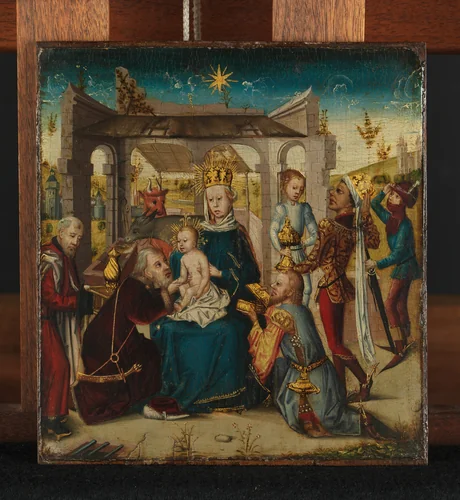
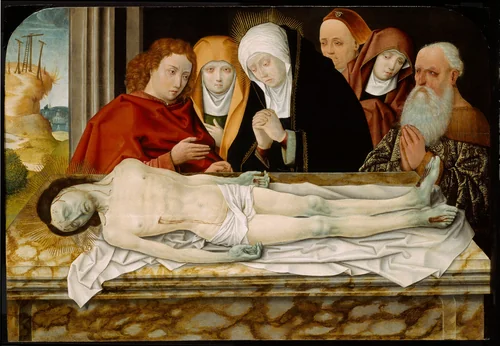
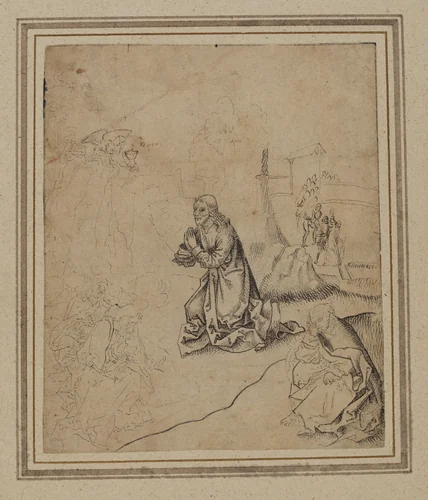
As the tradition shifted into the 15th and 16th centuries, the focus moved toward panel painting, allowing for increased scale and dramatic realism. The Christological cycles frequently favored by German masters emphasize emotional depth, visible in the stark contemplation required by Agony in the Garden and the solemn closure depicted in Entombment. By contrast, the frequently rendered theme of the Adoration of the Magi provided a vital opportunity for painters to demonstrate skill in rendering contemporary fashion, detailed textiles, and individualized portraiture, effectively bridging sacred narrative and modern life.
Interestingly, while this period was characterized by intense theological and political upheaval across Central Europe, the foundational visual language of German paintings remained surprisingly consistent in its clarity and didactic intent—a testament to the enduring power of established workshop traditions. Today, much of this foundational material is available for scholarly study and general enjoyment; select works have entered the public domain, allowing institutions to offer museum-quality reproductions and downloadable artwork for educational purposes worldwide.
Source: Wikipedia · CC BY-SA 4.0