Gerard ter Borch
Gerard ter Borch (1617-1681) stands as a foundational master of the Dutch Golden Age, instrumental in defining the sophisticated interior genre scene. Active from the mid-17th century, Ter Borch’s practice centered on capturing the subtleties of domestic life, often elevating everyday interactions to moments of profound psychological tension.
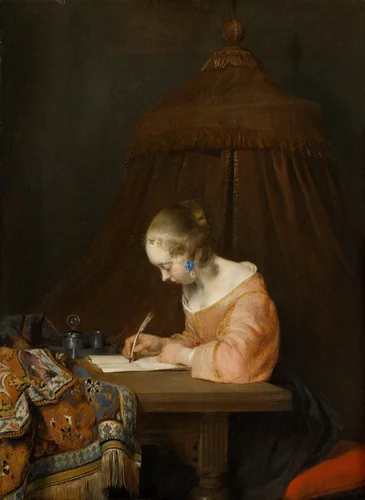
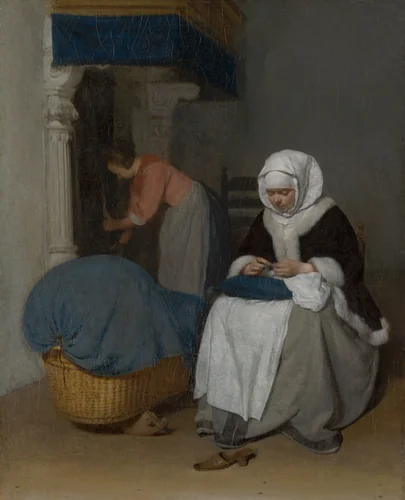
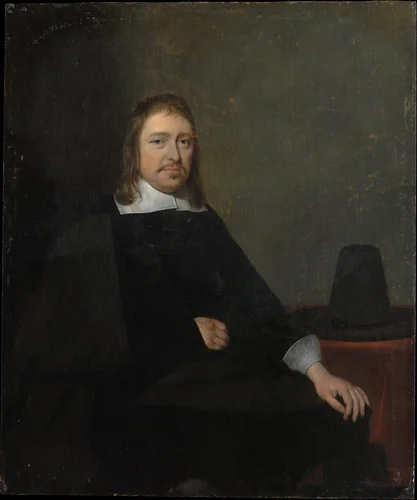
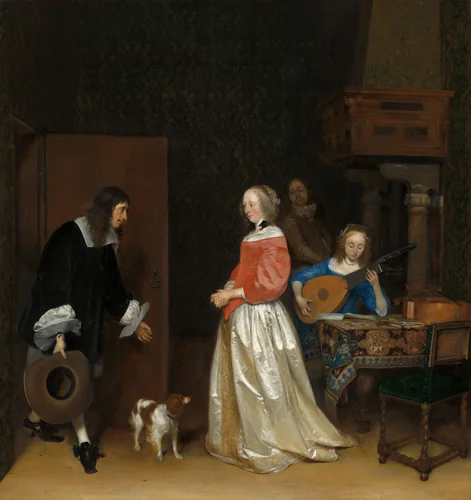
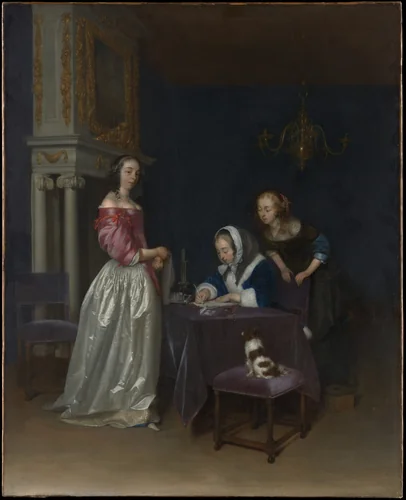
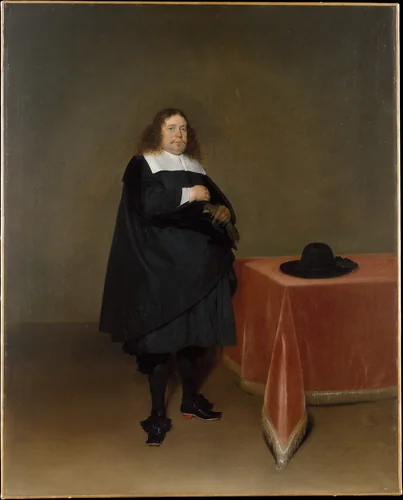
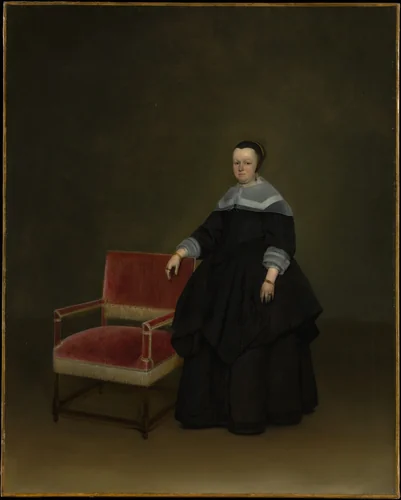
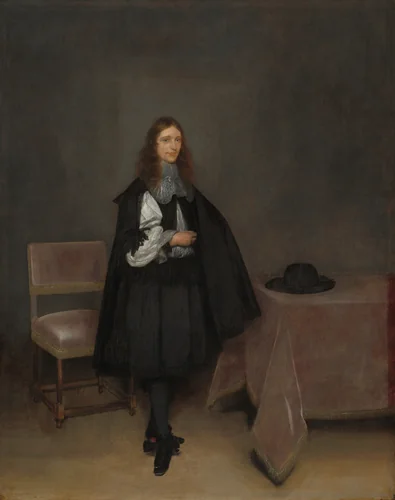
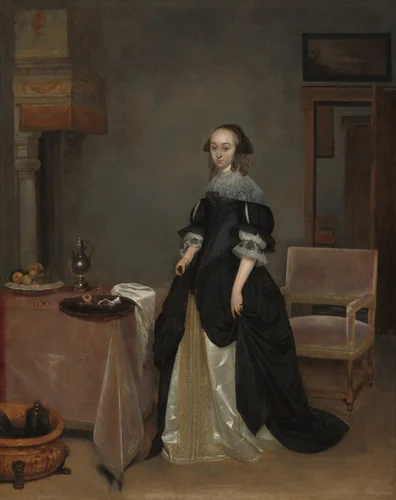
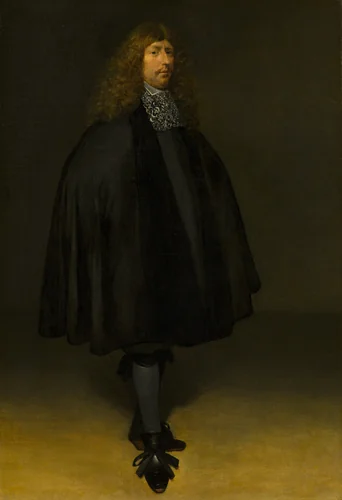
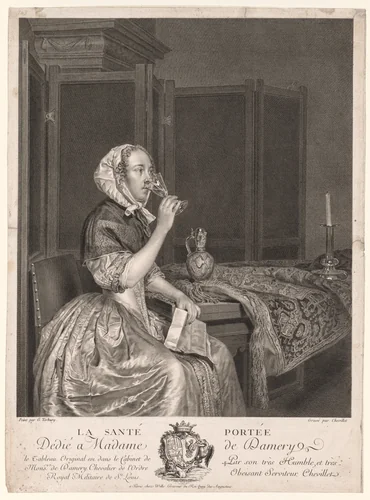
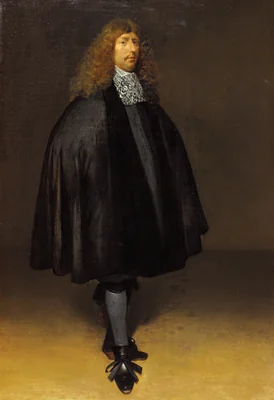
His key innovation, as noted by scholars, was establishing a new contextual framework for his subjects. Ter Borch consistently brought the viewer into “the sanctum of the home,” focusing less on overt action and more on implied narrative. He was among the first to explore the emotional complexities hidden beneath polite societal veneers. Works such as A Man Standing Seen from the Back or the complex group study The Charlatan demonstrate his masterful use of posture and light to hint at the figures’ inner uncertainties and concealed emotions. He possessed a keen ability to render texture, especially satin and silk, giving his compositions a distinct visual richness that enhanced their intimacy.
Ter Borch’s influence on his immediate contemporaries was substantial. He provided critical foundational lessons for artists like Gabriel Metsu, Gerrit Dou, and Eglon van der Neer. Crucially, he is considered a pivotal predecessor to Johannes Vermeer, providing the initial groundwork for Vermeer’s later, almost transcendent depictions of solitary domesticity. It is perhaps a quiet observation of art history that, despite establishing this innovative framework for capturing interior life, the visibility of Gerard ter Borch paintings was eventually overshadowed by the enduring fame of his younger counterpart.
Today, major collections including the Rijksmuseum, the Metropolitan Museum of Art, and the Art Institute of Chicago secure his legacy. The precision and delicacy inherent in his work make them ideal subjects for study and reproduction. Enthusiasts can easily access high-quality prints and digitized versions of his output, many of which reside in the public domain, securing his continued relevance well into the modern era.
Source: Wikipedia · CC BY-SA 4.0