Gerard Hoet
Gerard Hoet was a refined practitioner of the Dutch Golden Age, known for his versatility as both a painter and a highly skilled engraver. Active primarily between 1658 and 1671, Hoet’s relatively contained period of production yielded meticulous works that cemented his reputation for detailed mythological and biblical narratives. His extant work, held in major international collections including the Rijksmuseum, the Metropolitan Museum of Art, and the Art Institute of Chicago, illustrates an unwavering dedication to clarity of composition and moral clarity.
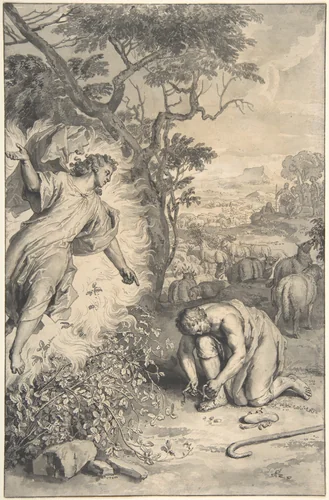
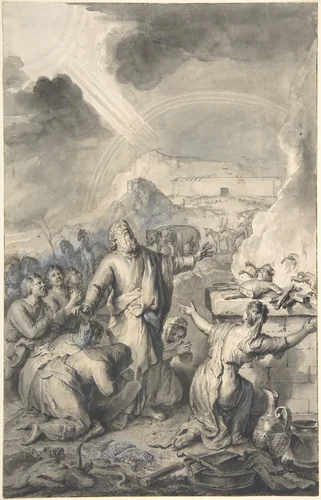
Hoet’s portfolio reveals a consistent interest in complex figure arrangements and dramatic tension. His graphic output, specifically his prints and numerous preparatory drawings, often disseminated his intellectual property far wider than his finished panels. Works such as Moses and the Burning Bush and The Sacrifice of Noah demonstrate his commitment to translating large-scale biblical events into compelling visual shorthand.
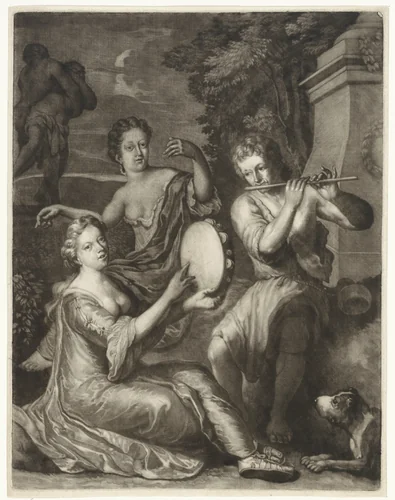
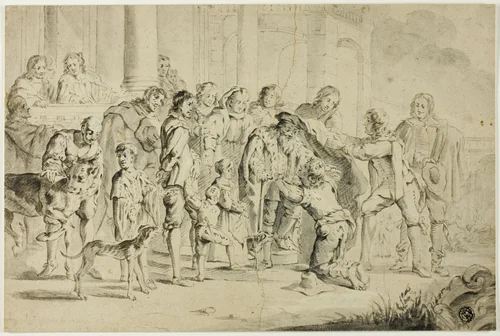
This narrative focus also extended to genre scenes, exemplified by Musicerend gezelschap, which provides a window into seventeenth-century social interaction, carefully rendered through the lens of a history painter. While Hoet executed important Gerard Hoet paintings, the technical discipline required for his engraved work, like the representation of The Prodigal Son, often defined his critical legacy during his active years. The precision required in producing plates ensured that his compositions maintained a rigorous, almost sculptural quality, whether the subject was classical, as in Mythologische voorstelling, or strictly sacred.
The continuing appreciation for Hoet’s craftsmanship is evident in the survival and accessibility of his creations. Today, those seeking to study his technique can often access high-quality prints derived from his original plates. It is perhaps telling that an artist known for such meticulous detail dedicated as much time to the preparatory sketches-four surviving drawings for every one painting-treating the study as a finished piece of intellectual property rather than mere planning. Due to their institutional housing, many of Hoet’s works now rest in the public domain, offering broad access to scholars and enthusiasts interested in the nuances of seventeenth-century Dutch draftsmanship.
Source: Wikipedia · CC BY-SA 4.0