Gérard Audran
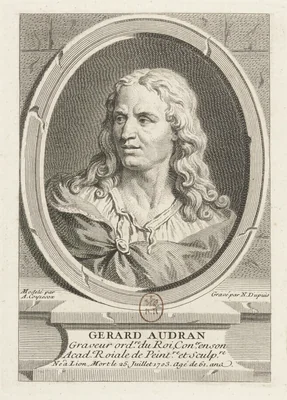
Gérard Audran (1650-1693) stands as a foundational contributor to the French engraving tradition of the late seventeenth century, operating within one of the most distinguished artistic dynasties of the era. As the third son of Claude Audran, Gérard inherited a rigorous technical discipline and professional infrastructure crucial for navigating the highly competitive Parisian art world. His decades-long career, spanning from 1650 to 1693, placed him at the core of classical print production, a crucial medium for disseminating visual knowledge across Europe.
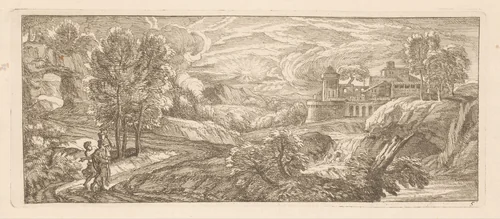
The role of the professional engraver during this period was not merely reproductive; it involved the interpretive translation of complex compositions onto copper plates. Audran mastered this demanding craft, focusing primarily on figural narratives and integrated landscape settings. His body of work demonstrates a deep commitment to narrative clarity, a prevailing aesthetic preference in the Académie Royale. This technical expertise is especially evident in the subtle rendering of light and shadow achieved in pieces such as Rivierlandschap met twee wandelende figuren (River landscape with two walking figures).
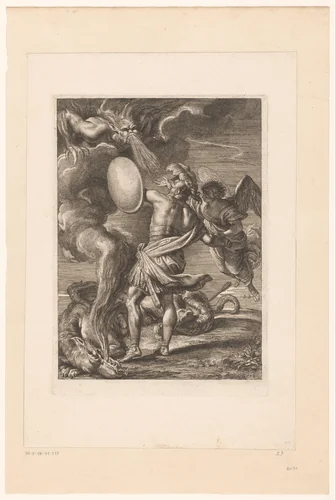
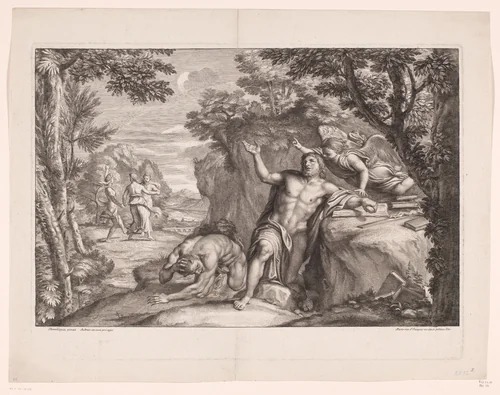
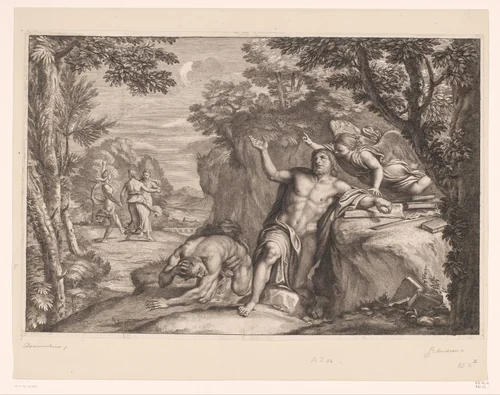
Audran’s thematic choices often centered on powerful moral and spiritual dilemmas. His known prints include the dramatic Gevecht tussen soldaat en duivel (Battle between soldier and devil), but he displayed a particular, and perhaps slightly obsessive, fascination with the figure of the Saint in isolation. A notable instance is his repeated exploration of Verzoeking van Hieronymus in de woestijn (The Temptation of Jerome in the Desert), a subject demanding precise psychological and environmental detail. That Audran undertook this difficult composition at least twice suggests either a high degree of artistic refinement applied to a popular theme, or simply a deep market demand for works addressing spiritual resilience.
The sustained significance of Gérard Audran’s contribution to printmaking is affirmed by the placement of his works in major international collections, including the Rijksmuseum and the Art Institute of Chicago. As the visual arts continue to move into the digital sphere, high-quality prints derived from his copperplate work are increasingly accessible. Fortunately for scholars and enthusiasts, many of these historically significant Gérard Audran prints have transitioned into the public domain, offering broad access to museum-quality imagery that defined the classical age.
Source: Wikipedia · CC BY-SA 4.0