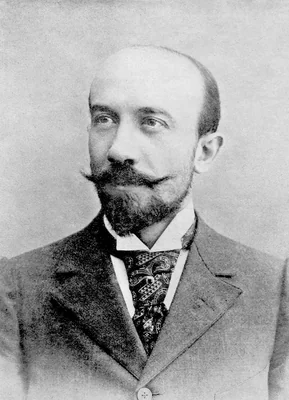
Georges Méliès
Georges Méliès stands as one of the most vital originators of cinematic language, fundamentally shifting early moving pictures from documentary novelty into expressive narrative and fantasy spectacle. A former French magician, toymaker, and theater director, Marie-Georges-Jean Méliès applied the principles of stage illusion directly to the emergent medium of film, pioneering techniques that remain standard practice today.
Active principally in the early 1900s, Méliès became globally renowned for his "trick films," which synthesized theatrical design with rigorous technical experimentation. He was the first great cinematic illusionist, popularizing special effects such as the substitution splice (the sudden disappearance or appearance of objects), multiple exposures, time-lapse photography, and sophisticated dissolves. Furthermore, Méliès was a crucial figure in narrative development, being among the first filmmakers to utilize storyboards in planning his elaborate scenes, ensuring seamless visual continuity across complex sequences.
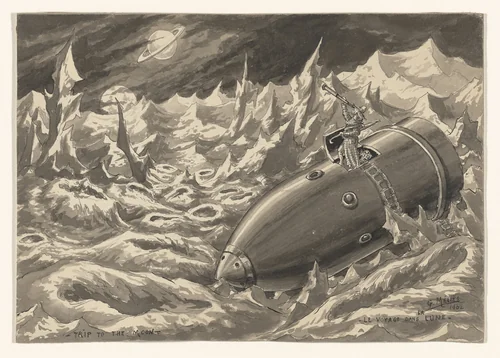
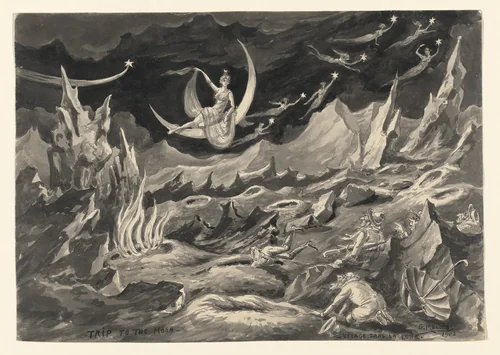
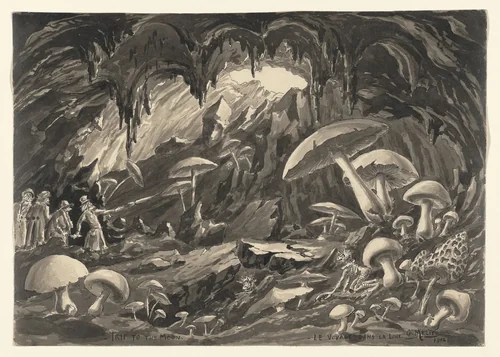
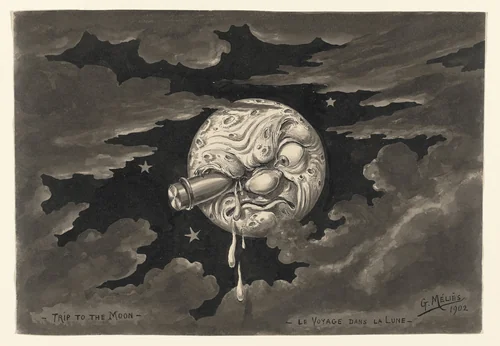
His most celebrated achievements include the foundational science-fiction films A Trip to the Moon (1902) and The Impossible Voyage (1904). These ambitious productions showcased his ability to transform painted backdrops and practical stagecraft into compelling cinematic fantasy, creating some of the most enduring, iconic images in film history. The detailed conceptual work and production drawings for these films, such as the initial designs for Scene 9: Landing Right in the Moon's Eye!!!, demonstrate his holistic approach to visual storytelling.
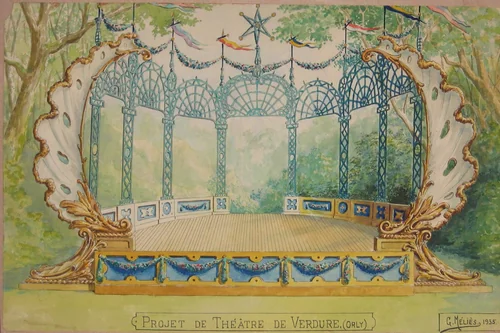
While Méliès is primarily remembered for his film output, a later body of work spanning 1930 to 1935 reveals his enduring dedication to draftsmanship. These drawings, many of which are preserved in major institutions like the Museum of Modern Art, often served as detailed retrospective storyboards for his earlier films or specific architectural projects like the Théâtre de Verdure, Orly. This collection of five known drawings provides museum-quality insight into the meticulous planning that underpinned his spectacular visions. Today, much of his visual legacy resides in the public domain, ensuring that Georges Méliès prints and detailed studies of his fantastical worlds remain accessible for generations of artists and enthusiasts.
Source: Wikipedia · CC BY-SA 4.0